 Bug FAQ
Western Black Widow
Latrodectus hesperus · Order: Araneae · Family: Theridiidae
Also called: Western Black Widow Spider
Source: Wikipedia, urbanipm.montana.edu

Their bite injects α-latrotoxin, a neurotoxin that can produce systemic symptoms in people.
Source: Wikipedia, urbanipm.montana.edu
How to recognize it
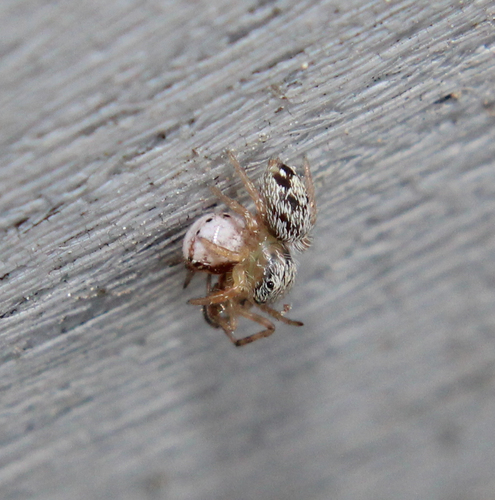
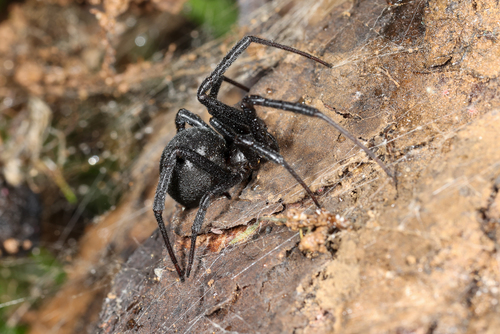
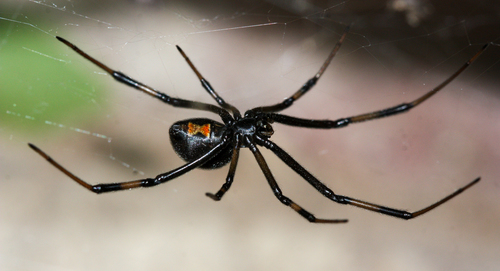
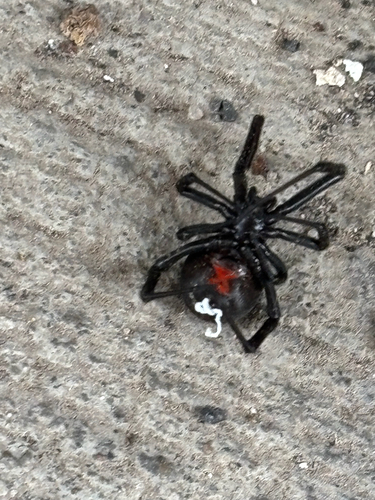
Males are lighter beige with white stripes on the abdomen and are about half the size of females. Immature spiders range from brown to black and have a longitudinal red stripe on the dorsal abdomen, plus an hourglass on the underside.
Source: Wikipedia, urbanipm.montana.edu
Size
Females measure 14 to 16 mm (about ½ in) in body length. Males are roughly half that length, around 8 mm (⅓ in).
Source: Wikipedia, urbanipm.montana.edu
Is it a pest in the house?
They are timid, often escaping rather than biting, and are found hanging upside-down in tangled webs inside homes.
Source: urbanipm.montana.edu, Wikipedia
Does it bite or sting?
Female venom contains α-latrotoxin, a neurotoxin that can cause pain, nausea, vomiting, goosebumps and localized sweating in humans. Bites usually happen when the spider is pressed or its retreat is disturbed; they are not aggressive otherwise.
Source: Wikipedia, urbanipm.montana.edu
How to get rid of it
Reducing the spider’s prey can encourage it to move elsewhere. Medical treatment for bites includes painkillers and antivenom. Both non-chemical and chemical control methods are available.
Source: Wikipedia, urbanipm.montana.edu
Where it lives
They build irregular, tangled webs and often hang upside-down near the center while waiting for prey.
Source: Wikipedia
What it eats
They wait in their web for insects to become trapped, then bite to paralyze them for later digestion.
Source: Wikipedia
Life cycle
Males may mate several times during their short lives and prefer well-fed females.
Source: Wikipedia
When you see it
From May through October they catch significantly more prey. Females are the primary threat and become aggressive mainly when protecting eggs.
Source: Wikipedia
Where it comes from
The western black widow is native to western North America, including the southwestern Canadian provinces and many western U.S. states.
Source: Wikipedia
Lookalikes
The western black widow was once considered a subspecies of L. mactans and is closely related to L. variolus. Males are smaller, lighter brown with several white stripes and about 8 mm long. Immature spiders can be brown to black with a dorsal red stripe and share the underside hourglass shape.
Source: Wikipedia, urbanipm.montana.edu
Where it is found in the US
Recorded in 26 of 51 states and DC. Most records: California, Colorado, Arizona, Utah, Texas, New Mexico, Nevada, Idaho.
Darker = more records. Counts are museum and citizen-science records, not population size.
Source: GBIF
Status: native in North America; native in United States; native in Canada. Source: iNaturalist
Months it is reported in the US
Source: GBIF
More photos
Questions people ask
Are western black widow bites dangerous?
Yes, their venom can cause pain, nausea, vomiting, goosebumps and sweating, and medical care may involve painkillers or antivenom.
Source: Wikipedia, urbanipm.montana.edu
Where are western black widows found?
They live in western North America, from southwestern Canada through many western U.S. states and into Mexico.
Source: Wikipedia
How do I get rid of them in my house?
Remove their prey to encourage relocation and use non-chemical or chemical control methods; professional pest control may be needed.
Source: Wikipedia, urbanipm.montana.edu
Same family (Theridiidae)



Sources
- Wikipedia: https://en.wikipedia.org/wiki/Latrodectus_hesperus
- urbanipm.montana.edu: https://urbanipm.montana.edu/entomology/resources/fact-sheets/spiders_of_montana/black.widow.html
Look it up elsewhere: GBIF · iNaturalist · BugGuide · ITIS · Wikipedia
Text written 2026-10-23 from the sources above and checked sentence by sentence against them. Data fetched 2026-10-23.