 Bug FAQ
Common House Spider
Parasteatoda tepidariorum · Order: Araneae · Family: Theridiidae
Also called: American house spider, Glasshouse spider
Source: Wikipedia, Penn State Extension
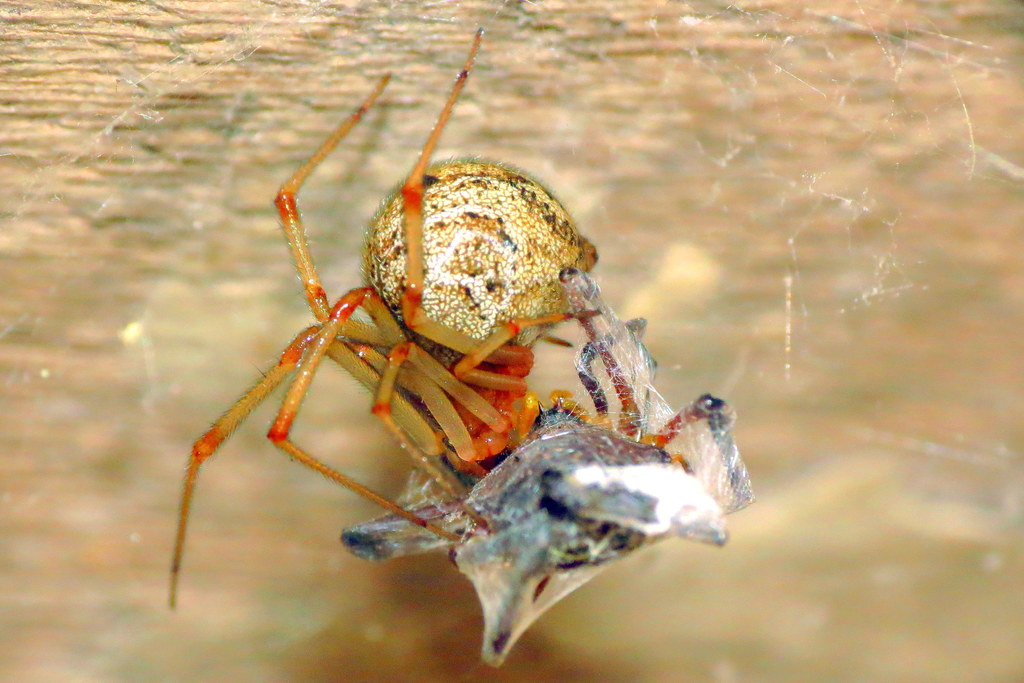
These spiders live in homes, especially damp corners, and spin cobwebs to catch small insects. Females are 5-6 mm long with a yellow-brown body and chevron markings; males are smaller with orange legs.
Source: Wikipedia, Penn State Extension
How to recognize it
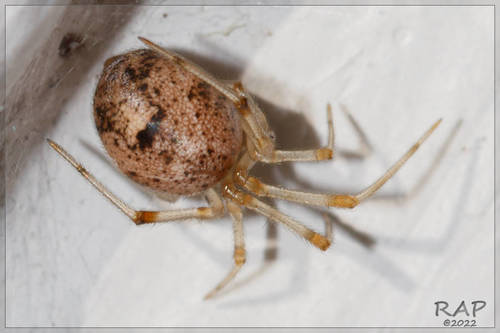
Body color ranges from tan to nearly black and may have gray chevrons or a triangular black spot on the abdomen.
Source: Wikipedia, Penn State Extension
Size
Females measure about 5 to 6 mm (0.20 to 0.24 in) and males about 3.8 to 4.7 mm (0.15 to 0.19 in). With legs spread, the spider can span an inch (≈2.5 cm) across.
Source: Wikipedia
Is it a pest in the house?
They help control other insects but their many webs can be a nuisance in homes.
Source: Wikipedia, Penn State Extension
Does it bite or sting?
Bites occur only when the spider is grabbed and squeezed, and the venom causes mild pain, redness and swelling for 4 to 24 hours. The species is not considered medically important.
Source: Wikipedia, Penn State Extension
How to get rid of it
They frequently abandon old webs and build new ones nearby, creating many webs quickly, which can bother homeowners.
Source: Penn State Extension
Where it lives
They are synanthropic, living in and near human dwellings. Webs are built in dark corners of walls, windows, basements and crawl spaces.
Source: Wikipedia, Penn State Extension
What it eats
They mainly eat small insects and other household pests. Large females may trap baby skinks by hanging fly remains in their webs.
Source: Wikipedia
Life cycle
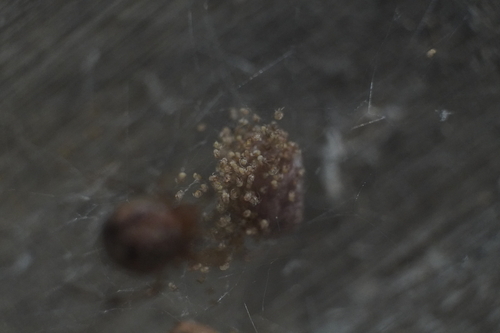
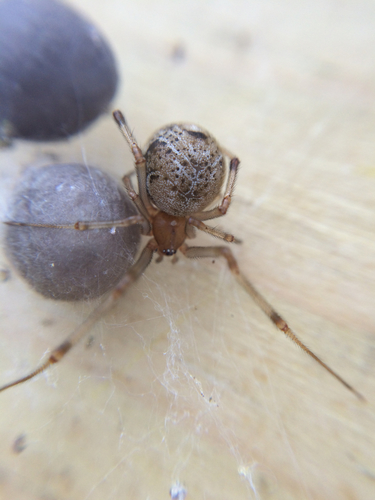
Adults can live more than a year after maturing. Females hang spherical, tan-papery egg sacs in their webs, each containing about 149 eggs on average.
Source: Wikipedia
Where it comes from
Native to Asia, they have been introduced to many regions worldwide, including North America, Europe, Africa, Oceania and South America.
Source: Wikipedia
Lookalikes
They resemble widow spiders in body shape.
Source: Wikipedia
Where it is found in the US
Recorded in 43 of 51 states and DC. Most records: Washington, Ohio, California, Texas, Maryland, Massachusetts, Virginia, North Carolina.
Darker = more records. Counts are museum and citizen-science records, not population size.
Source: GBIF
Status: introduced in North America; introduced in United States. Source: iNaturalist
Months it is reported in the US
Source: GBIF
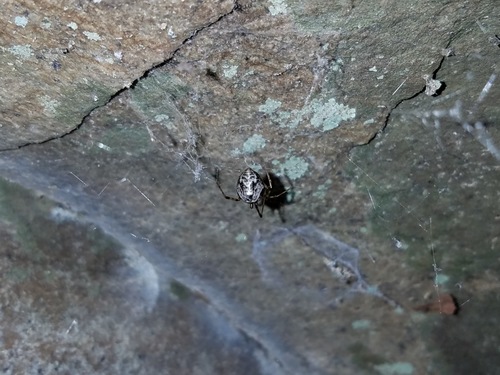
More photos
Questions people ask
Do common house spiders bite people?
They bite only when handled, causing mild pain and a red mark that may last up to a day.
Source: Wikipedia, Penn State Extension
Where do I usually find these spiders in my house?
In damp corners such as basements, crawl spaces, and the edges of walls and windows.
Source: Wikipedia, Penn State Extension
How big are male and female common house spiders?
Females are about 5 to 6 mm long, while males are slightly smaller at 3.8 to 4.7 mm.
Source: Wikipedia
Can I control the number of webs they make?
Since they often abandon old webs and build new ones, regularly cleaning and removing webs can reduce their numbers.
Source: Penn State Extension
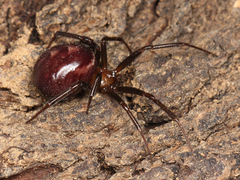
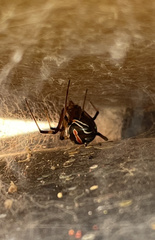
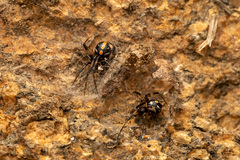
Same family (Theridiidae)



Sources
- Wikipedia: https://en.wikipedia.org/wiki/Parasteatoda_tepidariorum
- Penn State Extension: https://extension.psu.edu/common-house-spider
Look it up elsewhere: GBIF · iNaturalist · BugGuide · ITIS · Wikipedia
Text written 2026-10-23 from the sources above and checked sentence by sentence against them. Data fetched 2026-10-22.