 Bug FAQ
Ten-spotted Spurleg
Brachiacantha decempustulata · Order: Coleoptera · Family: Coccinellidae
Also called: Ten-spotted Lady Beetle, Ten-spotted Spurleg Lady Beetle
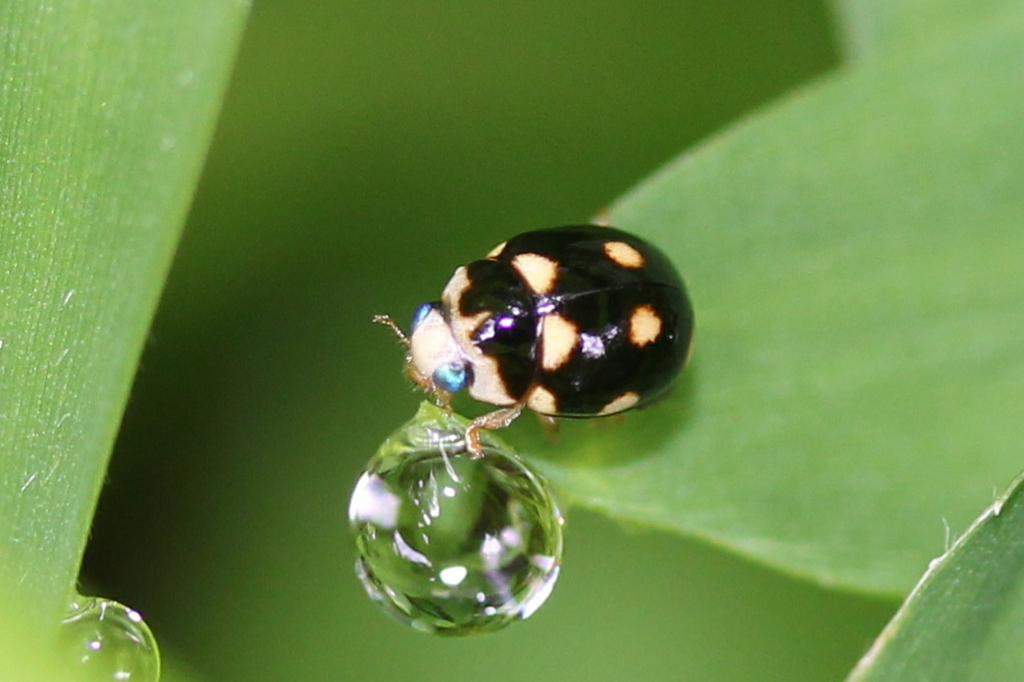
Adults are tiny, measuring roughly 2 to 2.5 mm in length. They live throughout much of North America, from eastern Canada down to Florida and westward to Wisconsin, Louisiana, and also in North Dakota.
Source: Wikipedia
How to recognize it
They look like Brachiacantha felina but have an oval shape and smaller spots on the wing covers.
Source: Wikipedia
Size
Adults reach about 2 to 2.5 mm long.
Source: Wikipedia
Where it lives
They are recorded from New Brunswick and Nova Scotia south to Florida, and west to Wisconsin and Louisiana, plus North Dakota.
Source: Wikipedia
Where it comes from
Their range includes much of North America, from eastern Canada to the southern United States and into the central states like North Dakota.
Source: Wikipedia
Lookalikes
They resemble Brachiacantha felina, yet can be told apart by their oval body and finer elytral spots.
Source: Wikipedia
Where it is found in the US
Recorded in 28 of 51 states and DC. Most records: Minnesota, North Carolina, Ohio, Illinois, Vermont, Kentucky, Pennsylvania, Wisconsin.
Darker = more records. Counts are museum and citizen-science records, not population size.
Source: GBIF
Status: native in North America; native in United States; native in Canada. Source: iNaturalist
Months it is reported in the US
Source: GBIF
More photos
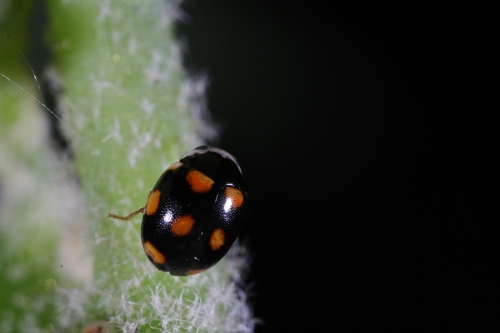
Same family (Coccinellidae)
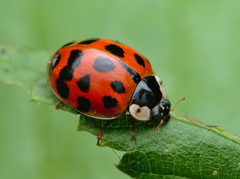
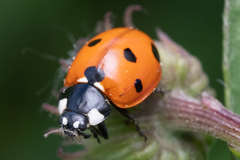
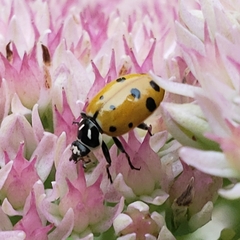

Sources
- Wikipedia: https://en.wikipedia.org/wiki/Brachiacantha_decempustulata
Look it up elsewhere: GBIF · iNaturalist · BugGuide · ITIS · Wikipedia
Text written 2026-10-26 from the sources above and checked sentence by sentence against them. Data fetched 2026-10-26.