 Bug FAQ
Tasmanian Ladybird
Cleobora mellyi · Order: Coleoptera · Family: Coccinellidae
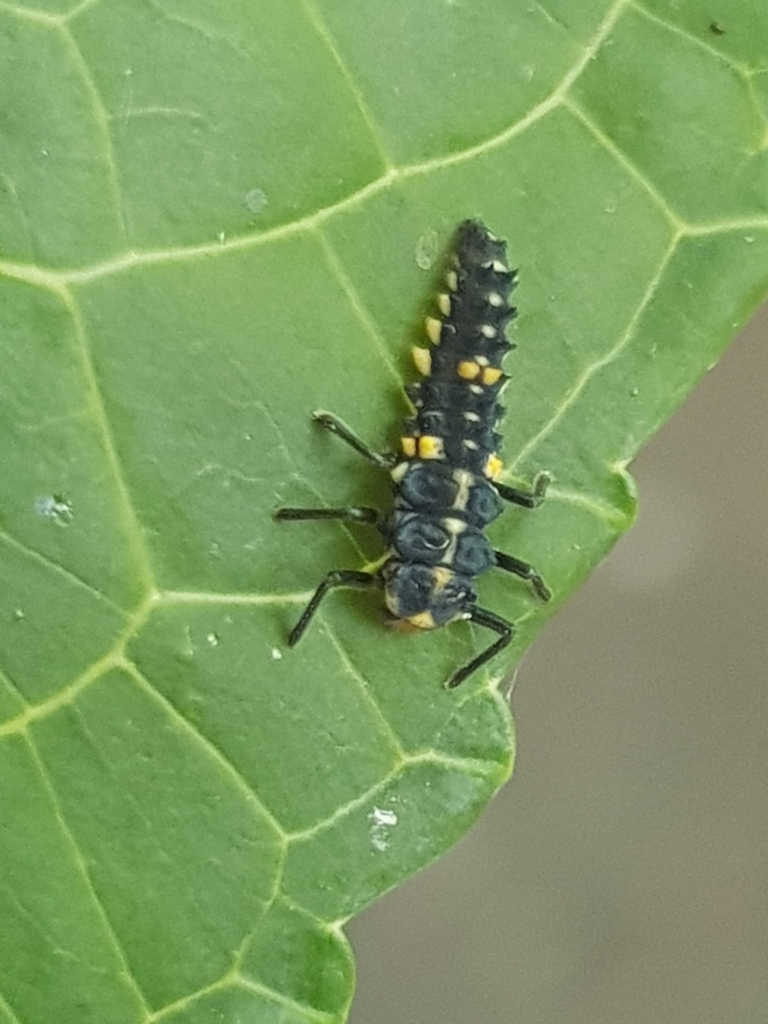
Adult Tasmanian ladybirds are 5.5 to 9 mm long and have orange or yellow heads, pronotum and elytra with black markings and transverse bands. They are native to Tasmania and southern mainland Australia and were introduced to New Zealand in 1977 to control the eucalypt tortoise beetle.
Source: Wikipedia
How to get rid of it
It was released as a biological control agent for the eucalypt tortoise beetle in New Zealand in 1977.
Source: Wikipedia
What it eats
It was released in New Zealand to eat the eucalypt tortoise beetle, Paropsis charybdis.
Source: Wikipedia
Lookalikes
Cleobora is a monotypic genus; its only species is Cleobora mellyi, the Tasmanian or southern ladybird, in the Coccinellini tribe of Coccinellinae.
Source: Wikipedia
Questions people ask
What does the Tasmanian ladybird look like?
It has a yellow or orange head with black markings, and orange or yellow pronotum and elytra with black patterns and transverse bands.
Source: Wikipedia
Where is the Tasmanian ladybird native to?
It is native to Tasmania and the southern mainland states of Australia.
Source: Wikipedia
What does the Tasmanian ladybird eat?
It was introduced to feed on the eucalypt tortoise beetle, Paropsis charybdis.
Source: Wikipedia
Same family (Coccinellidae)

Sources
- Wikipedia: https://en.wikipedia.org/wiki/Cleobora
Look it up elsewhere: GBIF · iNaturalist · BugGuide · Wikipedia
Text written 2026-10-23 from the sources above and checked sentence by sentence against them. Data fetched 2026-10-22.