 Bug FAQ
Tanbark Borer
Phymatodes testaceus · Order: Coleoptera · Family: Cerambycidae
Also called: Long-horned Beetle
Source: Wikipedia
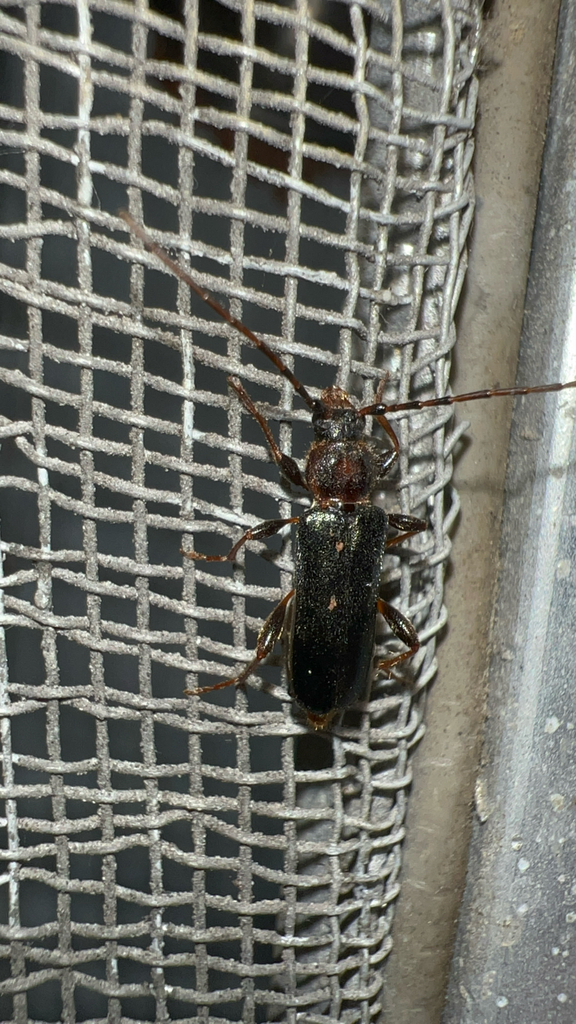
The tanbark borer is a longhorn beetle found across Europe, North Africa, parts of Asia and North America. Its larvae live under the bark of many deciduous trees and can harm the trees as they develop. The beetle’s life cycle takes one year in warmer areas and two years in cooler regions, with pupation in spring.
Source: Wikipedia
How to recognize it
Phymatodes testaceus, also called the tanbark borer or violet tanbark beetle, belongs to the longhorn beetle family Cerambycinae.
Source: Wikipedia
Size
Adult beetles are usually between 6 and 16 mm long. The larvae measure about 10 to 18 mm in length and are roughly 2.1 mm wide.
Source: Wikipedia
Is it a pest in the house?
Because the larvae damage the bark of deciduous trees, they can be a problem for trees growing near homes. The species is also present in Japan and North America.
Source: Wikipedia
Where it lives
Larvae develop inside and just beneath the bark of a variety of deciduous trees.
Source: Wikipedia
What it eats
The larvae feed on the tissue of deciduous tree bark as they grow. They form pupae in the spring.
Source: Wikipedia
Life cycle
In central and southern parts of its range the beetle completes its cycle in one year, while in northern areas it may take two years. Pupation occurs during the spring months.
Source: Wikipedia
When you see it
The larvae turn into pupae in spring.
Source: Wikipedia
Where it comes from
Its native range stretches from the Atlantic coast of Europe to the southern Urals, from southern Sweden and Norway down to North Africa and Syria. It is also found in Japan and North America.
Source: Wikipedia
Lookalikes
It is a polymorphic longhorn beetle in the subfamily Cerambycinae.
Source: Wikipedia
Where it is found in the US
Recorded in 25 of 51 states and DC. Most records: Pennsylvania, Wisconsin, Michigan, Massachusetts, Kentucky, Ohio, New York, Vermont.
Darker = more records. Counts are museum and citizen-science records, not population size.
Source: GBIF
Status: introduced in Canada. Source: iNaturalist
Months it is reported in the US
Source: GBIF
More photos
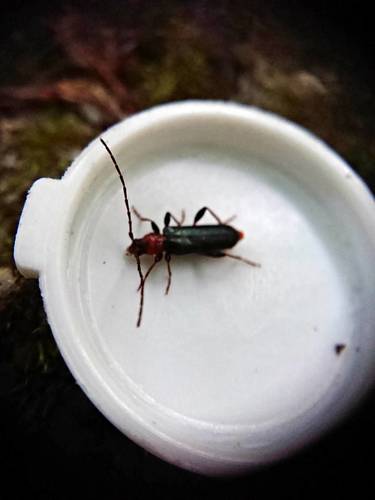
Questions people ask
Which trees are affected by the tanbark borer?
The larvae live under the bark of many deciduous trees and can damage them as they feed.
Source: Wikipedia
How long does the tanbark borer’s life cycle last?
It takes one year in warmer regions and two years in cooler climates.
Source: Wikipedia
Where is the tanbark borer found?
It ranges from the European Atlantic coast to the southern Urals and is also present in Japan and North America.
Source: Wikipedia
Same family (Cerambycidae)
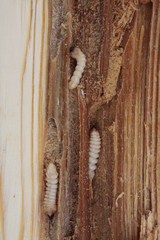 House LonghornHylotrupes bajulusCan damage your home
 Asian Longhorned BeetleAnoplophora glabripennisDamages trees, gardens or crops
 Red Milkweed BeetleTetraopes tetrophthalmus
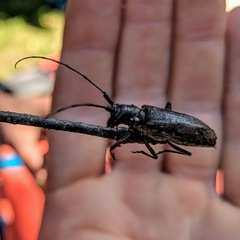 White-spotted SawyerMonochamus scutellatusCan damage your home
 Red Pine Longhorn BeetleStictoleptura rubra
 Spotted Longhorn BeetleRutpela maculataDamages trees, gardens or crops
Sources
- Wikipedia: https://en.wikipedia.org/wiki/Phymatodes_testaceus
Look it up elsewhere: GBIF · iNaturalist · BugGuide · ITIS · Wikipedia
Text written 2026-10-22 from the sources above and checked sentence by sentence against them. Data fetched 2026-10-22.