 Bug FAQ
Suzuki's Promalactis Moth
Promalactis suzukiella · Order: Lepidoptera · Family: Oecophoridae
Also called: Moth, Suzuki's Promalactis

The forewing measures between 4.5 and 7 mm in length. Adults fly from March through late September, producing at least two generations each year.
Source: Wikipedia
Size
The forewing length is 4.5 to 7 mm.
Source: Wikipedia
What it eats
Larvae feed under bark of rotting logs of chokecherry, oak species and peach.
Source: Wikipedia
When you see it
Adults appear from March through late September, suggesting multiple generations annually.
Source: Wikipedia
Where it comes from
Native to Korea, Japan and Taiwan. Introduced in the United States, first recorded in the mid-Atlantic in the early 2000s and now found in most states east of the Mississippi and Texas, except Florida, northern New England and Michigan.
Source: Wikipedia
Where it is found in the US
Recorded in 31 of 51 states and DC. Most records: Maryland, North Carolina, Alabama, Virginia, Ohio, Pennsylvania, Massachusetts, Tennessee.
Darker = more records. Counts are museum and citizen-science records, not population size.
Source: GBIF
Status: introduced in North America; introduced in Canada; introduced in United States. Source: iNaturalist
Months it is reported in the US
Source: GBIF
More photos
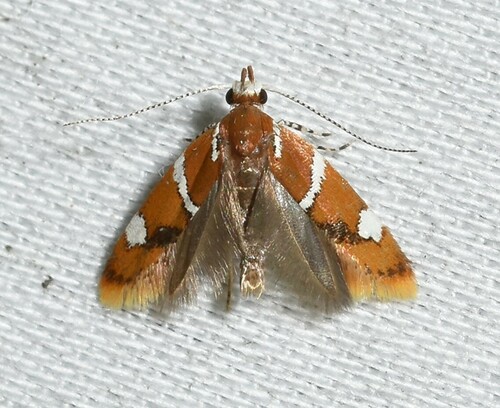
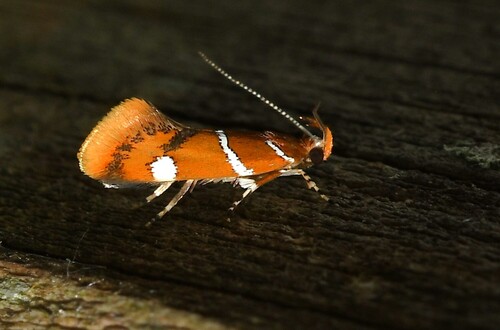
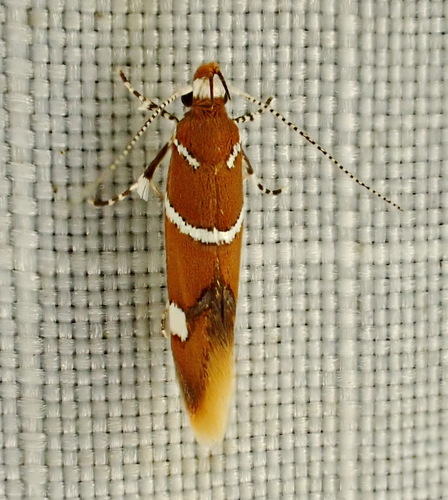
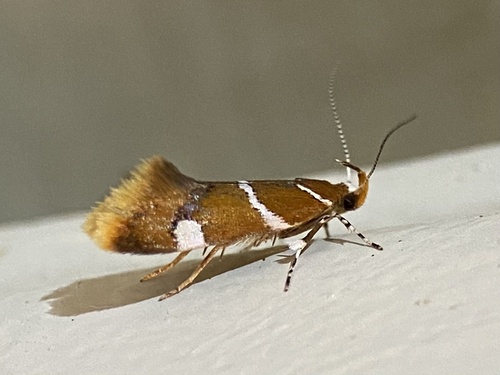
Same family (Oecophoridae)



Sources
- Wikipedia: https://en.wikipedia.org/wiki/Promalactis_suzukiella
Look it up elsewhere: GBIF · iNaturalist · BugGuide · Wikipedia
Text written 2026-10-22 from the sources above and checked sentence by sentence against them. Data fetched 2026-10-22.