 Bug FAQ
Izatha huttonii
Izatha huttonii · Order: Lepidoptera · Family: Oecophoridae

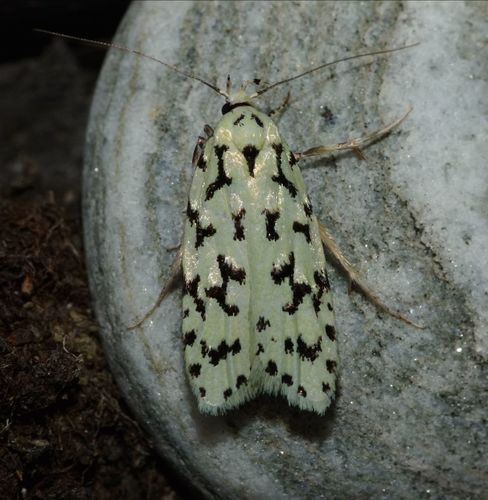
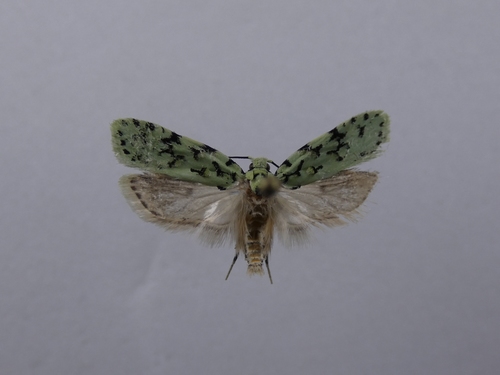
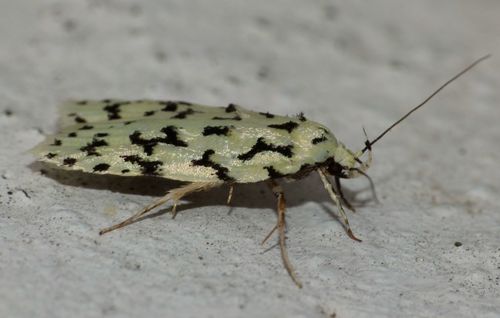
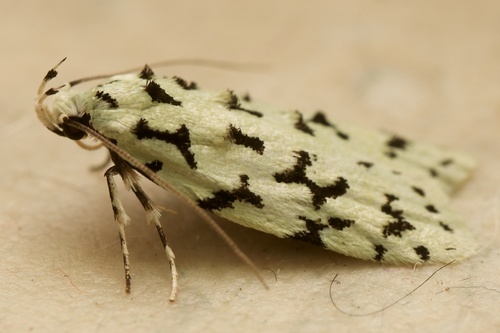
The adult moth has a wingspan of about one inch and a distinctive "M" shaped mark on the forewing discal area. It is native to New Zealand, found on the North Island, South Island and Stewart Island, and its larvae feed on dead wood of native trees such as makomako, karamu, Aristotelia serrata and Coprosma robusta. Adults are on the wing from October through March, with most records between November and March.
Source: Wikipedia
How to recognize it
The most obvious visual feature is the forewing discal "M" mark.
Source: Wikipedia
Size
The wingspan is about one inch.
Source: Wikipedia
What it eats
Larvae feed on dead wood of makomako and karamu. They also feed on dead branches of Aristotelia serrata and have been reared from Coprosma robusta.
Source: Wikipedia
Lookalikes
It has long been confused with Izatha peroneanella, and the differences are variable and subtle.
Source: Wikipedia
More photos
Questions people ask
How can I tell Izatha huttonii apart from similar moths?
Look for the distinctive "M" shaped mark on the forewing discal area and the pattern of black lines and spots described in the identification marks.
Source: Wikipedia
When are adult Izatha huttonii moths active?
Adults are on the wing from November through March, with occasional records in October.
Source: Wikipedia
What do the larvae of Izatha huttonii feed on?
They feed on dead wood of native trees such as makomako, karamu, Aristotelia serrata and Coprosma robusta.
Source: Wikipedia
Same family (Oecophoridae)
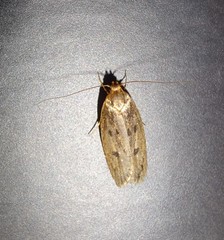 Brown House MothHofmannophila pseudospretellaCan damage your home
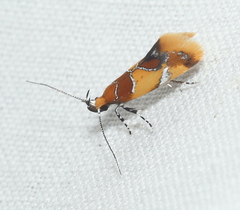 Orange-headed Callima MothCallima argenticinctella
 White-shouldered House MothEndrosis sarcitrellaCan damage your home
 Suzuki's Promalactis MothPromalactis suzukiella
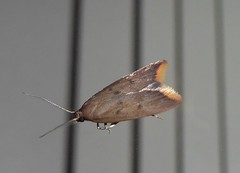 Ruddy StreakTachystola acroxantha
 Green lichen tuft mothIzatha peroneanella
Sources
- Wikipedia: https://en.wikipedia.org/wiki/Izatha_huttonii
Look it up elsewhere: GBIF · iNaturalist · BugGuide · Wikipedia
Text written 2026-10-23 from the sources above and checked sentence by sentence against them. Data fetched 2026-10-23.