 Bug FAQ
Brown House Moth
Hofmannophila pseudospretella · Order: Lepidoptera · Family: Oecophoridae
Source: Wikipedia
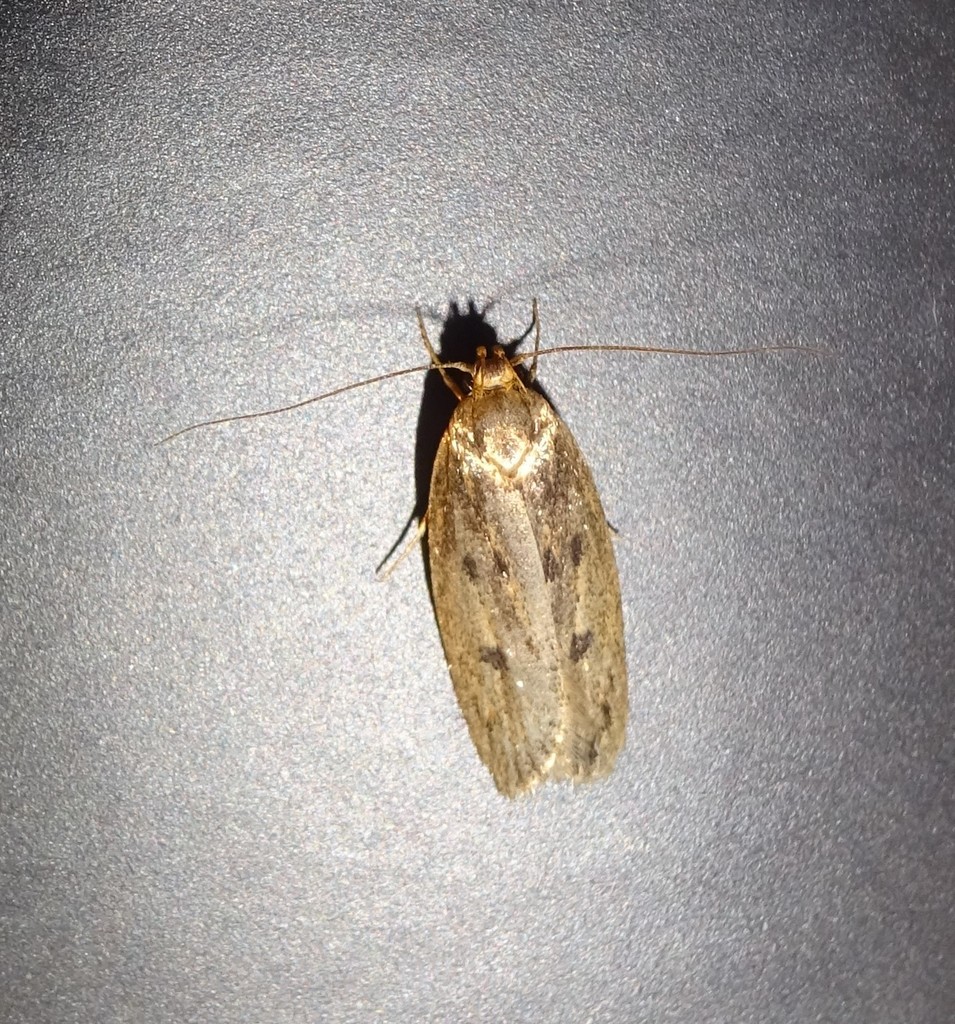
Adults have a wingspan of 15 to 26 mm and pale ochre forewings with dark patches, while the hindwing and body are brownish-grey. They live mainly in houses and commercial buildings, but can also be found in bird nests outdoors. Larvae feed on stored cereals, dried fruit, seeds, fabrics, fur and wood, causing serious damage to household items.
Source: Wikipedia
How to recognize it
Mature moths have pale ochre forewings with blackish-brown patches and brownish-grey hindwings; the head, thorax and abdomen are dark grey-brown.
Source: Wikipedia
Size
The wingspan ranges from 15 to 26 mm.
Source: Wikipedia
Is it a pest in the house?
The brown house moth is a serious pest in homes and commercial settings because its larvae feed destructively on food and materials. Larvae bite through synthetic carpet fibres to make pupation cells and are little affected by typical moth-proofing agents.
Source: Wikipedia
Where it lives
They are synanthropic, living in private houses and commercial buildings. Smaller numbers occur outside human settings, with larvae found in bird nests feeding on droppings and detritus.
Source: Wikipedia
What it eats
Larvae eat a variety of man-made foodstuffs and household materials. Their diet includes stored cereals, dried fruit, seeds, clothing, furniture fabric, fur and wood floor inlays.
Source: Wikipedia
Life cycle
A female can lay up to about 260 eggs, singly or in batches, during her life. Larvae are active from June to April, spinning silken tubes with food and leaving frass and silk behind.
Source: Wikipedia
When you see it
Adults are normally seen from May to September but can be present year-round in heated buildings. They are strongly attracted to light and can fly throughout the year.
Source: Wikipedia
Where it is found in the US
Recorded in 7 of 51 states and DC. Most records: Washington, California, Alaska, Oregon, Hawaii, Texas, Colorado.
Darker = more records. Counts are museum and citizen-science records, not population size.
Source: GBIF
Status: introduced in Canada; introduced in United States. Source: iNaturalist
Months it is reported in the US
Source: GBIF
More photos


Questions people ask
What household items can they damage?
Their larvae can chew stored cereals, dried fruit, seeds, clothing, furniture fabric, fur and even wood floor inlays.
Source: Wikipedia
When are adult moths active?
Adults are usually seen from May through September but can be found all year in heated buildings.
Source: Wikipedia
Where do they usually live?
They mainly live inside private houses and commercial buildings, though larvae can also be found in bird nests outdoors.
Source: Wikipedia
Same family (Oecophoridae)




Sources
- Wikipedia: https://en.wikipedia.org/wiki/Hofmannophila
Look it up elsewhere: GBIF · iNaturalist · BugGuide · Wikipedia
Text written 2026-10-22 from the sources above and checked sentence by sentence against them. Data fetched 2026-10-22.