 Bug FAQ
Sumac Stem Borer
Oberea ocellata · Order: Coleoptera · Family: Cerambycidae
Source: Wikipedia
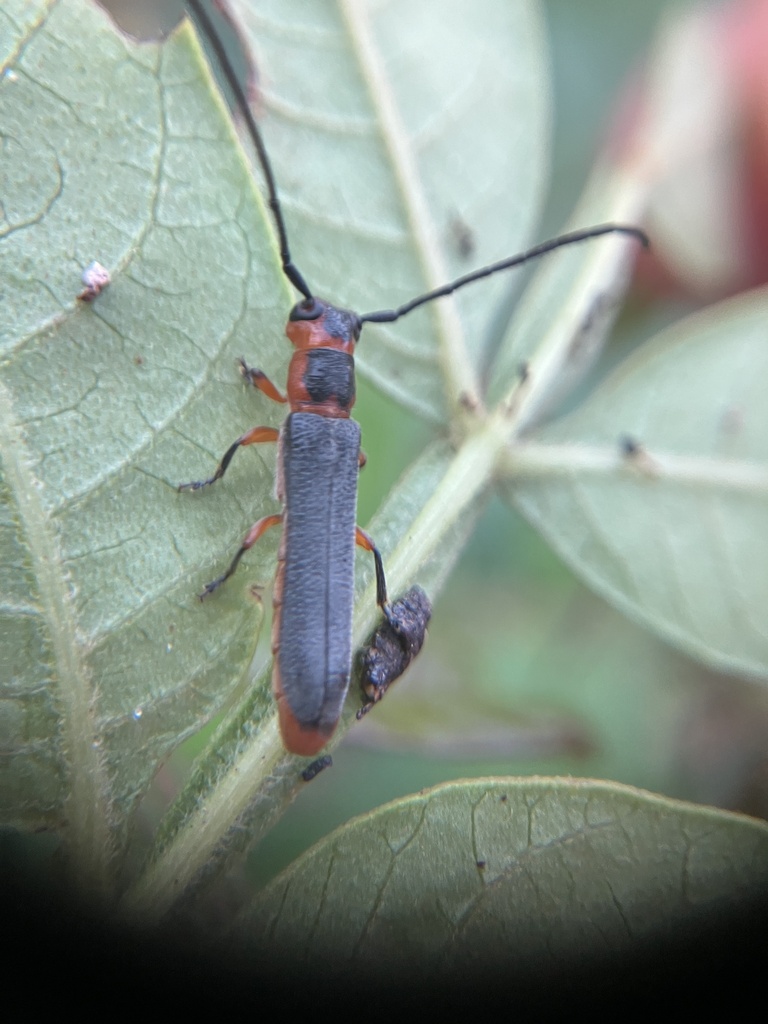
The sumac stem borer is a well-known tree pest that can cause serious damage. Its presence is easy to spot because it leaves light-yellow frass. If you find an infestation, cut the affected blueberry cane below the hollow section to keep the beetle from reaching the crown.
Source: Wikipedia
How to recognize it
You can spot it by the distinctive light-yellow frass it produces.
Source: Wikipedia
How to get rid of it
- Cutting the cane below the hollow section stops the borer from reaching the crown.
- Natural enemies such as Lixophaga variabilis and Bracon ceramycidiphagus exist but do not significantly control its numbers.
Source: Wikipedia
Where it lives
It is a notable pest of trees.
Source: Wikipedia
What it eats
After hatching, the larvae drill toward the tip of the host plant. They then turn back and burrow into the crown of the tree.
Source: Wikipedia
Life cycle
In June, adult females lay single eggs under the bark of blueberry canes near the tip. The eggs hatch after about two weeks, and the larvae begin their drilling activity.
Source: Wikipedia
When you see it
Egg-laying occurs in June.
Source: Wikipedia
Where it is found in the US
Recorded in 22 of 51 states and DC. Most records: North Carolina, Florida, Massachusetts, Texas, Pennsylvania, Kentucky, South Carolina, Indiana.
Darker = more records. Counts are museum and citizen-science records, not population size.
Source: GBIF
Status: native in North America; native in Canada. Source: iNaturalist
Months it is reported in the US
Source: GBIF
More photos
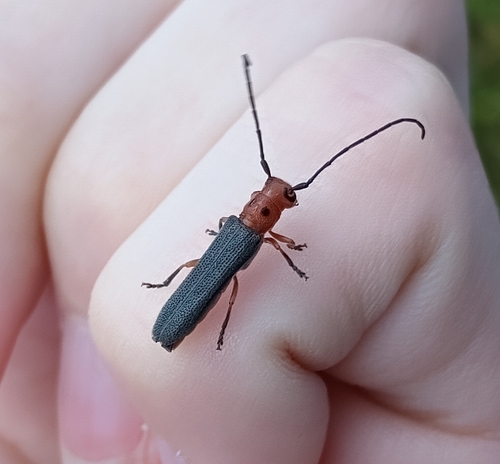
Questions people ask
How can I tell if a sumac stem borer is present?
Look for light-yellow frass, which is a clear sign of its activity.
Source: Wikipedia
What should I do if I find an infestation?
Cut the affected blueberry cane below the hollow, infested section to prevent the beetle from reaching the tree crown.
Source: Wikipedia
When does the sumac stem borer lay its eggs?
Adult females lay eggs in June, placing each one under the bark near the tip of a blueberry cane.
Source: Wikipedia
What do the larvae do after hatching?
They drill toward the terminal end of the plant, then reverse direction and burrow into the crown.
Source: Wikipedia
Same family (Cerambycidae)
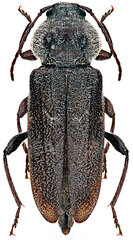 House LonghornHylotrupes bajulusCan damage your home
 Asian Longhorned BeetleAnoplophora glabripennisDamages trees, gardens or crops
 Red Milkweed BeetleTetraopes tetrophthalmus
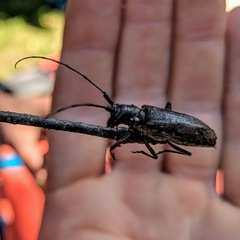 White-spotted SawyerMonochamus scutellatusCan damage your home
 Red Pine Longhorn BeetleStictoleptura rubra
 Spotted Longhorn BeetleRutpela maculata
Sources
- Wikipedia: https://en.wikipedia.org/wiki/Oberea_ocellata
Look it up elsewhere: GBIF · iNaturalist · BugGuide · ITIS · Wikipedia
Text written 2026-10-29 from the sources above and checked sentence by sentence against them. Data fetched 2026-10-29.