 Bug FAQ
Streaked Lady Beetle
Myzia pullata · Order: Coleoptera · Family: Coccinellidae
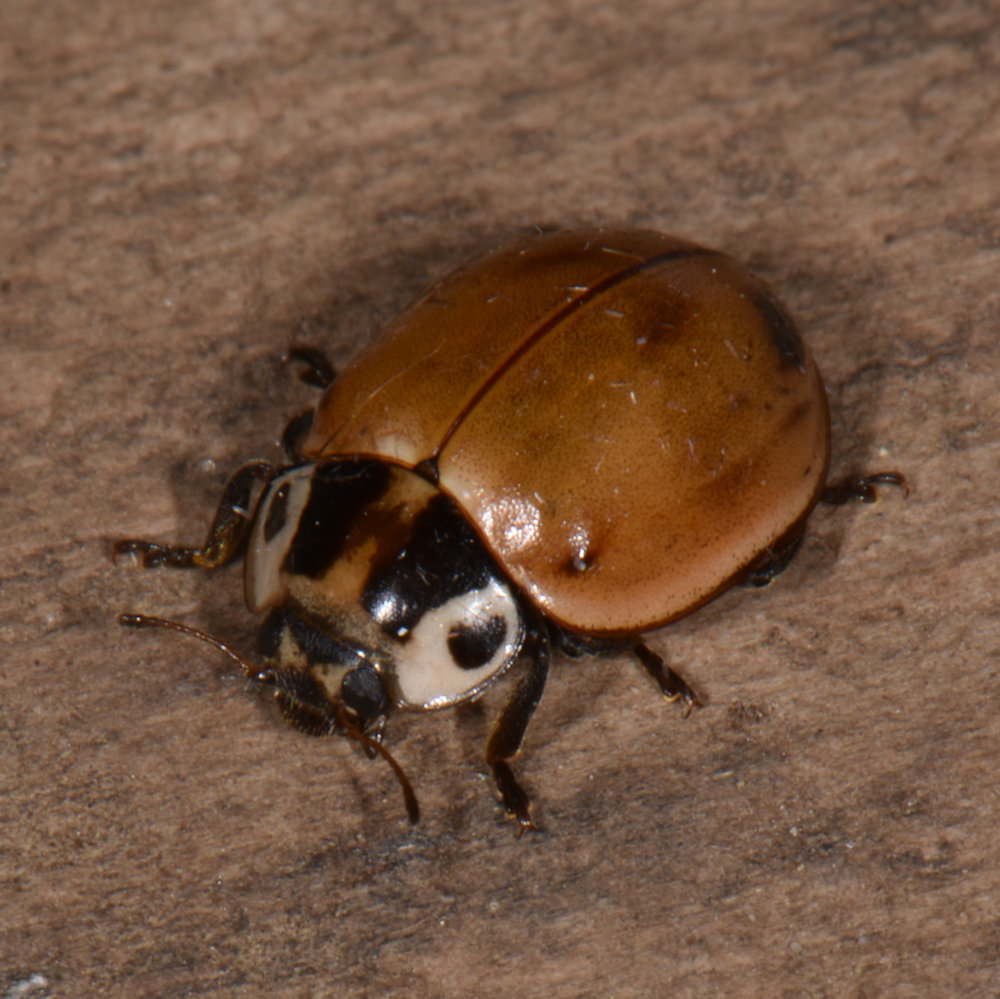
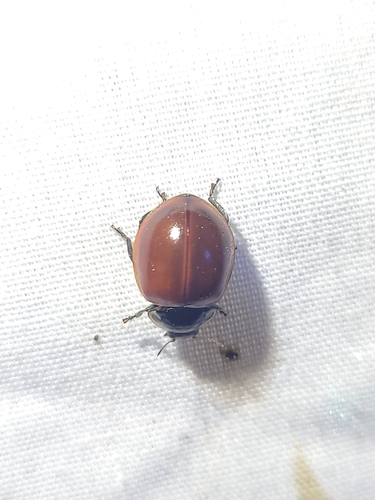
Adult Streaked Lady Beetles are about 6.5 to 8 mm long and have a pale brown-yellow color. Their pronotum is dark brown in the middle with a white side border and a dark brown spot. They occur across North America from Labrador to South Carolina and west to Alberta and Colorado.
Source: Wikipedia
How to recognize it
The beetles are pale brownish-yellow overall. The pronotum shows a dark brown middle area, a white lateral border, and a dark brown median spot.
Source: Wikipedia
Size
Adults measure roughly 6.5 to 8 mm in length.
Source: Wikipedia
Where it lives
They are found throughout North America, from Labrador down to South Carolina and westward to Alberta and Colorado.
Source: Wikipedia
Where it comes from
Their native range includes North America, spanning from eastern Canada to the southeastern United States and west to the Rocky Mountain region.
Source: Wikipedia
Where it is found in the US
Recorded in 34 of 51 states and DC. Most records: Massachusetts, New York, Texas, Pennsylvania, Kentucky, Alaska, Maryland, Arkansas.
Darker = more records. Counts are museum and citizen-science records, not population size.
Source: GBIF
Status: native in North America; native in Canada; native in United States. Source: iNaturalist
Months it is reported in the US
Source: GBIF
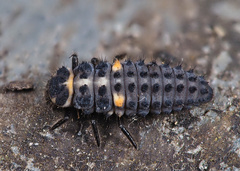
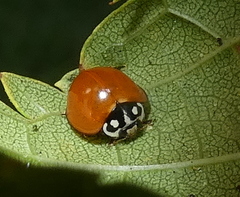
More photos
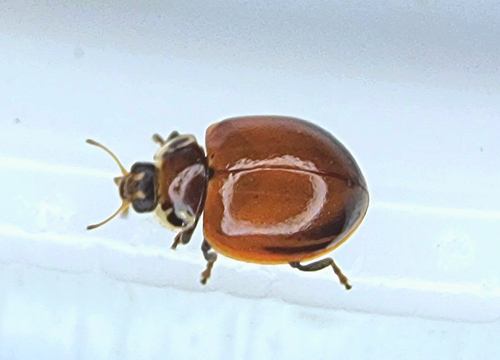
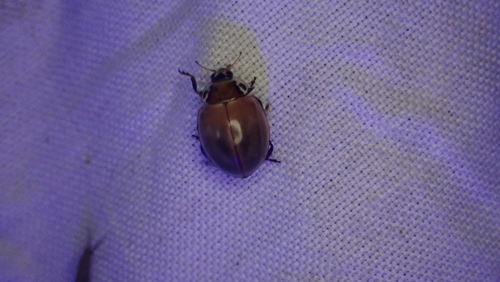
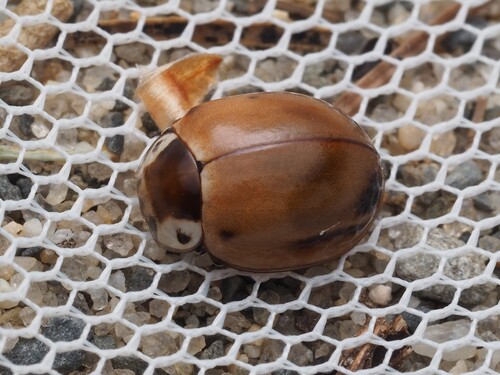
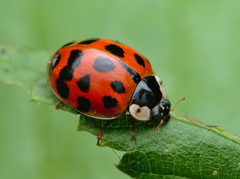
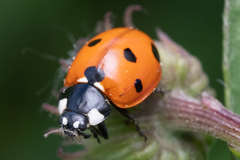
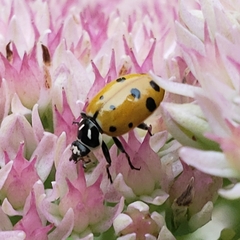
Same family (Coccinellidae)

Sources
- Wikipedia: https://en.wikipedia.org/wiki/Myzia_pullata
Look it up elsewhere: GBIF · iNaturalist · BugGuide · ITIS · Wikipedia
Text written 2026-10-24 from the sources above and checked sentence by sentence against them. Data fetched 2026-10-24.