 Bug FAQ
Squash Lady Beetle
Epilachna borealis · Order: Coleoptera · Family: Coccinellidae
Also called: Squash Beetle
Source: Wikipedia

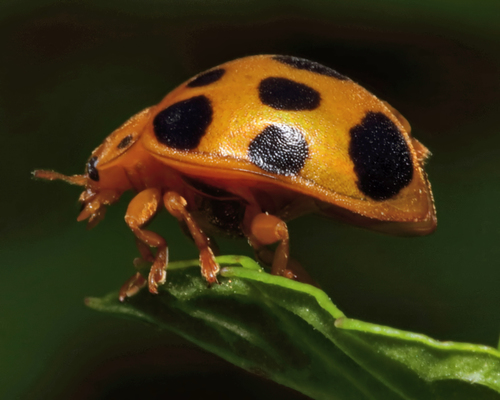
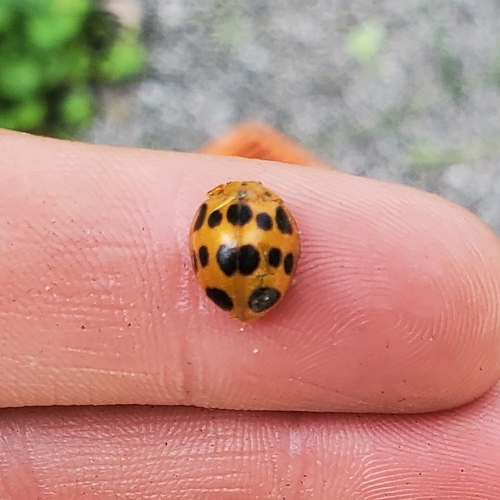
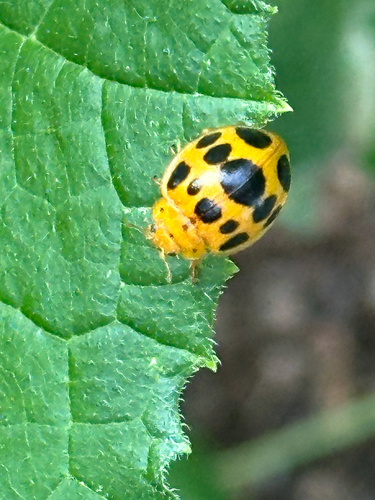
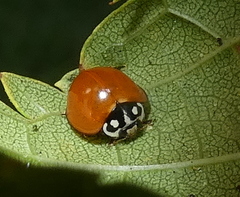
The squash lady beetle is yellow with seven black spots on each wing cover and four spots on the pronotum. Adults and larvae eat the leaf tissue of cucurbit plants, often starting with a semicircular trench. Later in the season they also feed on the rind of pumpkins and squash.
Source: Wikipedia
Where it lives
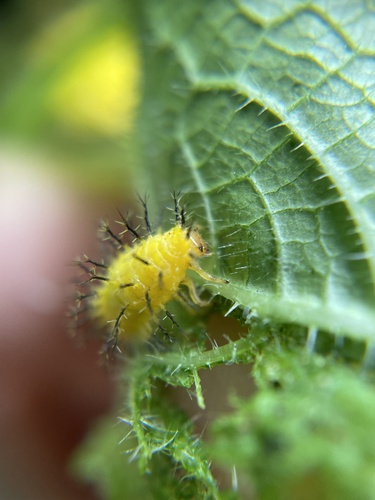
Both adults and larvae feed on leaf tissue between veins, usually beginning by cutting a semicircular trench around the area they will eat.
Source: Wikipedia
What it eats
It feeds on cucurbit plants such as squash, pumpkins and other members of the cucumber family. In the later part of the season adults also chew the rind of pumpkins and squash.
Source: Wikipedia
Life cycle
Females lay small yellow eggs in clusters on the leaves of cucurbit plants.
Source: Wikipedia
Lookalikes
It is often mistaken for other ladybugs or cucumber beetles because of its similar appearance.
Source: Wikipedia
Where it is found in the US
Recorded in 30 of 51 states and DC. Most records: Georgia, North Carolina, Connecticut, Virginia, South Carolina, Kentucky, Tennessee, Alabama.
Darker = more records. Counts are museum and citizen-science records, not population size.
Source: GBIF
Status: native in North America; native in United States. Source: iNaturalist
Months it is reported in the US
Source: GBIF
More photos
Questions people ask
How can I tell this beetle apart from other ladybugs?
Look for a yellow body with seven black spots on each wing cover and four spots on the pronotum.
Source: Wikipedia
What plants does it damage?
It feeds on cucurbit crops like squash, pumpkins and related plants, sometimes chewing the fruit rind later in the season.
Source: Wikipedia
Why do people think it’s a cucumber beetle?
Its yellow color and black spot pattern look similar to cucumber beetles, leading to frequent misidentification.
Source: Wikipedia
Same family (Coccinellidae)

Sources
- Wikipedia: https://en.wikipedia.org/wiki/Epilachna_borealis
Look it up elsewhere: GBIF · iNaturalist · BugGuide · ITIS · Wikipedia
Text written 2026-10-22 from the sources above and checked sentence by sentence against them. Data fetched 2026-10-22.