 Bug FAQ
Spring Harvestman
Rilaena triangularis · Order: Opiliones · Family: Phalangiidae
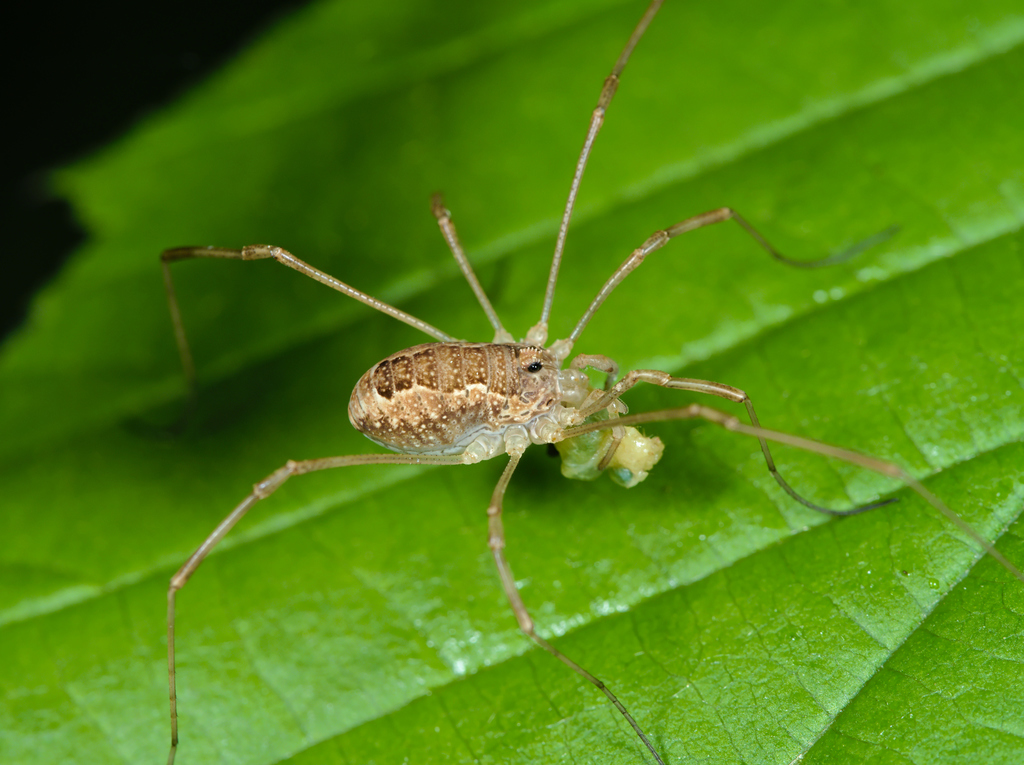
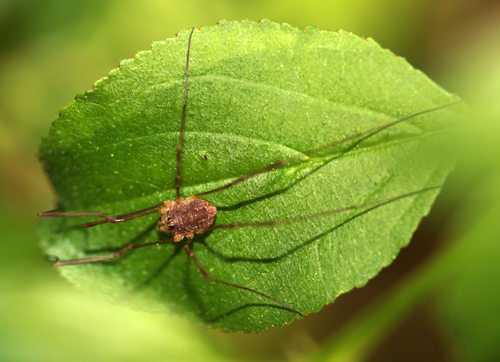
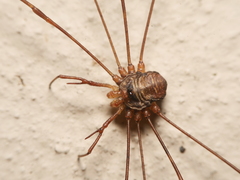
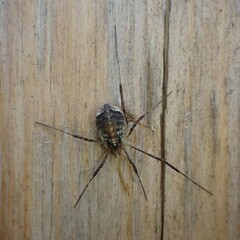
Rilaena triangularis is a harvestman found widely across Europe. It lives in forests, floodplain forests and fens. Its dorsal surface shows a pale-yellow outlined triangular or vase-shaped saddle marking.
Source: Wikipedia
How to recognize it
The species gets its name from a darker triangular or vase-shaped saddle pattern on the back, often outlined in a lighter colour.
Source: Wikipedia
Where it lives
It thrives in forests, floodplain forests and fens.
Source: Wikipedia
Where it comes from
Its natural range covers much of Europe.
Source: Wikipedia
Lookalikes
It has previously been placed in the genus Platybunus (Paraplatybunus).
Source: Wikipedia
Where it is found in the US
Recorded in 13 of 51 states and DC. Most records: Washington, Maine, Massachusetts, Michigan, New Hampshire, Vermont, Minnesota, Montana.
Darker = more records. Counts are museum and citizen-science records, not population size.
Source: GBIF
Status: introduced in North America; introduced in Canada; introduced in United States. Source: iNaturalist
Months it is reported in the US
Source: GBIF
More photos
Questions people ask
Where might I find this species?
Look for it in forests, floodplain forests and fens across Europe.
Source: Wikipedia
How can I tell it apart from similar harvestmen?
The distinctive pale-yellow outlined triangular or vase-shaped saddle on its back is a key identifying mark.
Source: Wikipedia
Same family (Phalangiidae)
Sources
- Wikipedia: https://en.wikipedia.org/wiki/Rilaena_triangularis
Look it up elsewhere: GBIF · iNaturalist · BugGuide · ITIS · Wikipedia
Text written 2026-10-22 from the sources above and checked sentence by sentence against them. Data fetched 2026-10-22.