 Bug FAQ
Fork-palped Harvestman
Dicranopalpus ramosus · Order: Opiliones · Family: Phalangiidae
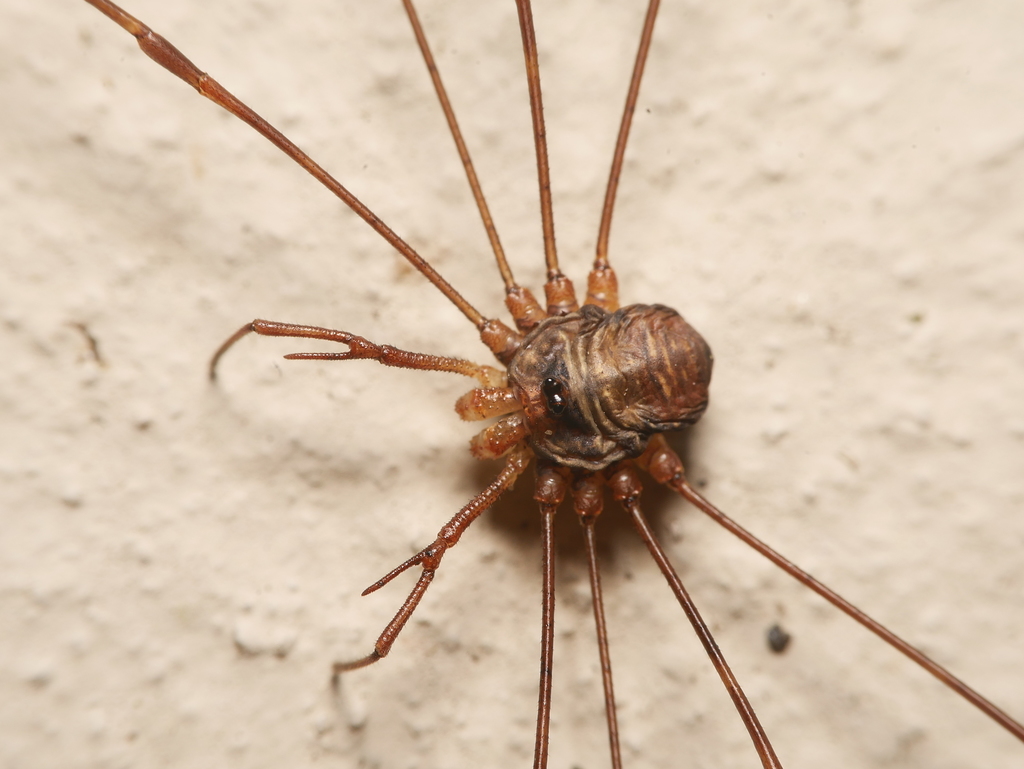
The fork-palped harvestman is a small brownish arachnid with distinctive forked pedipalps and a sideways leg posture. Adults appear from late summer to autumn, often on garden walls or occasionally indoors, and the species originally comes from Morocco.
Source: Wikipedia
How to recognize it
Its body is brown with dark markings and the females are lighter; the forked pedipalps and the habit of holding legs out to the sides make it easy to spot.
Source: Wikipedia
Size
Males grow up to about 4 mm, while females can reach roughly 6 mm in length.
Source: Wikipedia
Where it lives
You’ll find adults from August through November on garden walls, outer building surfaces, and sometimes inside houses.
Source: Wikipedia
When you see it
Adults are present from late summer into late autumn.
Source: Wikipedia
Where it comes from
The species was first recorded in Morocco.
Source: Wikipedia
Lookalikes
A close relative, Dicranopalpus gasteinensis, looks very similar and lives in the Alpine region.
Source: Wikipedia
Where it is found in the US
Recorded in 1 of 51 states and DC. Most records: Oregon.
Darker = more records. Counts are museum and citizen-science records, not population size.
Source: GBIF
Status: introduced in North America; introduced in United States. Source: iNaturalist
More photos

Same family (Phalangiidae)


Sources
- Wikipedia: https://en.wikipedia.org/wiki/Dicranopalpus_ramosus
Look it up elsewhere: GBIF · iNaturalist · BugGuide · Wikipedia
Text written 2026-10-22 from the sources above and checked sentence by sentence against them. Data fetched 2026-10-22.