 Bug FAQ
Saddleback Harvestman
Mitopus morio · Order: Opiliones · Family: Phalangiidae

Saddleback harvestmen are small arachnids about 4 to 8.5 mm long, with a distinctive dark saddle marking on their backs. They live in many habitats across Europe, North Africa, Asia and North America and eat small insects and other tiny arthropods.
Source: Wikipedia
How to recognize it
The body is oval and the male is a bit narrower; a dark irregular saddle shape on the back often has thin white edges and a pinkish stripe down the middle. Legs range from yellow-brown to dark brown and are long and thin. Males have a sharp forward-pointing tooth under the first segment of the chelicera.
Source: Wikipedia
Size
Males are about 4 to 6 mm long, while females range from 4 to 8.5 mm.
Source: Wikipedia
Where it lives
They are very common and can be found in forests, heath, moorland, spruce and beech woods, meadows, gardens and even human settlements, from lowlands up to mountains.
Source: Wikipedia
What it eats
They prey on small insects and other tiny arthropods.
Source: Wikipedia
Life cycle
Eggs hatch at the end of March. Adults appear from mid-May to mid-November, depending on location.
Source: Wikipedia
When you see it
Adults are present from mid-May through mid-November, varying with region.
Source: Wikipedia
Where it comes from
Their distribution includes Europe, North Africa, Asia and parts of North America.
Source: Wikipedia
Lookalikes
Females can be mistaken for the females of Phalangium opilio.
Source: Wikipedia
Where it is found in the US
Recorded in 8 of 51 states and DC. Most records: Alaska, New Hampshire, Vermont, Georgia, Maine, Mississippi, New York, Wyoming.
Darker = more records. Counts are museum and citizen-science records, not population size.
Source: GBIF
Status: native in North America; native in Canada; native in United States. Source: iNaturalist
Months it is reported in the US
Source: GBIF
More photos
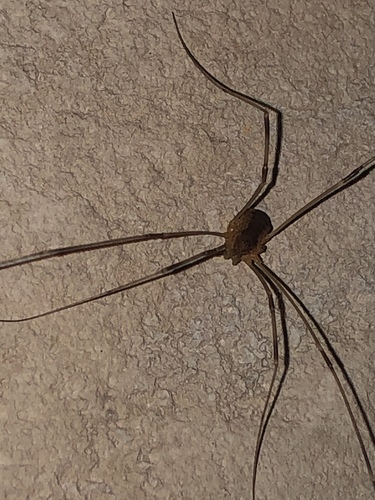
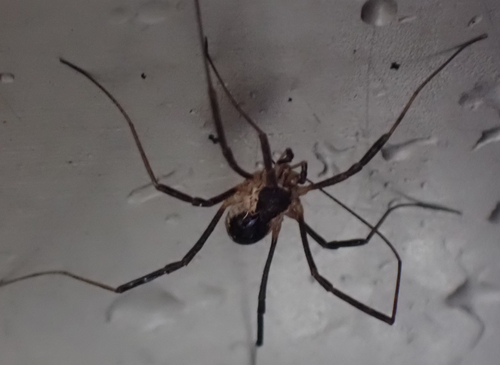
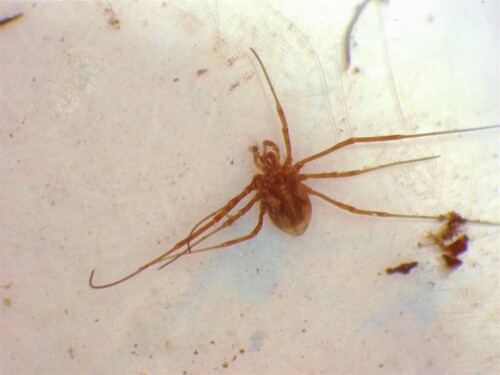
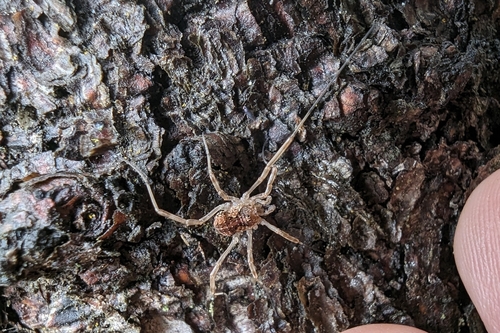
Same family (Phalangiidae)


Sources
- Wikipedia: https://en.wikipedia.org/wiki/Mitopus_morio
Look it up elsewhere: GBIF · iNaturalist · BugGuide · ITIS · Wikipedia
Text written 2026-10-22 from the sources above and checked sentence by sentence against them. Data fetched 2026-10-22.