 Bug FAQ
Paroligolophus agrestis
Paroligolophus agrestis · Order: Opiliones · Family: Phalangiidae
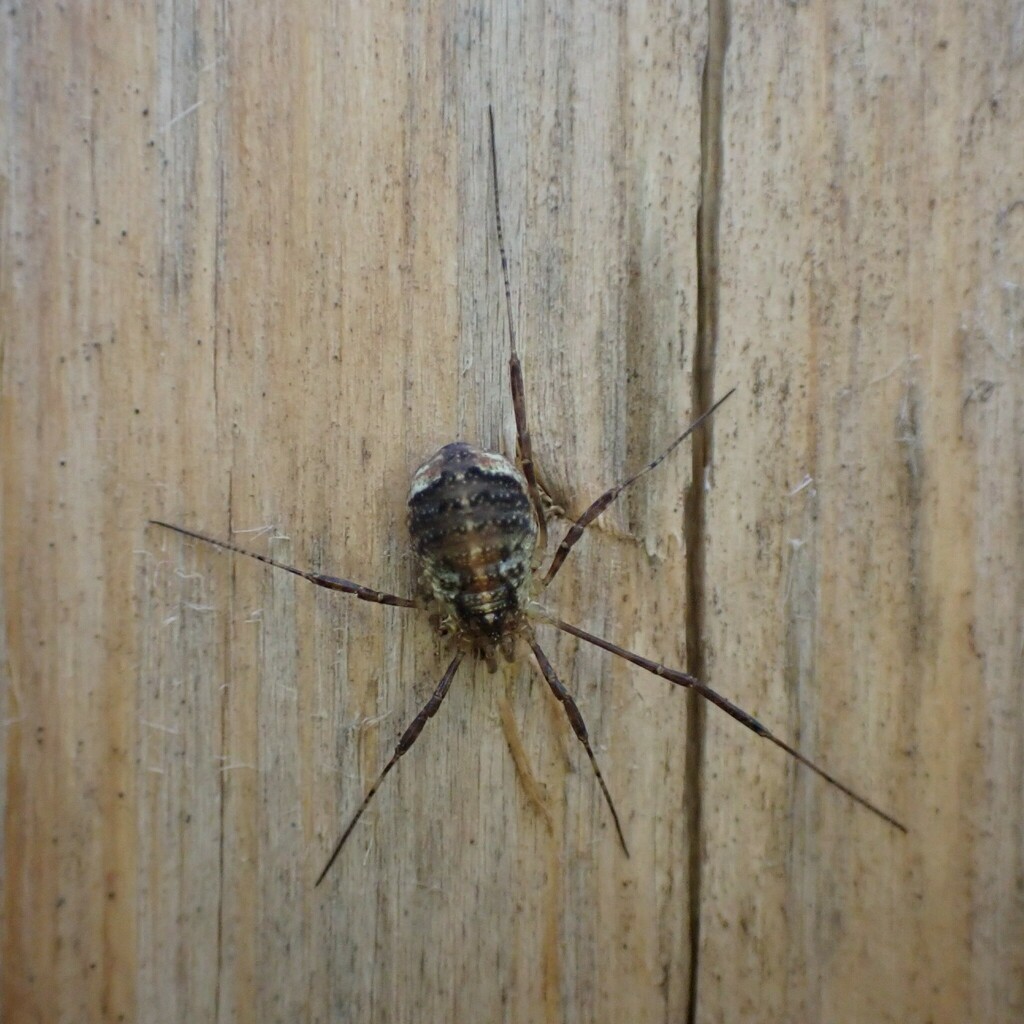
Mature females are about 6 mm long and males about 4 mm. The second leg is the longest, reaching 14 to 20 mm when stretched. The body’s upper surface is brown with grey and red shades and a whitish line down the centre; the red tone helps identification.
Source: Wikipedia
How to recognize it
The dorsal surface is brown with grey and red tones and a central whitish line. The reddish coloration is a useful ID feature.
Source: Wikipedia
Size
Females grow to about 6 mm, males are smaller at around 4 mm. The second pair of legs can extend to 14 to 20 mm.
Source: Wikipedia
Where it lives
Paroligolophus agrestis is a harvestman species.
Source: Wikipedia
Where it comes from
It is native to Europe, including the UK, and has been introduced to the Pacific Northwest and Nova Scotia in North America.
Source: Wikipedia
Where it is found in the US
Recorded in 2 of 51 states and DC. Most records: Washington, Oregon.
Darker = more records. Counts are museum and citizen-science records, not population size.
Source: GBIF
Status: introduced in North America; introduced in Canada; introduced in United States. Source: iNaturalist
Months it is reported in the US
Source: GBIF
More photos
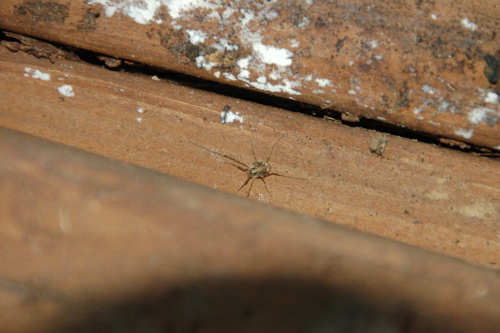
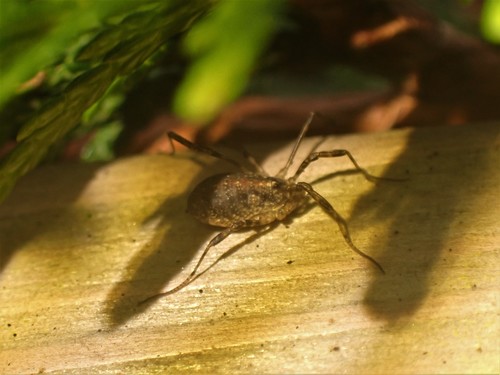
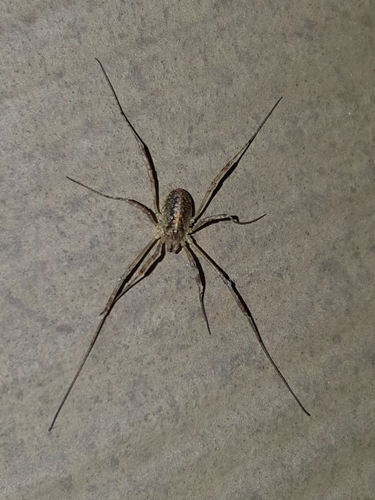
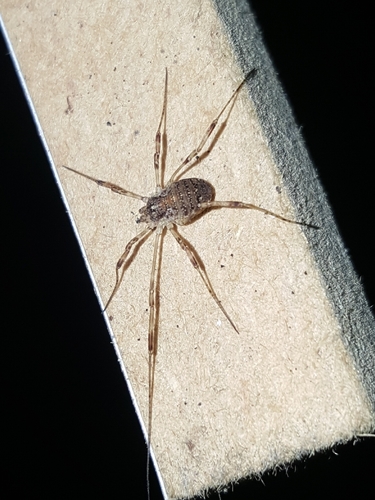
Same family (Phalangiidae)


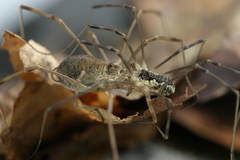

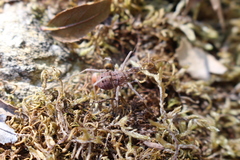
Sources
- Wikipedia: https://en.wikipedia.org/wiki/Paroligolophus_agrestis
Look it up elsewhere: GBIF · iNaturalist · BugGuide · ITIS · Wikipedia
Text written 2026-10-23 from the sources above and checked sentence by sentence against them. Data fetched 2026-10-22.