 Bug FAQ
European Harvestman
Phalangium opilio · Order: Opiliones · Family: Phalangiidae
Also called: Daddy Longleg
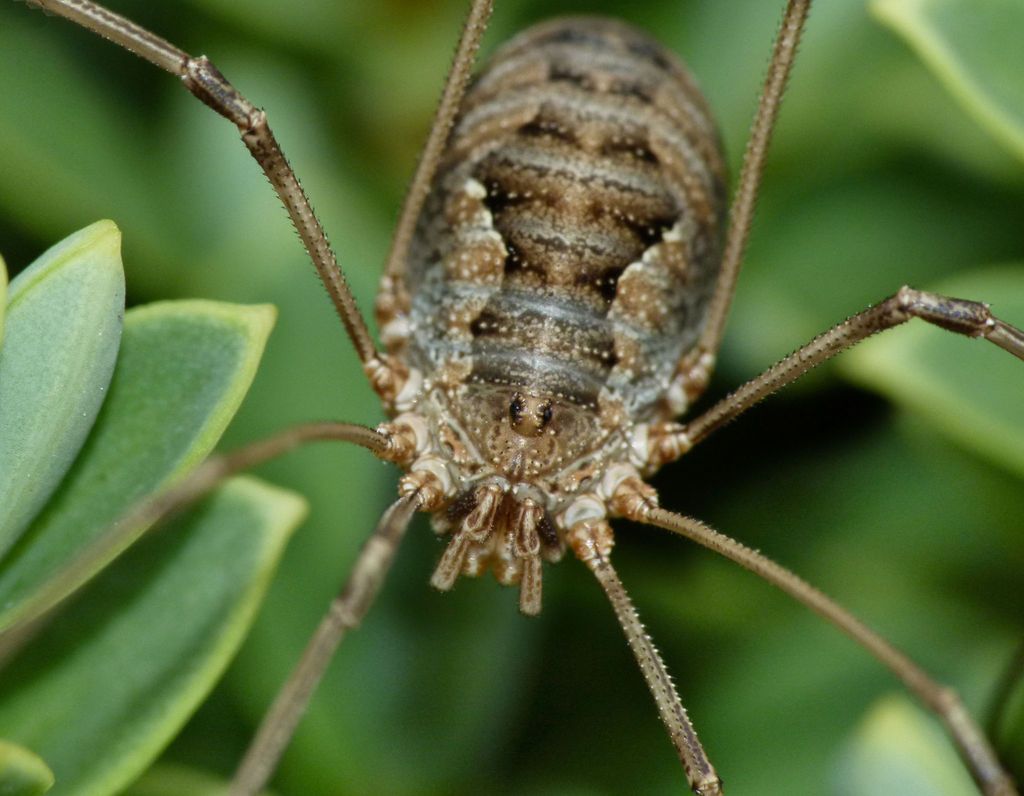
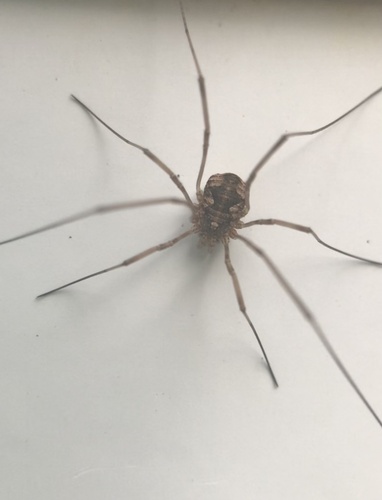
Adult European Harvestmen are 3.5 to 9 mm long and have a light brown-gray coloration with a pale underside. They live in many open and human-made habitats, are widespread across the Holarctic, and feed on soft-bodied insects and mite pests.
Source: Wikipedia
How to recognize it
Both sexes look similar, but males have longer pedipalps and horn-like projections on the second cheliceral segment.
Source: Wikipedia
Size
Adults measure between 3.5 and 9 mm in body length.
Source: Wikipedia
How to get rid of it
Broad-spectrum insecticides are very harmful to them, while products containing Bt toxins tend to be less damaging.
Source: Wikipedia
Where it lives
They are found in meadows, bogs, forests and especially in human-altered areas.
Source: Wikipedia
What it eats
They are generalist predators and scavengers, eating aphids, caterpillars, leafhoppers, beetle larvae, mites and even soybean pest eggs.
Source: Wikipedia
Life cycle
Eggs are laid in moist places and hatch after three to five months; juveniles molt several times and become adults in two to three months.
Source: Wikipedia
When you see it
They are nocturnal, with about 90 % of activity occurring between 6 pm and 6 am.
Source: Wikipedia
Lookalikes
Mitopus morio looks similar, but P. opilio has two pale denticles below the carapace edge and males have forward-pointing cheliceral horns.
Source: Wikipedia
Where it is found in the US
Recorded in 43 of 51 states and DC. Most records: Colorado, Washington, Oregon, California, Massachusetts, New York, Michigan, Minnesota.
Darker = more records. Counts are museum and citizen-science records, not population size.
Source: GBIF
Status: introduced in North America; introduced in United States; introduced in Canada. Source: iNaturalist
Months it is reported in the US
Source: GBIF
More photos
Questions people ask
Can they help control garden pests?
Yes, they eat a variety of soft-bodied insects such as aphids and caterpillars that can harm crops.
Source: Wikipedia
How can I manage them if I don’t want them around?
Avoid using broad-spectrum insecticides, which are highly toxic to them; consider more selective methods if control is needed.
Source: Wikipedia
Same family (Phalangiidae)



Sources
- Wikipedia: https://en.wikipedia.org/wiki/Phalangium_opilio
Look it up elsewhere: GBIF · iNaturalist · BugGuide · ITIS · Wikipedia
Text written 2026-10-22 from the sources above and checked sentence by sentence against them. Data fetched 2026-10-22.