 Bug FAQ
Spotted Tree Borer
Synaphaeta guexi · Order: Coleoptera · Family: Cerambycidae

The spotted tree borer (Synaphaeta guexi) lives along the Pacific coast of North America, from British Columbia to California. Its larvae have been found in a variety of hardwoods such as Pacific willow, white alder, coffeeberry, English walnut and cherry.
Source: Wikipedia
How to recognize it
Synaphaeta guexi is also called the spotted tree borer.
Source: Wikipedia
What it eats
It has been reared from hardwood trees including Pacific willow, white alder, coffeeberry, English walnut and cherry.
Source: Wikipedia
Where it is found in the US
Recorded in 6 of 51 states and DC. Most records: California, Oregon, Utah, Washington, Nevada, New Mexico.
Darker = more records. Counts are museum and citizen-science records, not population size.
Source: GBIF
Status: native in North America; native in Canada. Source: iNaturalist
Months it is reported in the US
Source: GBIF
More photos
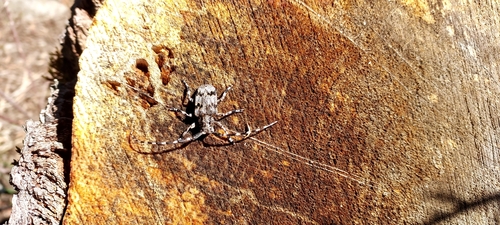
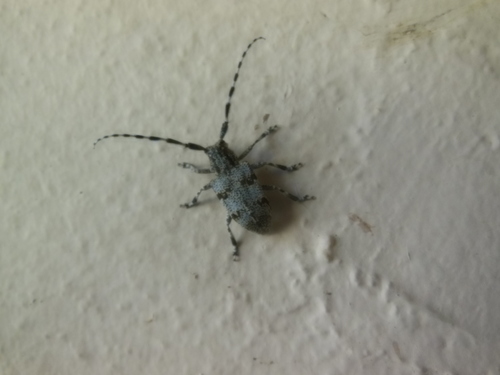
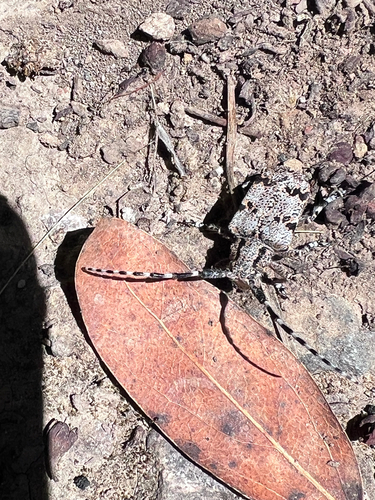
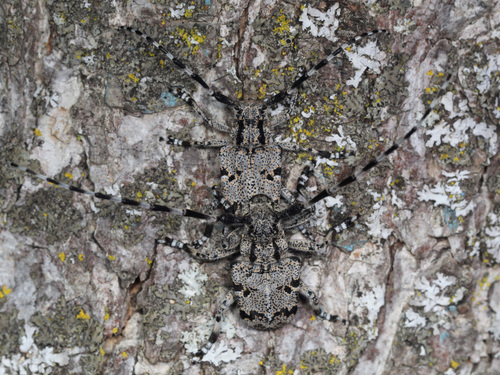
Questions people ask
What trees does the spotted tree borer affect?
It feeds on hardwoods such as Pacific willow, white alder, coffeeberry, English walnut and cherry.
Source: Wikipedia
Where is the spotted tree borer found?
It lives from British Columbia down through the Pacific states to California.
Source: Wikipedia
Same family (Cerambycidae)
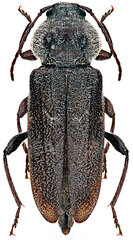 House LonghornHylotrupes bajulusCan damage your home
 Asian Longhorned BeetleAnoplophora glabripennisDamages trees, gardens or crops
 Red Milkweed BeetleTetraopes tetrophthalmus
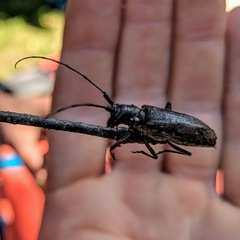 White-spotted SawyerMonochamus scutellatusCan damage your home
 Red Pine Longhorn BeetleStictoleptura rubra
 Spotted Longhorn BeetleRutpela maculata
Sources
- Wikipedia: https://en.wikipedia.org/wiki/Synaphaeta
Look it up elsewhere: GBIF · iNaturalist · BugGuide · ITIS · Wikipedia
Text written 2026-10-25 from the sources above and checked sentence by sentence against them. Data fetched 2026-10-25.