 Bug FAQ
Spiraea Aphid
Aphis spiraecola · Order: Hemiptera · Family: Aphididae
Also called: Green Citrus Aphid, Green citris aphid, Spirea aphid
Source: Wikipedia

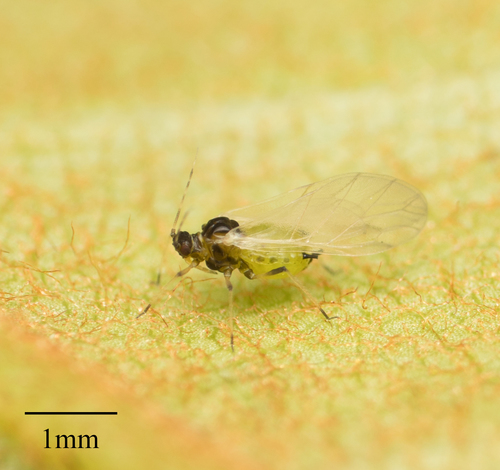
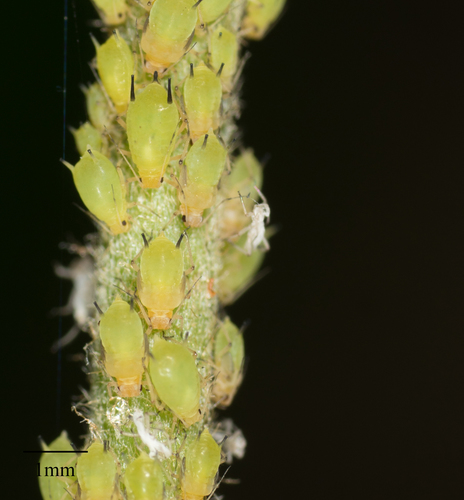
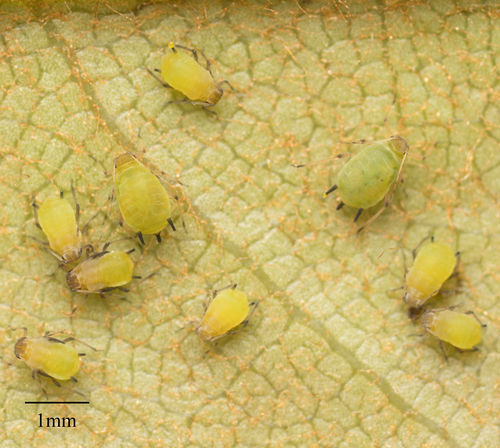
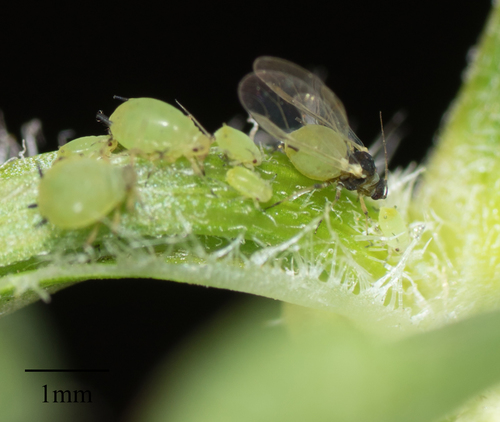
Spiraea aphid is bright green to apple-green and has a dark brown head and thorax with a yellow-green abdomen marked by dusky side patches. The aphid is found worldwide in temperate and tropical regions, originally from the Far East, and it can be a serious pest of orchards and ornamental plants.
Source: Wikipedia
How to recognize it
Unlike the apple aphid, they lack marginal tubercles on the lower abdomen.
Source: Wikipedia
Size
Adults range from bright green-yellow to apple green in color.
Source: Wikipedia
Is it a pest in the house?
It is a pest of citrus, apples and ornamental plants. It can transmit many plant viruses that threaten crop yields.
Source: Wikipedia
How to get rid of it
Insecticides are recommended for controlling infestations on citrus crops. Imidacloprid is the preferred product for orchard treatment.
Source: Wikipedia
Where it lives
They occur in temperate and tropical areas worldwide except in cold regions.
Source: Wikipedia
What it eats
Important crop hosts include citrus, cacao, papaya, apples, pears and stone fruits.
Source: Wikipedia
Life cycle
The aphid reproduces parthenogenetically for most of its range but undergoes sexual reproduction in part of its life cycle.
Source: Wikipedia
When you see it
Winter hosts are Spiraea and citrus species, while many other plants serve as secondary hosts. It prefers woody, shrubby plants, with citrus and apples being the most affected crops.
Source: Wikipedia
Lookalikes
It is often mistaken for the apple aphid (A. pomi), but the latter has marginal tubercles on the lower abdomen which this species lacks.
Source: Wikipedia
Where it is found in the US
Recorded in 36 of 51 states and DC. Most records: California, Washington, Michigan, Illinois, New York, North Carolina, Utah, Florida.
Darker = more records. Counts are museum and citizen-science records, not population size.
Source: GBIF
Status: introduced in North America; introduced in United States. Source: iNaturalist
Months it is reported in the US
Source: GBIF
More photos
Questions people ask
What plants does this aphid damage?
It feeds on and damages young buds, flowers, shoots and leaves of many crops, especially citrus, apples, pears, stone fruits and other ornamental plants.
Source: Wikipedia
How is Spiraea aphid controlled in orchards?
Insecticide applications, particularly imidacloprid, are used to manage infestations on citrus and other affected crops.
Source: Wikipedia
Can this aphid spread disease?
Yes, it can transmit a range of plant viruses that can threaten entire crop yields.
Source: Wikipedia
Same family (Aphididae)
 Melon AphidAphis gossypiiDamages trees, gardens or crops
 Oleander AphidAphis neriiDamages trees, gardens or crops
 Witch-hazel Cone Gall AphidHormaphis hamamelidis
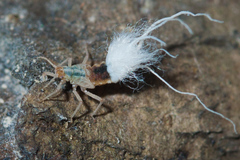 Beech Blight AphidGrylloprociphilus imbricatorDamages trees, gardens or crops
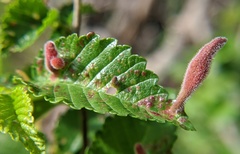 Rice Root AphidTetraneura nigriabdominalis
 Bean AphidAphis fabaeDamages trees, gardens or crops
Sources
- Wikipedia: https://en.wikipedia.org/wiki/Aphis_spiraecola
Look it up elsewhere: GBIF · iNaturalist · BugGuide · Wikipedia
Text written 2026-10-24 from the sources above and checked sentence by sentence against them. Data fetched 2026-10-24.