 Bug FAQ
Spined Soldier Bug
Podisus maculiventris · Order: Hemiptera · Family: Pentatomidae
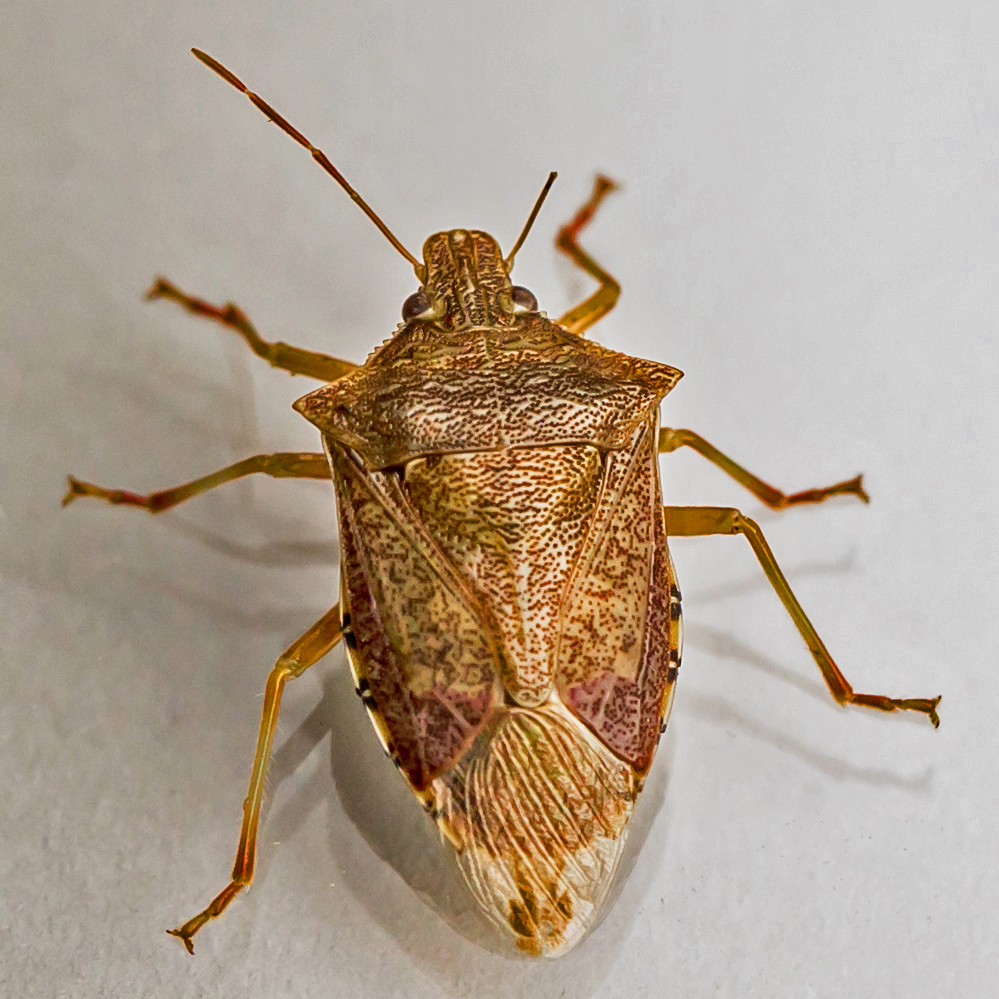
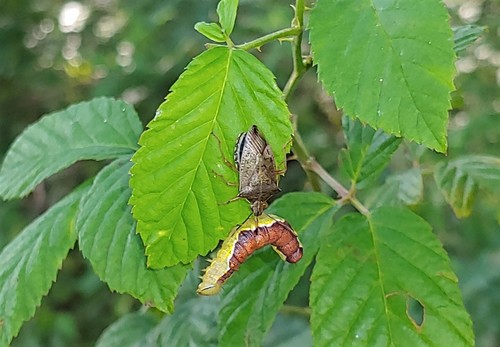
Adult spined soldier bugs are about 11 mm long and are pale brown to tan with a black streak on the wing membrane and two forward-pointing spines on the shoulders. They are common across North America from Mexico and the Bahamas up into Canada, living in woodlands, near streams and many farm fields. These bugs are generalist predators that eat over 90 insect species, including many crop pests, and will sip plant juices only when prey are scarce.
Source: Wikipedia
How to recognize it
They have a pale brown to tan body, a black streak on the wing membrane, and spined humeri that help tell them apart.
Source: Wikipedia
Size
Adults measure roughly 11 mm, with females a bit larger than males.
Source: Wikipedia
How to get rid of it
They are more vulnerable than many of their prey to organophosphorous and carbamate insecticides, but less affected by pyrethroids. Insecticides such as diafenthiuron and diflubenzuron are not highly toxic by contact but can be harmful if ingested in water.
Source: Wikipedia
Where it lives
They live in many habitats such as woodlands, stream edges, and agricultural areas.
Source: Wikipedia
What it eats
They are generalist predators that feed on a wide variety of insects, covering over 90 species in eight orders. When insects are scarce they may drink plant juices, which does not appear to harm the plants.
Source: Wikipedia
Life cycle
Development from egg to adult takes about 27 to 38 days, depending on temperature and daylight. In warm places like Florida they are active year-round, while farther north they have two to three generations per year and overwinter as adults from October to April.
Source: Wikipedia
When you see it
In warm regions they stay active all year, but in cooler climates they become active in spring.
Source: Wikipedia
Lookalikes
They look similar to Alcaeorrhynchus grandis but are smaller and have two forward-pointing spines, whereas A. grandis is over 15 mm and has a single outward-facing spine.
Source: Wikipedia
Where it is found in the US
Recorded in 45 of 51 states and DC. Most records: Illinois, Texas, North Carolina, Kentucky, Mississippi, Ohio, Pennsylvania, Indiana.
Darker = more records. Counts are museum and citizen-science records, not population size.
Source: GBIF
Status: native in North America; native in Canada. Source: iNaturalist
Months it is reported in the US
Source: GBIF
More photos
Questions people ask
How can I tell a spined soldier bug apart from similar bugs?
Look for a pale brown to tan body with a black streak on the wing membrane and two forward-pointing spines on the shoulders; similar bugs are larger and have only one outward spine.
Source: Wikipedia
What does the spined soldier bug eat?
It preys on many insects, over 90 species across eight orders, and will sip plant juices only when prey are scarce.
Source: Wikipedia
When are spined soldier bugs active?
In warm areas they are active year-round; in cooler regions they become active in spring and may have two to three generations per year.
Source: Wikipedia
Are these bugs harmful to my garden crops?
They actually help by eating many crop-pest insects rather than damaging plants themselves.
Source: Wikipedia
Same family (Pentatomidae)
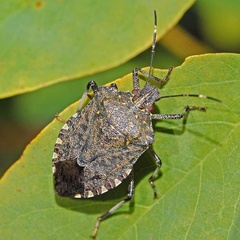 Brown Marmorated Stink BugHalyomorpha halysDamages trees, gardens or crops
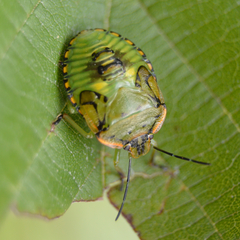 Green Stink BugChinavia hilarisDamages trees, gardens or crops
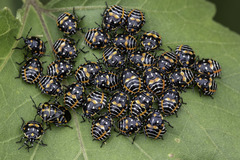 Harlequin BugMurgantia histrionicaDamages trees, gardens or crops
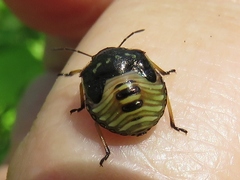 Brown Stink BugEuschistus servusDamages trees, gardens or crops
 Green Shield BugPalomena prasina
 European Striped Shield BugGraphosoma italicum
Sources
- Wikipedia: https://en.wikipedia.org/wiki/Spined_soldier_bug
Look it up elsewhere: GBIF · iNaturalist · BugGuide · ITIS · Wikipedia
Text written 2026-10-23 from the sources above and checked sentence by sentence against them. Data fetched 2026-10-23.