 Bug FAQ
Speckle-necked Longhorn Beetle
Susuacanga stigmatica · Order: Coleoptera · Family: Cerambycidae
Source: Wikipedia
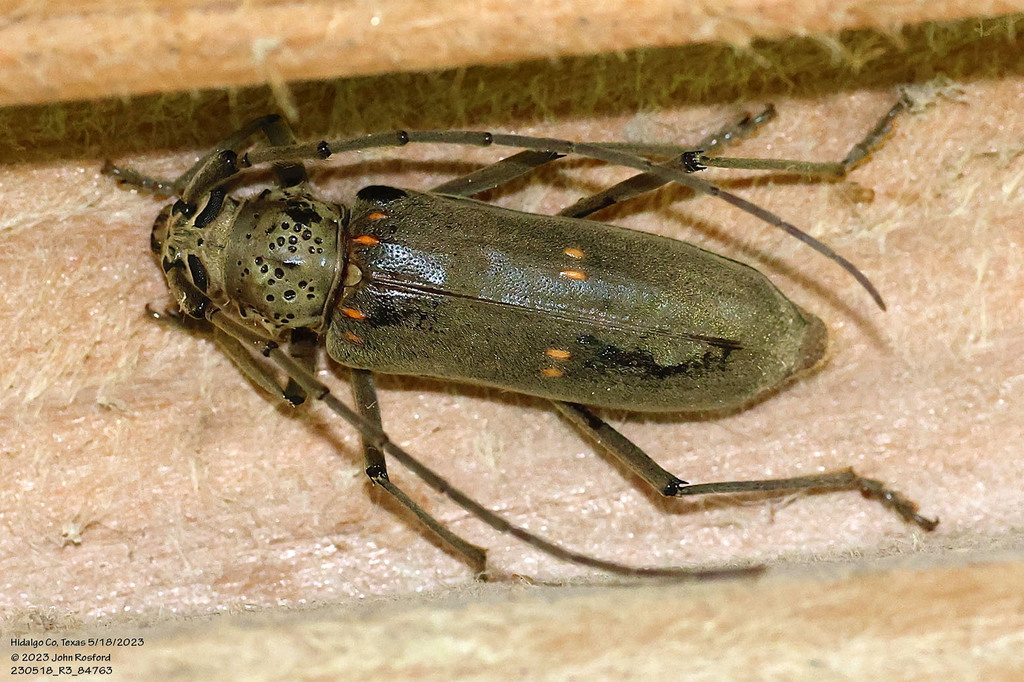
The speckle-necked longhorn beetle is a large beetle with antennae longer than its body and a head set high between the antenna bases. It is found under loose bark of willow and acacia in southern Texas and on Caribbean-coast resorts in the Yucatán where Celtis trees grow. Its larvae are wood-boring round-headed borers that chew the inner bark and wood of stressed trees.
Source: Wikipedia
How to recognize it
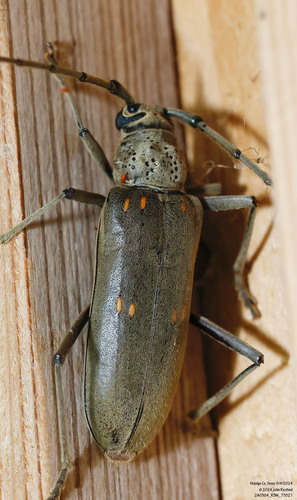
The head sits high between the antenna bases and the pronotum has two black triangular spots. Each elytron is wider than the pronotum, smooth, and bears four elongated spots in two pairs.
Source: Wikipedia
Where it lives
In southern Texas it has been found beneath loose bark of willow and acacia trees. It has also been photographed at a beachside resort on Mexico’s Yucatán Caribbean coast where Celtis species occur.
Source: Wikipedia
What it eats
The larvae are round-headed wood borers, a typical feeding habit of longhorn beetle larvae.
Source: Wikipedia
Life cycle
The larval stage is a round-headed wood borer, chewing inside wood.
Source: Wikipedia
Where it comes from
It occurs in southern Texas, USA. It is also present in the Yucatán Peninsula of Mexico.
Source: Wikipedia
Where it is found in the US
Recorded in 1 of 51 states and DC. Most records: Texas.
Darker = more records. Counts are museum and citizen-science records, not population size.
Source: GBIF
Months it is reported in the US
Source: GBIF
More photos
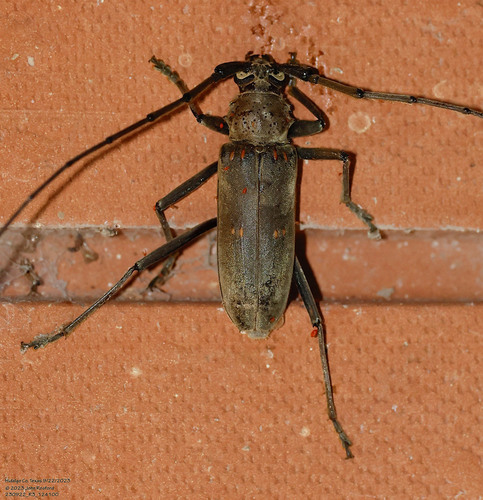
Questions people ask
What damage can the speckle-necked longhorn beetle cause?
Its larvae chew the inner bark and wood of stressed trees, potentially harming the tree’s health.
Source: Wikipedia
Where might I find this beetle?
Look under loose bark of willow or acacia in southern Texas, or near Celtis trees on Caribbean-coast resorts in the Yucatán.
Source: Wikipedia
Same family (Cerambycidae)
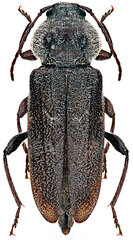 House LonghornHylotrupes bajulusCan damage your home
 Asian Longhorned BeetleAnoplophora glabripennisDamages trees, gardens or crops
 Red Milkweed BeetleTetraopes tetrophthalmus
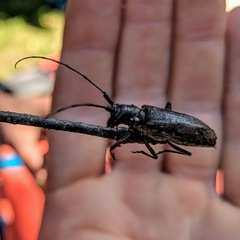 White-spotted SawyerMonochamus scutellatusCan damage your home
 Red Pine Longhorn BeetleStictoleptura rubra
 Spotted Longhorn BeetleRutpela maculata
Sources
- Wikipedia: https://en.wikipedia.org/wiki/Susuacanga_stigmatica
Look it up elsewhere: GBIF · iNaturalist · BugGuide · Wikipedia
Text written 2026-10-27 from the sources above and checked sentence by sentence against them. Data fetched 2026-10-27.