 Bug FAQ
Southern Yellowjacket
Vespula squamosa · Order: Hymenoptera · Family: Vespidae
Also called: Yellow jacket wasp
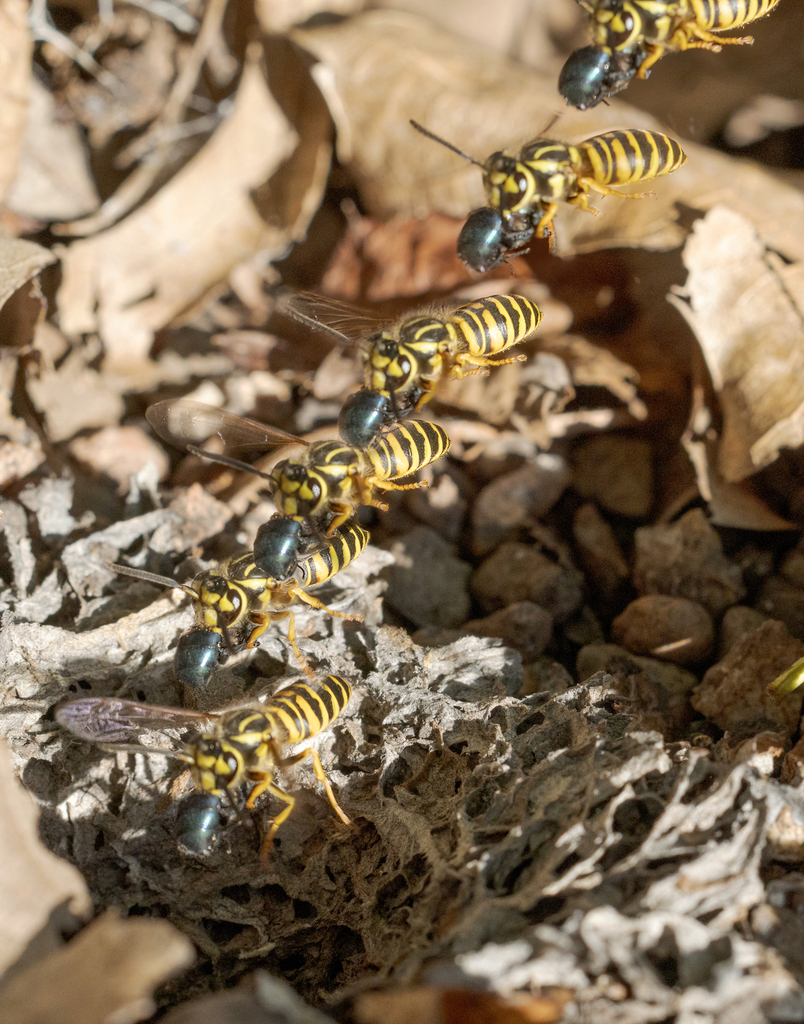
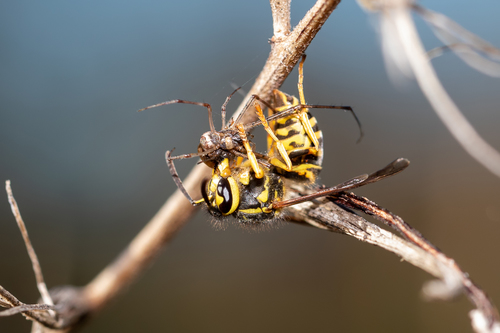
Southern yellowjackets are about half an inch long and have black-yellow stripes; the queen looks more orange-brown. They build nests in yards, parks, roadsides or sometimes pine forests, and the colonies grow from late May to winter. These wasps hunt live insects and scavenge dead animals, and they are considered a pest because their stings hurt.
How to recognize it
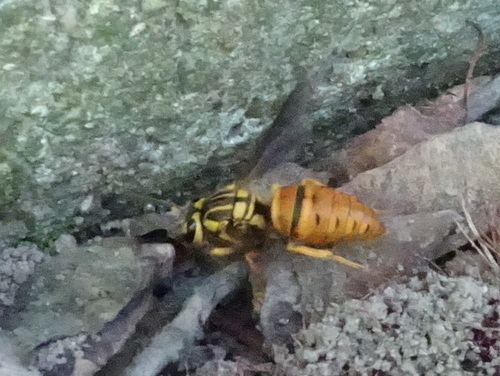
Workers and males show black and yellow striped bodies, while the queen has fewer black marks and more orange-brown coloring.
Source: Wikipedia
Size
Adults are roughly 0.5 inches (1.3 cm) long; workers’ forewings are 9.5 to 11 mm and males about 12.5 mm.
Source: Wikipedia
Is it a pest in the house?
Because they sting painfully, they are considered a pest and nests near homes can be irritating.
Does it bite or sting?
Their stings are painful, they can sting repeatedly, and unlike honeybees they do not die after stinging.
How to get rid of it
If a nest is large or hard to reach, hire a professional; otherwise treat at night when activity is low.
Source: UF/IFAS
Where it lives
Nests are often found in human-made areas like yards, parks and road edges, but some colonies occur in pine forests.
Source: Wikipedia
What it eats
They feed on live insects and on the flesh of dead animals; they do not make honey.
Source: Wikipedia
Life cycle
Workers construct small cells 4 to 5 mm wide, while queens build larger queen cells about 7 mm wide.
Source: Wikipedia
When you see it
Colonies usually start in late May or early June and reach their largest size between October and December.
Source: Wikipedia
Where it comes from
They are native to eastern North America, ranging from the eastern United States down to Central America.
Source: Wikipedia
Lookalikes
Workers and males look like other yellowjackets, but the queen’s orange-brown color sets her apart. Both V. squamosa and V. sulphurea have two stripes on the scutum, which helps separate them from other species.
Source: Wikipedia
Where it is found in the US
Recorded in 33 of 51 states and DC. Most records: Texas, Florida, Pennsylvania, North Carolina, Maryland, Virginia, Georgia, Alabama.
Darker = more records. Counts are museum and citizen-science records, not population size.
Source: GBIF
Status: native in North America; native in Canada; native in United States. Source: iNaturalist
Months it is reported in the US
Source: GBIF
More photos
Questions people ask
How can I safely remove a southern yellowjacket nest?
For big or hard-to-reach nests, call a pest-control professional; small nests can be treated at night when the insects are less active.
Source: UF/IFAS
Do southern yellowjackets sting?
Yes, they can sting repeatedly and the sting is painful.
Where do southern yellowjackets build their nests?
They often nest in yards, parks, roadsides, and sometimes in pine forests.
Source: Wikipedia
What do southern yellowjackets eat?
They hunt live insects and scavenge dead animals; they do not produce honey.
Source: Wikipedia
Same family (Vespidae)


Sources
- Wikipedia: https://en.wikipedia.org/wiki/Vespula_squamosa
- UF/IFAS: https://edis.ifas.ufl.edu/publication/IN238
Look it up elsewhere: GBIF · iNaturalist · BugGuide · Wikipedia
Text written 2026-10-23 from the sources above and checked sentence by sentence against them. Data fetched 2026-10-23.