 Bug FAQ
Smiling Mason Wasp
Ancistrocerus campestris · Order: Hymenoptera · Family: Vespidae
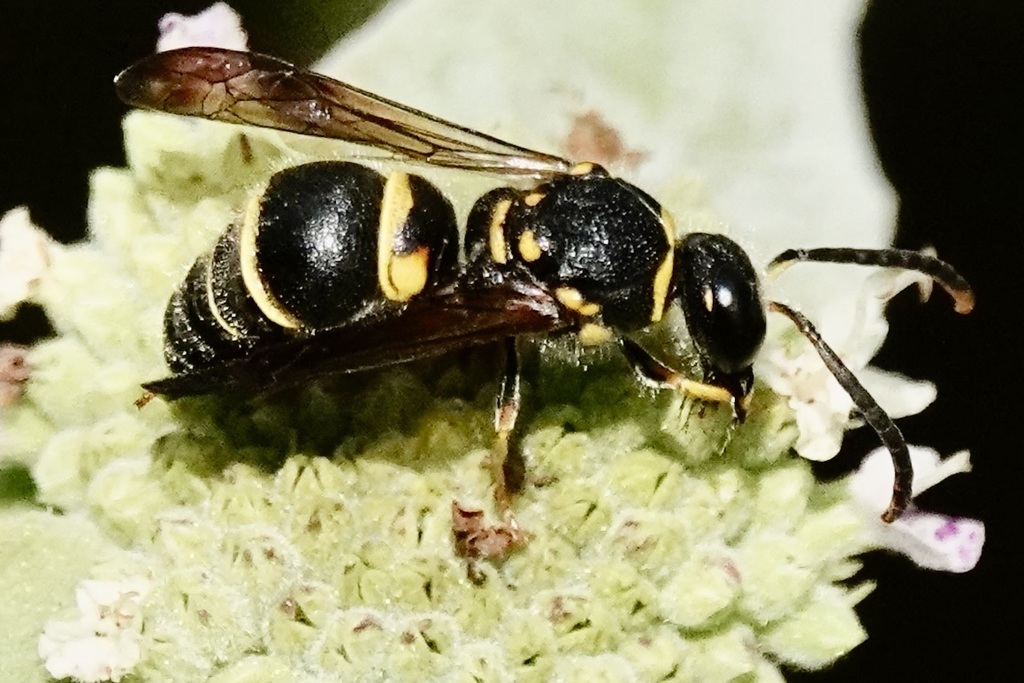
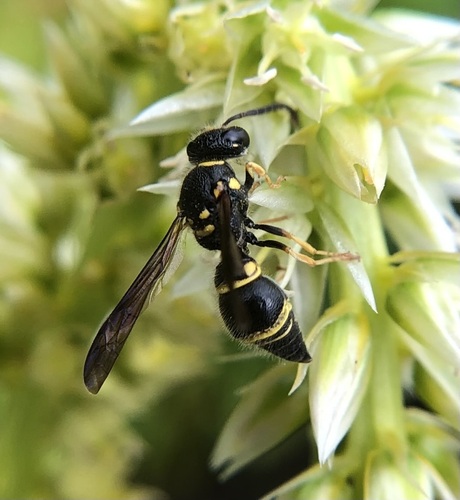
Adult Ancistrocerus campestris are about a centimeter long. They can be recognized by a smile-like pattern on the back of their thorax. These wasps hunt caterpillars of the Amphisbatidae and Gelechiidae families.
Source: Wikipedia
How to recognize it
A distinctive smiley-face marking appears on the rear of the thorax.
Source: Wikipedia
Size
Adults grow up to about 10 mm in length.
Source: Wikipedia
What it eats
It preys on caterpillars belonging to the Amphisbatidae and Gelechiidae families.
Source: Wikipedia
Where it is found in the US
Recorded in 36 of 51 states and DC. Most records: Virginia, Maryland, New York, Illinois, Ohio, North Carolina, Georgia, Pennsylvania.
Darker = more records. Counts are museum and citizen-science records, not population size.
Source: GBIF
Status: native in North America; native in Canada. Source: iNaturalist
Months it is reported in the US
Source: GBIF
More photos
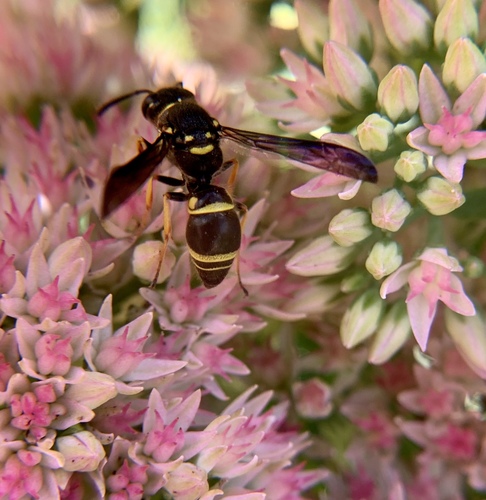
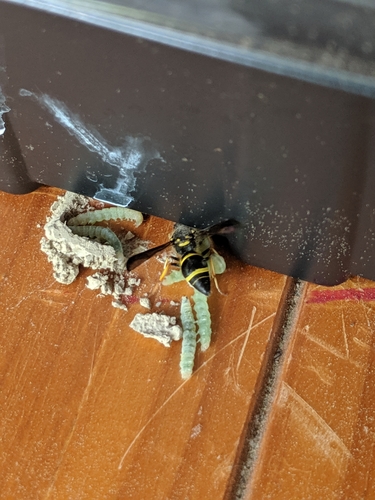
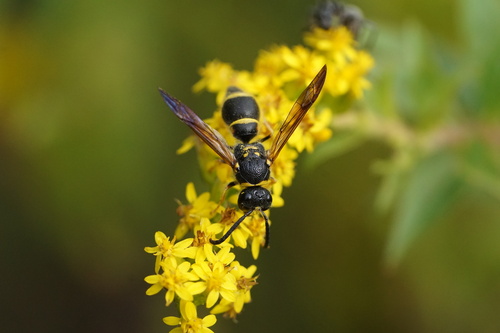
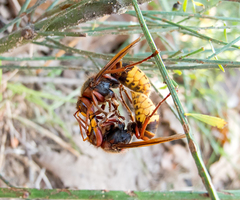
Same family (Vespidae)


Sources
- Wikipedia: https://en.wikipedia.org/wiki/Ancistrocerus_campestris
Look it up elsewhere: GBIF · iNaturalist · BugGuide · Wikipedia
Text written 2026-10-23 from the sources above and checked sentence by sentence against them. Data fetched 2026-10-22.