 Bug FAQ
Small yellow cockroach
Cariblatta lutea · Order: Blattodea · Family: Ectobiidae
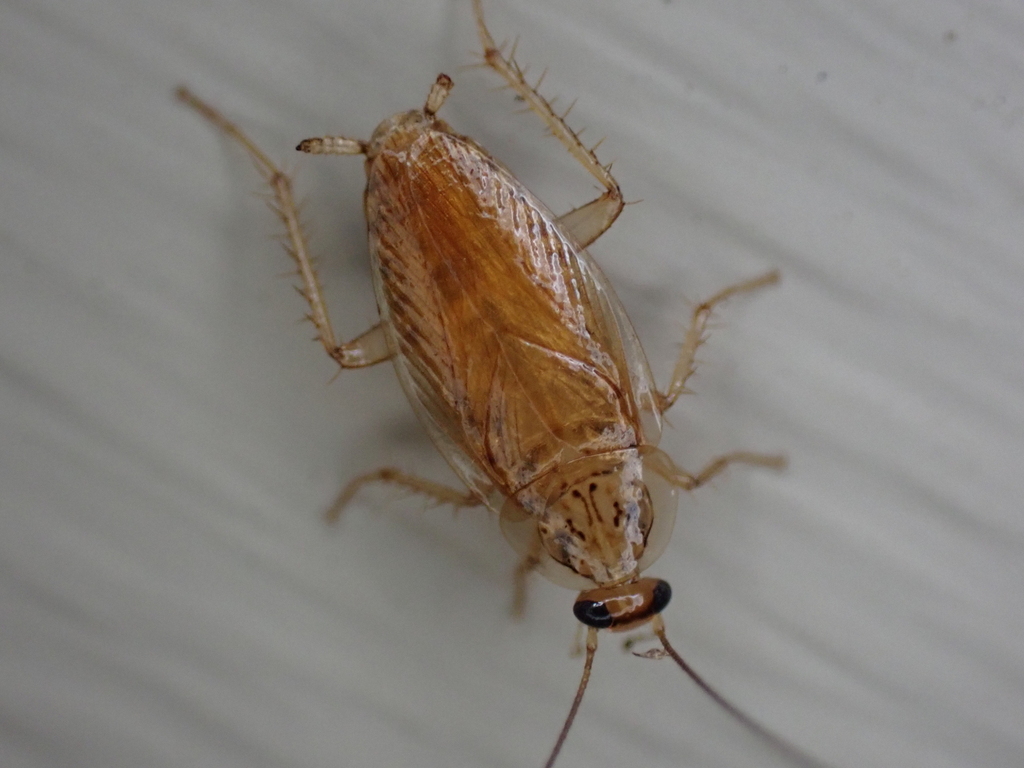
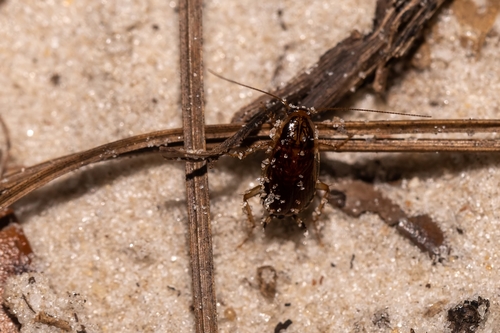
Adult small yellow cockroaches are about 7 to 9 mm long, with females a bit larger than males. They are pale brownish-yellow with a brown head, a band between the eyes, dark spots on the face and pronotum, and partly transparent sides. They live in leaf litter, grass, pine needles and disturbed areas of the southeastern United States, sometimes near houses.
Source: Wikipedia
Size
Adults measure about 7 mm long, while first-instar hatchlings are under 2 mm. Females range from 7.0 to 9.5 mm and males from 5.8 to 8.1 mm.
Source: Wikipedia
Is it a pest in the house?
In Florida it is commonly found near houses as well as in disturbed areas.
Source: Wikipedia
Where it lives
Also occurs in various plant communities, gopher burrows, disturbed sites and near houses in Florida.
Source: Wikipedia
What it eats
Its egg case (ootheca) can serve as a host for the ensign wasp Hyptia floridana.
Source: Wikipedia
Life cycle
The species includes two subspecies: the small yellow cockroach (C. lutea lutea) and the least yellow cockroach (C. lutea minima).
Source: Wikipedia
Where it comes from
It is also recorded from Cuba.
Source: Wikipedia
Lookalikes
C. lutea minima is generally smaller and has shorter tegmina than C. lutea lutea.
Source: Wikipedia
Where it is found in the US
Recorded in 12 of 51 states and DC. Most records: Florida, Georgia, Alabama, North Carolina, South Carolina, Mississippi, Louisiana, Tennessee.
Darker = more records. Counts are museum and citizen-science records, not population size.
Source: GBIF
Status: introduced in Canada; native in North America; native in United States. Source: iNaturalist
Months it is reported in the US
Source: GBIF
More photos
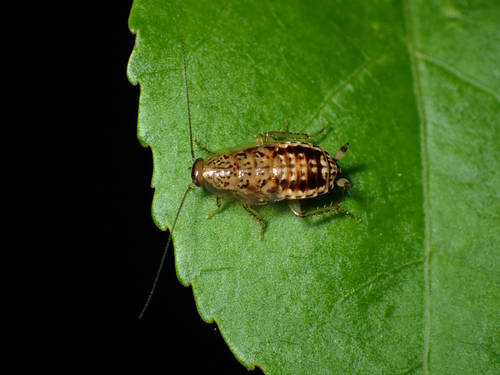
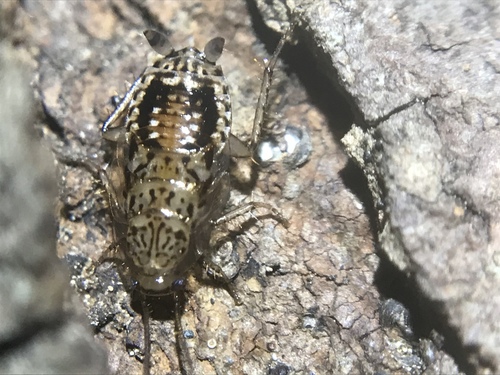
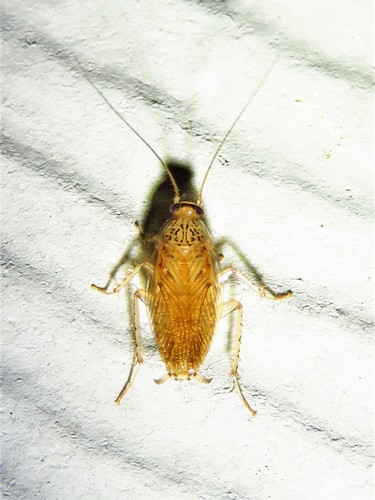
Questions people ask
What do small yellow cockroaches look like?
They are pale brownish-yellow with a brown head, a band between the eyes, dark spots on the face and pronotum, and partly transparent sides.
Source: Wikipedia
How big are they?
Adults are about 7 mm long, females up to 9.5 mm and males up to 8.1 mm; hatchlings are under 2 mm.
Source: Wikipedia
Where are they found?
They live in leaf litter, grass and pine-needle litter in southeastern US forests, as well as in disturbed areas and near houses.
Source: Wikipedia
Same family (Ectobiidae)
 German CockroachBlattella germanicaCan spread germs or disease
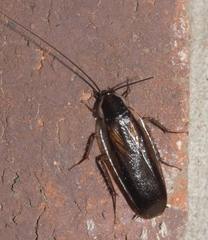 Pennsylvania Wood CockroachParcoblatta pennsylvanicaNuisance, not dangerous
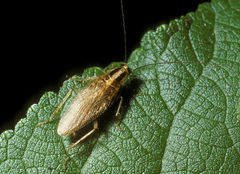 Asian CockroachBlattella asahinaiNuisance, not dangerous
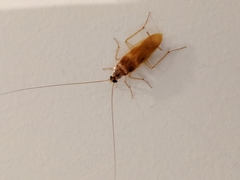 Brown-banded CockroachSupella longipalpaCan spread germs or disease
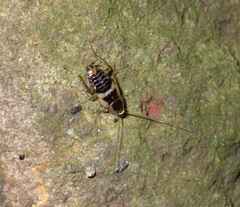 Variable CockroachPlanuncus tingitanus
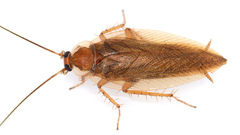 Amber Wood CockroachEctobius vittiventrisHarmless
Sources
- Wikipedia: https://en.wikipedia.org/wiki/Cariblatta_lutea
Look it up elsewhere: GBIF · iNaturalist · BugGuide · ITIS · Wikipedia
Text written 2026-10-23 from the sources above and checked sentence by sentence against them. Data fetched 2026-10-23.