 Bug FAQ
Small Transverse Ladybird Beetle
Coccinella transversalis · Order: Coleoptera · Family: Coccinellidae
Also called: Transverse Ladybird Beetle, Transverse lady beetle
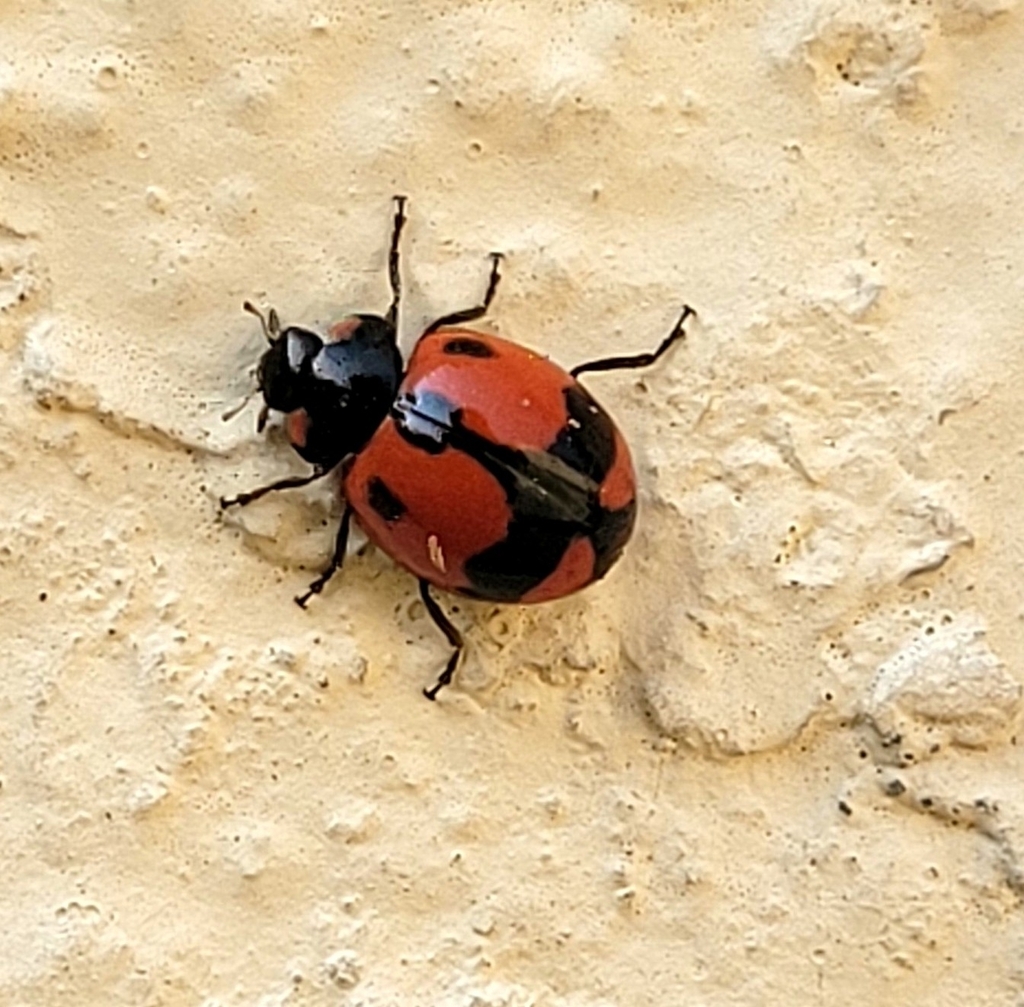
It is a tiny beetle about 4-7 mm long with a black head and red or orange wing covers marked by a black stripe and side spots. It lives across India, Southeast Asia, Malesia and Australia and feeds on many aphids and other crop-damaging insects.
Source: Wikipedia
How to recognize it
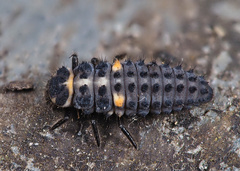
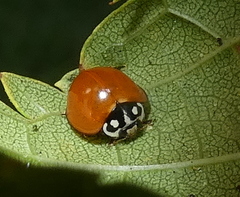
The beetle has a black head, bright red or orange elytra with a central black band and two three-lobed black markings on the sides.
Source: Wikipedia
Size
Adults measure 3.8 to 6.7 mm long and 3.3 to 5.45 mm wide.
Source: Wikipedia
What it eats
It preys on many plant-eating insects, especially a wide variety of aphids, leafhoppers, scale insects, and some moth larvae.
Source: Wikipedia
Where it comes from
Its native range spans India, southern and southeastern Asia, Malesia and Australia.
Source: Wikipedia
Lookalikes
Do not confuse it with the European/North American Coccinella transversoguttata, which is also called a transverse ladybird.
Source: Wikipedia
Where it is found in the US
Recorded in 1 of 51 states and DC. Most records: Ohio.
Darker = more records. Counts are museum and citizen-science records, not population size.
Source: GBIF
Questions people ask
Are they a pest for my garden?
They are actually beneficial, feeding on many aphids and other insects that damage crops.
Source: Wikipedia
How can I tell it apart from similar beetles?
Look for the black head, red or orange wing covers with a central black stripe and two side markings; other species like C. transversoguttata have different patterns.
Source: Wikipedia
Same family (Coccinellidae)

Sources
- Wikipedia: https://en.wikipedia.org/wiki/Coccinella_transversalis
Look it up elsewhere: GBIF · iNaturalist · BugGuide · Wikipedia
Text written 2026-10-22 from the sources above and checked sentence by sentence against them. Data fetched 2026-10-22.