 Bug FAQ
Silver-spotted Ghost Moth
Sthenopis argenteomaculatus · Order: Lepidoptera · Family: Hepialidae
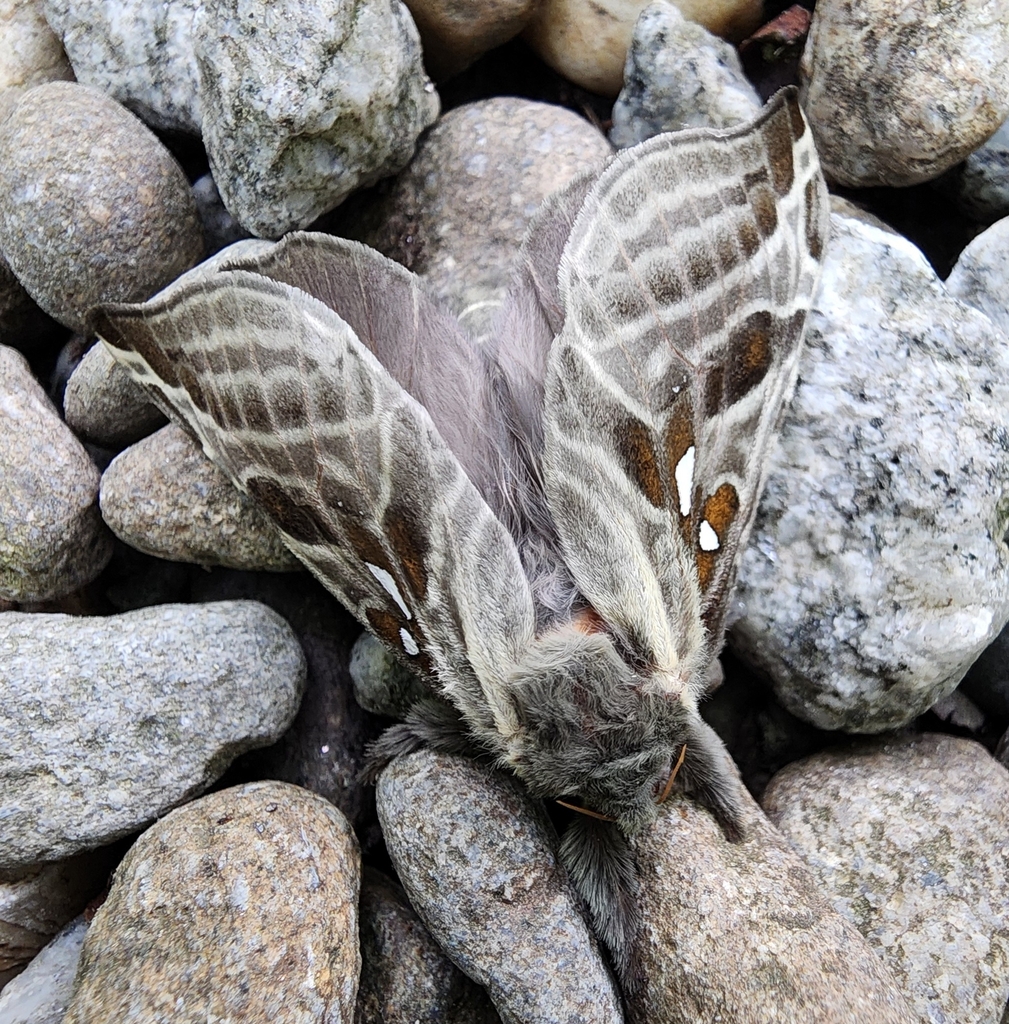
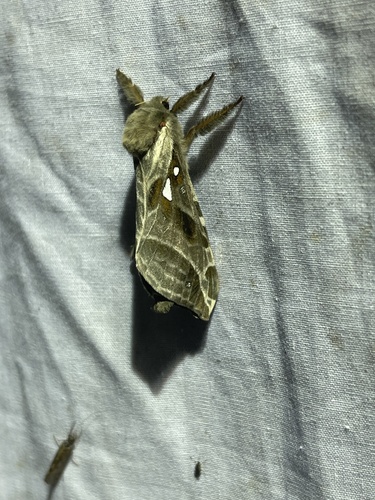
The silver-spotted ghost moth has a wingspan of roughly 65 to 100 mm and its forewings are gray-to-tan with irregular dark bands. Its larvae bore into the roots of alders, birches and willows that grow in shallow water, and the species needs two years to complete its life cycle. Adults fly from June through August and are found from Nova Scotia down to North Carolina and west to Minnesota.
Source: Wikipedia
How to recognize it
Forewings are gray to tan and show irregular dark bands.
Source: Wikipedia
Size
Wingspan ranges from about 65 mm to 100 mm.
Source: Wikipedia
Where it lives
Larvae bore into roots of host plants that are partially submerged in water.
Source: Wikipedia
What it eats
Food plants include alder, birch and willow.
Source: Wikipedia
Life cycle
The species needs two years to complete its life cycle.
Source: Wikipedia
When you see it
Adults are on the wing from June through August.
Source: Wikipedia
Where it is found in the US
Recorded in 18 of 51 states and DC. Most records: Michigan, Massachusetts, Minnesota, Connecticut, Maine, New York, Pennsylvania, Maryland.
Darker = more records. Counts are museum and citizen-science records, not population size.
Source: GBIF
Status: native in North America; native in Canada. Source: iNaturalist
Months it is reported in the US
Source: GBIF
More photos
Questions people ask
When can I see adult silver-spotted ghost moths?
Adults are active from June to August.
Source: Wikipedia
What trees do the larvae feed on?
The larvae feed on alders, birches and willows whose roots are in shallow water.
Source: Wikipedia
How long does it take for this moth to develop?
It takes two years to complete its life cycle.
Source: Wikipedia
Same family (Hepialidae)


Sources
- Wikipedia: https://en.wikipedia.org/wiki/Sthenopis_argenteomaculatus
Look it up elsewhere: GBIF · iNaturalist · BugGuide · Wikipedia
Text written 2026-10-27 from the sources above and checked sentence by sentence against them. Data fetched 2026-10-27.