 Bug FAQ
Orange Swift
Triodia sylvina · Order: Lepidoptera · Family: Hepialidae
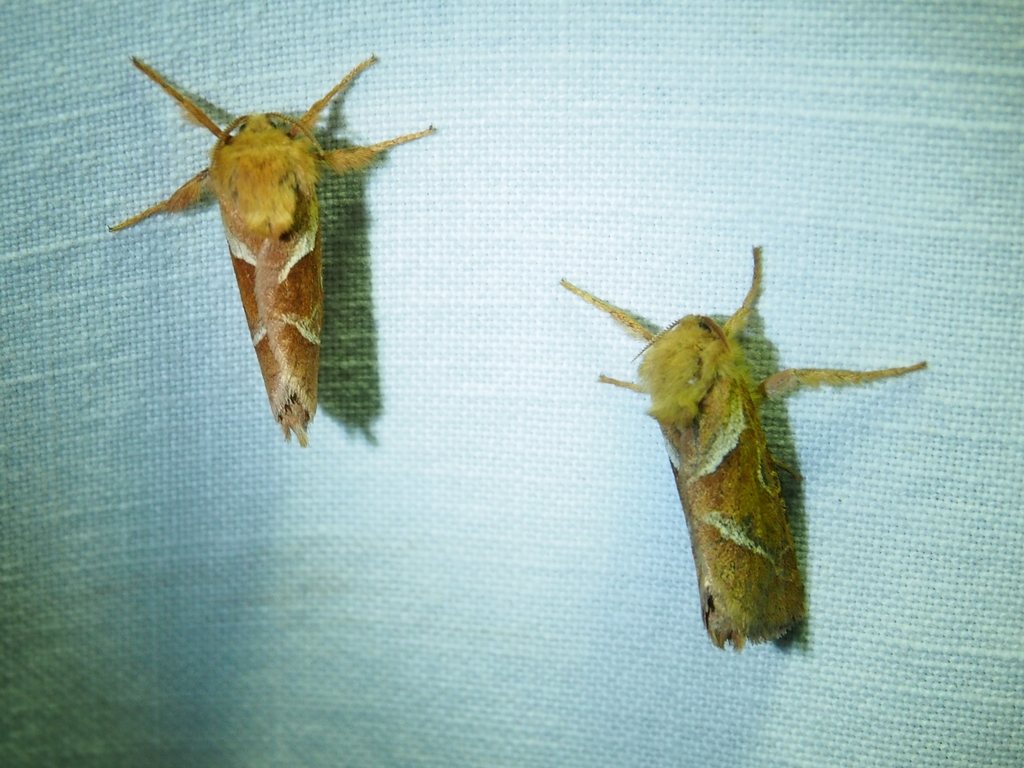
The orange swift has a wingspan of about 32 to 48 mm and flies at night from June to September.
Source: Wikipedia
How to recognize it
Males have rich orange forewings with two white bars that make a V shape. The hindwings are dark brown. Females are generally larger and less brightly coloured than males.
Source: Wikipedia
Size
The wingspan ranges from 32 to 48 mm.
Source: Wikipedia
What it eats
It lacks a proboscis and therefore does not feed on flowers.
Source: Wikipedia
Life cycle
Larvae spin silken cocoons near the soil surface, and the pupae are elongated with hooked bristles on the abdomen. Adults emerge from the cocoon before the imago stage.
Source: Wikipedia
When you see it
Adults are active at night from June through September.
Source: Wikipedia
Same family (Hepialidae)


Sources
- Wikipedia: https://en.wikipedia.org/wiki/Orange_swift
Look it up elsewhere: GBIF · iNaturalist · BugGuide · Wikipedia
Text written 2026-10-22 from the sources above and checked sentence by sentence against them. Data fetched 2026-10-22.