 Bug FAQ
Silver-sided Sector Spider
Zygiella x-notata · Order: Araneae · Family: Araneidae
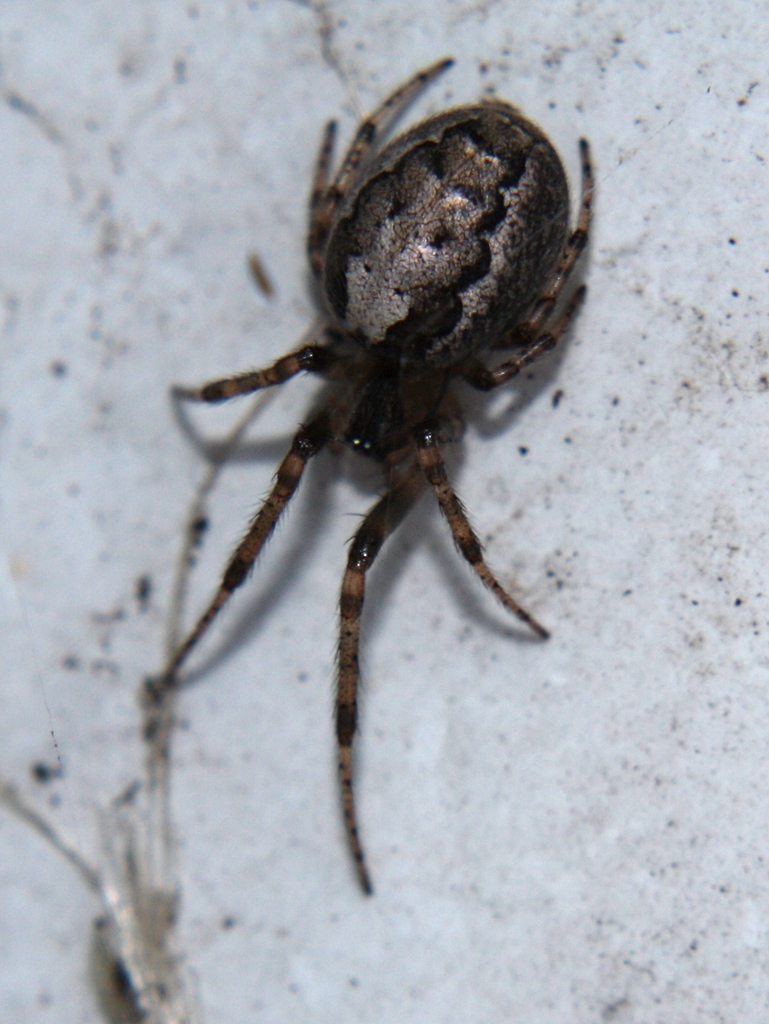
The silver-sided sector spider is an orb-weaver that lives near human habitations and builds a distinctive web with a missing sector. Females are 5-11 mm long, have a leaf-shaped mark on the abdomen and grey-banded legs, and they produce egg sacs in late autumn.
Source: Wikipedia
How to recognize it
Females have a leaf-like spot on the rear of the abdomen and grey-banded legs with dark wave patterns on the back.
Source: Wikipedia
Size
Adult females measure 5-11 mm in body length; males are up to about 7 mm, and the female carapace is about 1.5 mm wide.
Source: Wikipedia
Is it a pest in the house?
They build their orb-webs near human settlements and live there as adults.
Source: Wikipedia
Does it bite or sting?
They bite and wrap prey in silk while capturing it.
Source: Wikipedia
Where it lives
They are common around humans, often found on boats, docks, and urban shrubs or bushes.
Source: Wikipedia
What it eats
They catch flying insects, mainly small flies, in their webs.
Source: Wikipedia
Life cycle
Females lay egg sacs in late autumn; the young hatch in late spring and mature after several molts.
Source: Wikipedia
When you see it
In moderate climates adults appear from July to October, sometimes later; in warm areas they can be active year-round.
Source: Wikipedia
Where it comes from
The species is native to Europe, especially Britain and western-central parts of the continent.
Source: Wikipedia
Lookalikes
Their webs have a missing sector, giving them the common name “missing sector orb weaver,” and they belong to the Zygiella genus of orb-weavers.
Source: Wikipedia
Where it is found in the US
Recorded in 9 of 51 states and DC. Most records: California, Washington, Oregon, Massachusetts, Alaska, Wyoming, Illinois, Virginia.
Darker = more records. Counts are museum and citizen-science records, not population size.
Source: GBIF
Status: introduced in North America; introduced in Canada; introduced in United States. Source: iNaturalist
Months it is reported in the US
Source: GBIF
More photos

Questions people ask
Where are they usually found?
They live near human structures like boats, docks, and garden shrubs, especially in Europe.
Source: Wikipedia
Same family (Araneidae)


Sources
- Wikipedia: https://en.wikipedia.org/wiki/Zygiella_x-notata
Look it up elsewhere: GBIF · iNaturalist · BugGuide · ITIS · Wikipedia
Text written 2026-10-22 from the sources above and checked sentence by sentence against them. Data fetched 2026-10-22.