 Bug FAQ
Senecio blue stem borer
Patagoniodes farinaria · Order: Lepidoptera · Family: Pyralidae
Source: Wikipedia
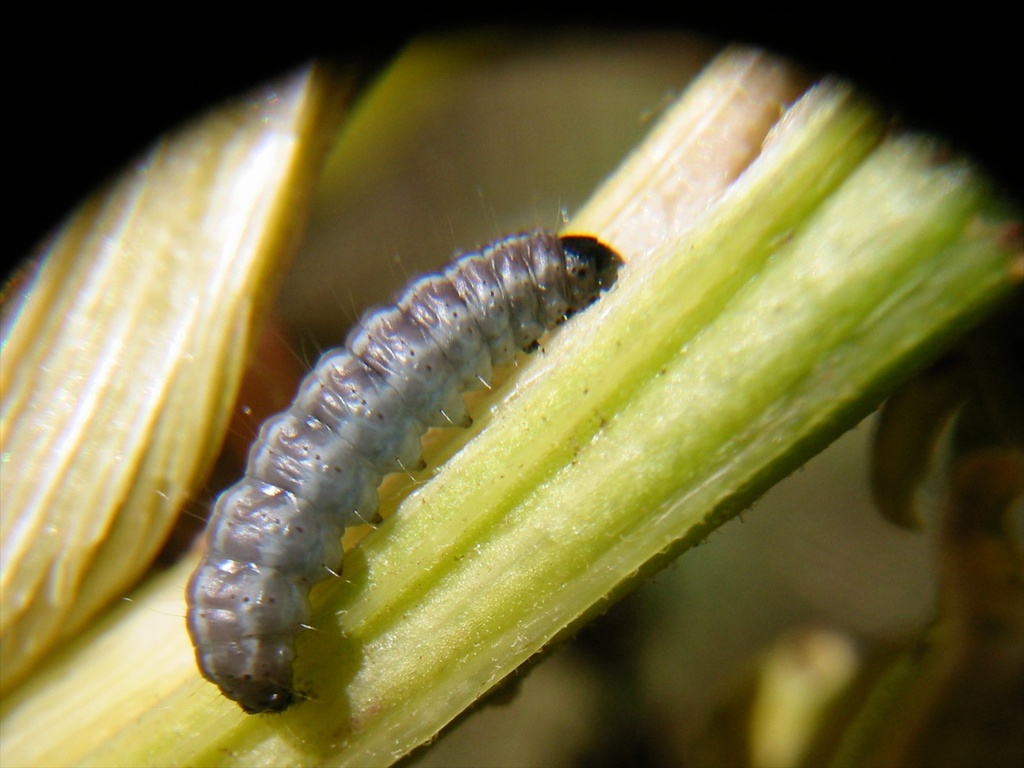
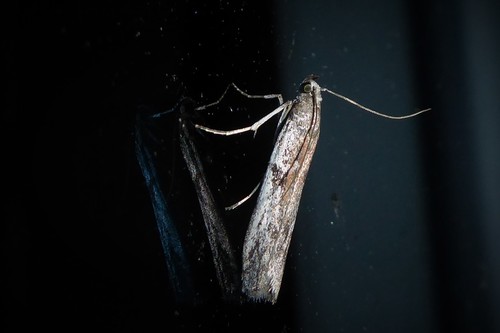
The blue stem borer is a moth that lives in New Zealand and Australia. Its larvae bore into the shoots of Senecio jacobaea and related Senecio species. Adult moths are drawn to lights and are often caught in mercury-vapour light traps.
Source: Wikipedia
How to recognize it
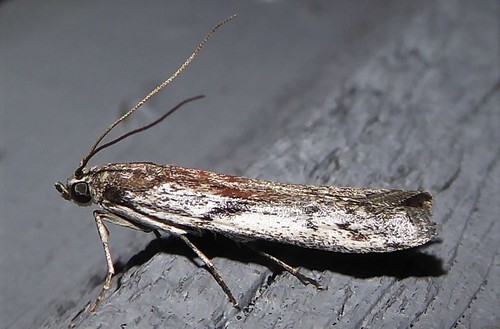
Adults are attracted to light and are commonly caught in mercury-vapour light traps.
Source: Wikipedia
Where it lives
It occurs in New Zealand and Australia.
Source: Wikipedia
What it eats
The larvae bore into shoots of Senecio jacobaea, other Senecio species, and closely related plants.
Source: Wikipedia
Life cycle
Patagoniodes farinaria is a moth belonging to the family Pyralidae.
Source: Wikipedia
Where it comes from
Its native range includes New Zealand and Australia.
Source: Wikipedia
More photos
Questions people ask
What plants does the blue stem borer damage?
Its larvae feed on the shoots of Senecio jacobaea and other Senecio species.
Source: Wikipedia
How are adult blue stem borers attracted?
Adults are drawn to lights and are often caught in mercury-vapour light traps.
Source: Wikipedia
Same family (Pyralidae)
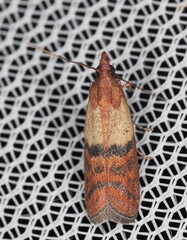 Indian-Meal MothPlodia interpunctellaCan damage your home
 Greater Wax MothGalleria mellonella
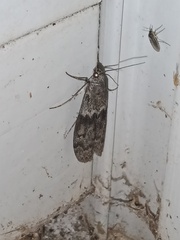 Mediterranean Flour MothEphestia kuehniellaCan damage your home
 Meal mothPyralis farinalisDamages trees, gardens or crops
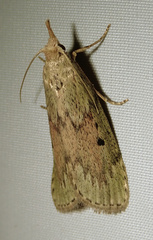 Bee MothAphomia sociellaNuisance, not dangerous
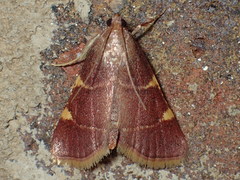 Yellow-fringed Dolichomia MothHypsopygia olinalis
Sources
- Wikipedia: https://en.wikipedia.org/wiki/Patagoniodes_farinaria
Look it up elsewhere: GBIF · iNaturalist · BugGuide · Wikipedia
Text written 2026-10-23 from the sources above and checked sentence by sentence against them. Data fetched 2026-10-23.