 Bug FAQ
Seaside Lady Beetle
Naemia seriata · Order: Coleoptera · Family: Coccinellidae
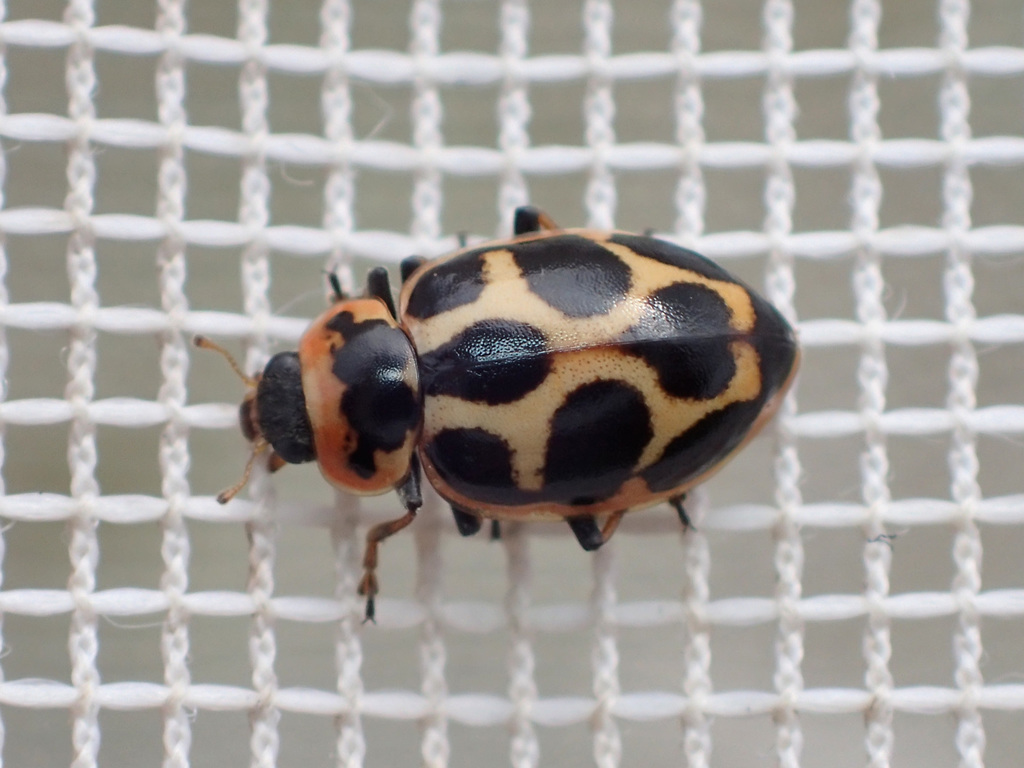
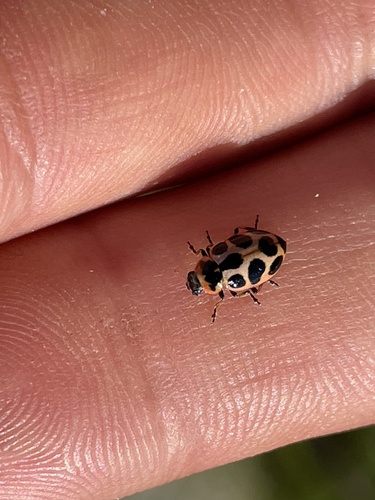
The seaside lady beetle is a small oval beetle 4 to 6.7 mm long, colored light brown, yellow, orange or red with large black spots that may run together along the sides.
Source: Wikipedia
How to recognize it
The beetle’s pronotum usually has one central black spot, sometimes split into two, and the elytral spots often merge together.
Source: Wikipedia
Size
Adults measure between 4 and 6.7 mm in length and have an elongately oval shape.
Source: Wikipedia
Where it comes from
The seaside lady beetle is native to North America.
Source: Wikipedia
Lookalikes
It can be confused with the spotted pink lady beetle, which is more common and not limited to coasts; the seaside beetle’s apical elytral spots and pronotum markings are merged, while the other species has separate spots.
Source: Wikipedia
Where it is found in the US
Recorded in 21 of 51 states and DC. Most records: Texas, Massachusetts, Florida, New Jersey, Louisiana, Maine, Maryland, California.
Darker = more records. Counts are museum and citizen-science records, not population size.
Source: GBIF
Status: native in North America; native in Canada; native in United States. Source: iNaturalist
Months it is reported in the US
Source: GBIF
More photos
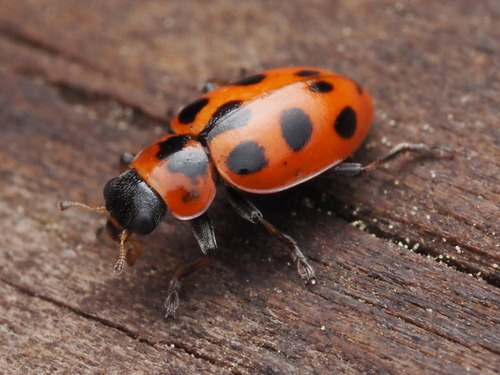
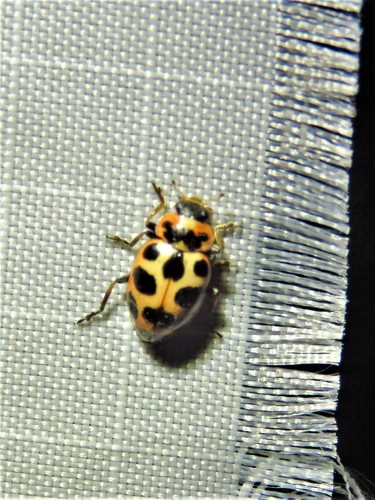
Questions people ask
How can I tell a seaside lady beetle apart from similar beetles?
Look for merged spots on the wing covers and a single central spot on the pronotum; other similar beetles have distinct, separate spots.
Source: Wikipedia
Where might I find a seaside lady beetle?
They live on beaches, salt marshes, and bay islands along the Atlantic and Pacific coasts.
Source: Wikipedia
Same family (Coccinellidae)

Sources
- Wikipedia: https://en.wikipedia.org/wiki/Naemia_seriata
Look it up elsewhere: GBIF · iNaturalist · BugGuide · ITIS · Wikipedia
Text written 2026-10-24 from the sources above and checked sentence by sentence against them. Data fetched 2026-10-24.