 Bug FAQ
Saint Andrew's Cross Spider
Argiope keyserlingi · Order: Araneae · Family: Araneidae
Also called: St Andrews cross spider
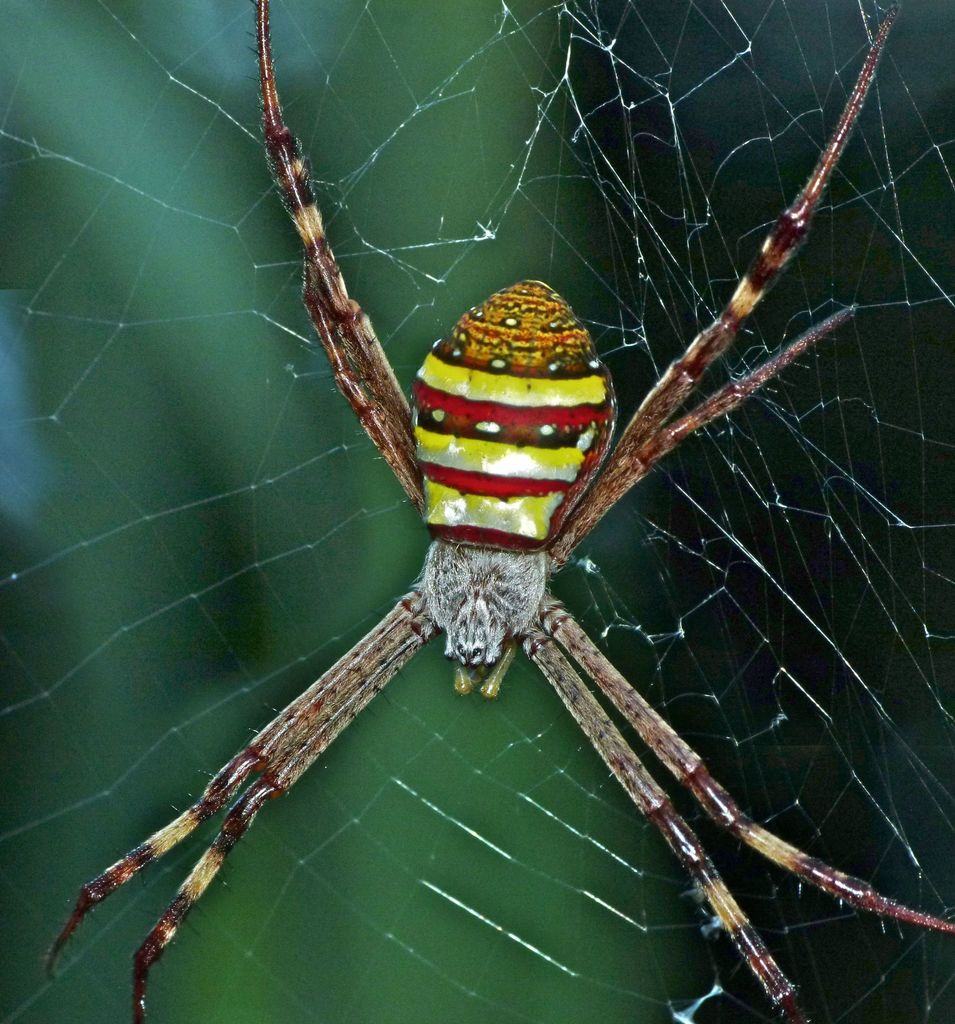
Females are 10 to 16 mm long and males 3 to 4 mm, showing strong sexual dimorphism. They have a glossy carapace with silver, yellow, red and black bands plus two horizontal yellow belts, and a brown-pearlescent overall colour. Found on eastern Australia’s east coast, especially in rainforest margins, open forests, heathlands, and suburban gardens where they build medium webs on low shrubs like Lomandra longifolia.
Source: Wikipedia
How to recognize it
Their carapace is glossy with silver, yellow, red and black bands and two horizontal yellow belts; the rest of the body is brown and pearly.
Source: Wikipedia
Size
Females range from 10 to 16 mm, while males are much smaller at 3 to 4 mm.
Source: Wikipedia
Where it lives
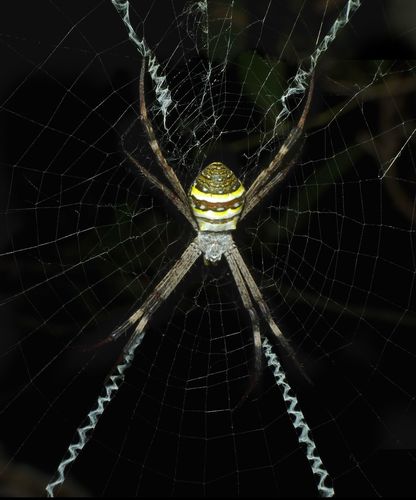
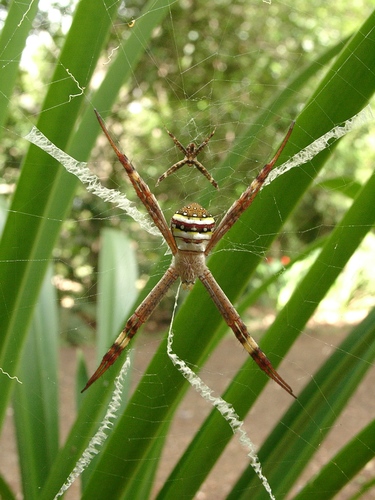
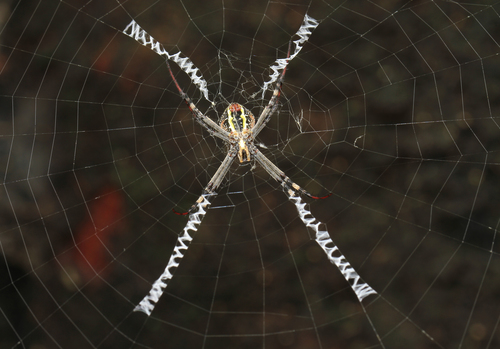
They are common in suburban parks and gardens, especially among Lomandra longifolia leaves, and spin medium webs on low, shrubby vegetation.
Source: Wikipedia
What it eats
They catch flies, moths, butterflies, bees and other insects, wrapping prey in silk before digestion.
Source: Wikipedia
Life cycle
Females are much larger than males, and mature females appear in summer; it is common to see several males on a single female’s web.
Source: Wikipedia
When you see it
Mature females are visible during summer, and the species is active both day and night (cathemeral).
Source: Wikipedia
Lookalikes
It looks similar to the north Queensland species Argiope aetherea, and juveniles stay in closed habitats to avoid predators.
Source: Wikipedia
More photos

Questions people ask
How can I identify this spider?
Look for a glossy carapace with silver, yellow, red and black bands, two yellow belts, and a brown-pearlescent body; females are 10 to 16 mm, males 3 to 4 mm.
Source: Wikipedia
Same family (Araneidae)


Sources
- Wikipedia: https://en.wikipedia.org/wiki/Argiope_keyserlingi
Look it up elsewhere: GBIF · iNaturalist · BugGuide · ITIS · Wikipedia
Text written 2026-10-22 from the sources above and checked sentence by sentence against them. Data fetched 2026-10-22.