 Bug FAQ
Saddled Leafhopper
Colladonus clitellarius · Order: Hemiptera · Family: Cicadellidae
Also called: Saddleback Leafhopper, The Saddleback Leafhopper
Source: Wikipedia

Adults are about five to six millimetres long, with females a bit larger than males. You will most often see them from May through November in forested areas of the northeastern United States and southeastern Canada.
Source: Wikipedia
How to recognize it
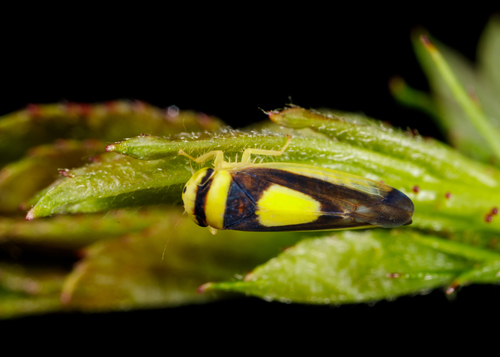
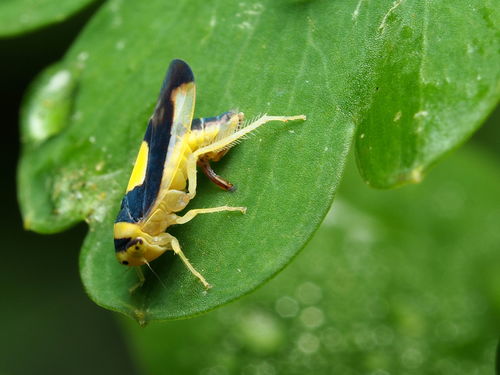
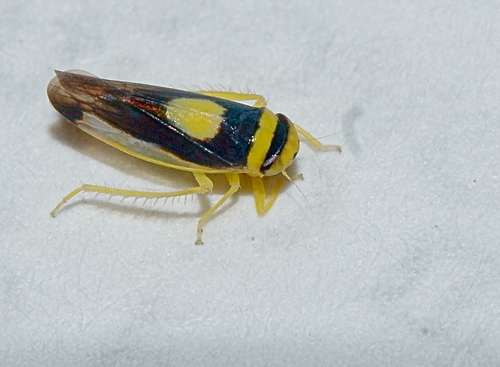
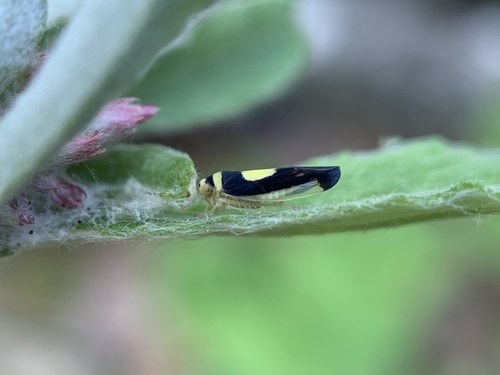
A key field mark is a bright green, saddle-shaped patch on the back, plus brown-green or white stripes on the head that continue into the eyes, giving a two-tone look.
Source: Wikipedia
Size
Adults measure roughly five to six millimetres, with males usually a little smaller than females.
Source: Wikipedia
Where it lives
They live mainly in forested habitats in the northeastern U.S. and southeastern Canada.
Source: Wikipedia
What it eats
They feed on the foliage of willows, honey locusts and the invasive mile-a-minute vine.
Source: Wikipedia
Life cycle
Adults are most common from May to November.
Source: Wikipedia
When you see it
You will typically encounter adults between May and November.
Source: Wikipedia
Where it comes from
Their range covers eastern North America.
Source: Wikipedia
Where it is found in the US
Recorded in 35 of 51 states and DC. Most records: Illinois, Pennsylvania, Massachusetts, Maryland, New York, Ohio, Wisconsin, Virginia.
Darker = more records. Counts are museum and citizen-science records, not population size.
Source: GBIF
Status: native in North America; native in Canada; native in United States. Source: iNaturalist
Months it is reported in the US
Source: GBIF
More photos
Questions people ask
How big are saddled leafhoppers?
They are about five to six millimetres long, with females a bit larger than males.
Source: Wikipedia
Same family (Cicadellidae)
 Red-banded LeafhopperGraphocephala coccineaDamages trees, gardens or crops
 Coppery LeafhopperJikradia olitoria
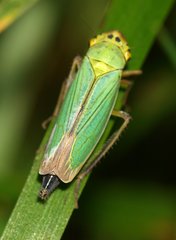 Green LeafhopperCicadella viridis
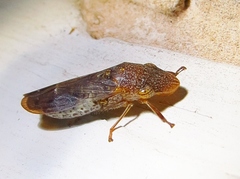 Glassy-winged SharpshooterHomalodisca vitripennisCan spread germs or disease
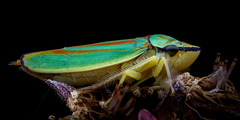 Rhododendron LeafhopperGraphocephala fennahiDamages trees, gardens or crops
 Japanese LeafhopperOrientus ishidaeCan spread germs or disease
Sources
- Wikipedia: https://en.wikipedia.org/wiki/Colladonus_clitellarius
Look it up elsewhere: GBIF · iNaturalist · BugGuide · Wikipedia
Text written 2026-10-22 from the sources above and checked sentence by sentence against them. Data fetched 2026-10-22.