 Bug FAQ
Rustic Borer
Xylotrechus colonus · Order: Coleoptera · Family: Cerambycidae
Also called: Long-horned Beetle, Rustic Borer Beetle
Source: Wikipedia
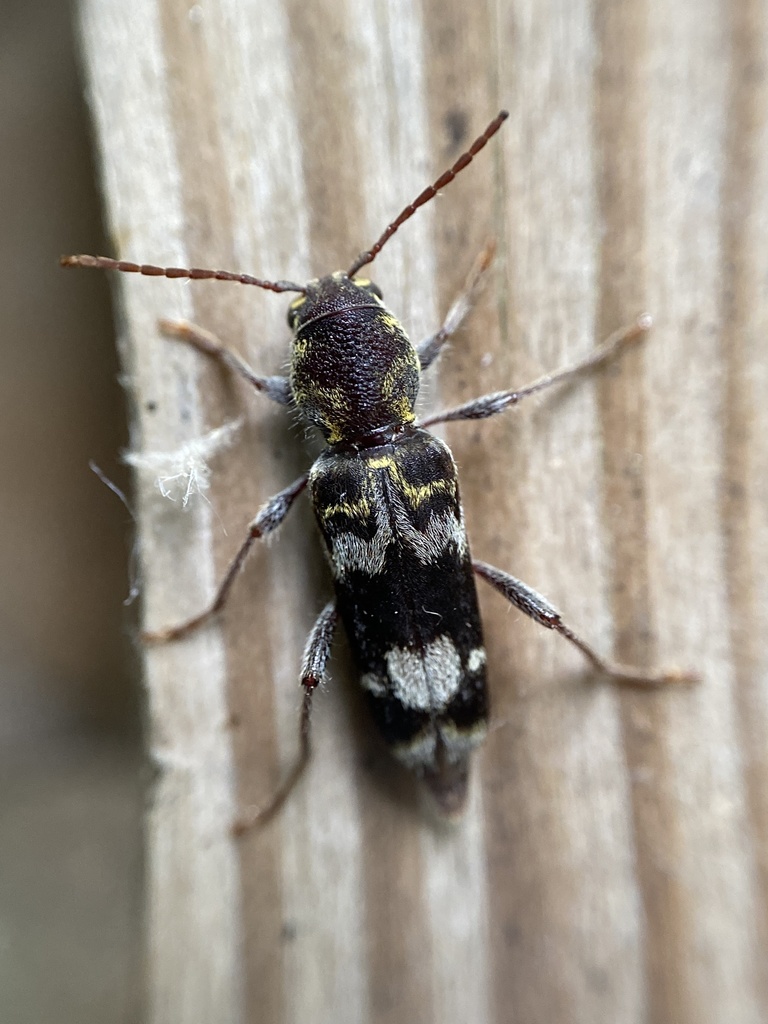
Adults have black wing covers with grey bands and a yellow mark near the base, and a black underside with faint yellow banding. They are found in the eastern United States, from central Texas northward, and were first described in 1775. Larvae feed on oak sapwood while adults sip nectar from goldenrod and other composite flowers.
Source: Wikipedia
How to recognize it
Underside is black with faint yellow banding.
Source: Wikipedia
What it eats
Larvae feed on the sapwood of oak trees (Quercus).
Source: Wikipedia
Life cycle
The species was first described by Johan Christian Fabricius in 1775.
Source: Wikipedia
Where it comes from
Occurs primarily in the eastern United States, from central Texas upward.
Source: Wikipedia
Where it is found in the US
Recorded in 38 of 51 states and DC. Most records: Texas, Florida, Pennsylvania, North Carolina, Alabama, Maryland, Georgia, Louisiana.
Darker = more records. Counts are museum and citizen-science records, not population size.
Source: GBIF
Status: native in North America; native in Canada. Source: iNaturalist
Months it is reported in the US
Source: GBIF
More photos

Questions people ask
Where is Rustic Borer commonly found?
In the eastern United States, from central Texas northward.
Source: Wikipedia
What do adult Rustic Borers eat?
Adults sip nectar from goldenrod and other composite flowers.
Source: Wikipedia
Same family (Cerambycidae)
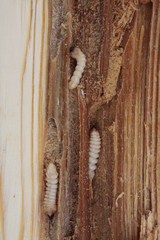 House LonghornHylotrupes bajulusCan damage your home
 Asian Longhorned BeetleAnoplophora glabripennisDamages trees, gardens or crops
 Red Milkweed BeetleTetraopes tetrophthalmus
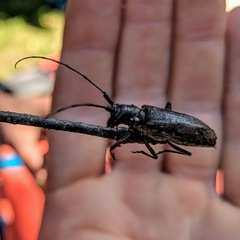 White-spotted SawyerMonochamus scutellatusCan damage your home
 Red Pine Longhorn BeetleStictoleptura rubra
 Spotted Longhorn BeetleRutpela maculataDamages trees, gardens or crops
Sources
- Wikipedia: https://en.wikipedia.org/wiki/Xylotrechus_colonus
Look it up elsewhere: GBIF · iNaturalist · BugGuide · ITIS · Wikipedia
Text written 2026-10-22 from the sources above and checked sentence by sentence against them. Data fetched 2026-10-22.