 Bug FAQ
Rust Pine Borer
Arhopalus rusticus · Order: Coleoptera · Family: Cerambycidae
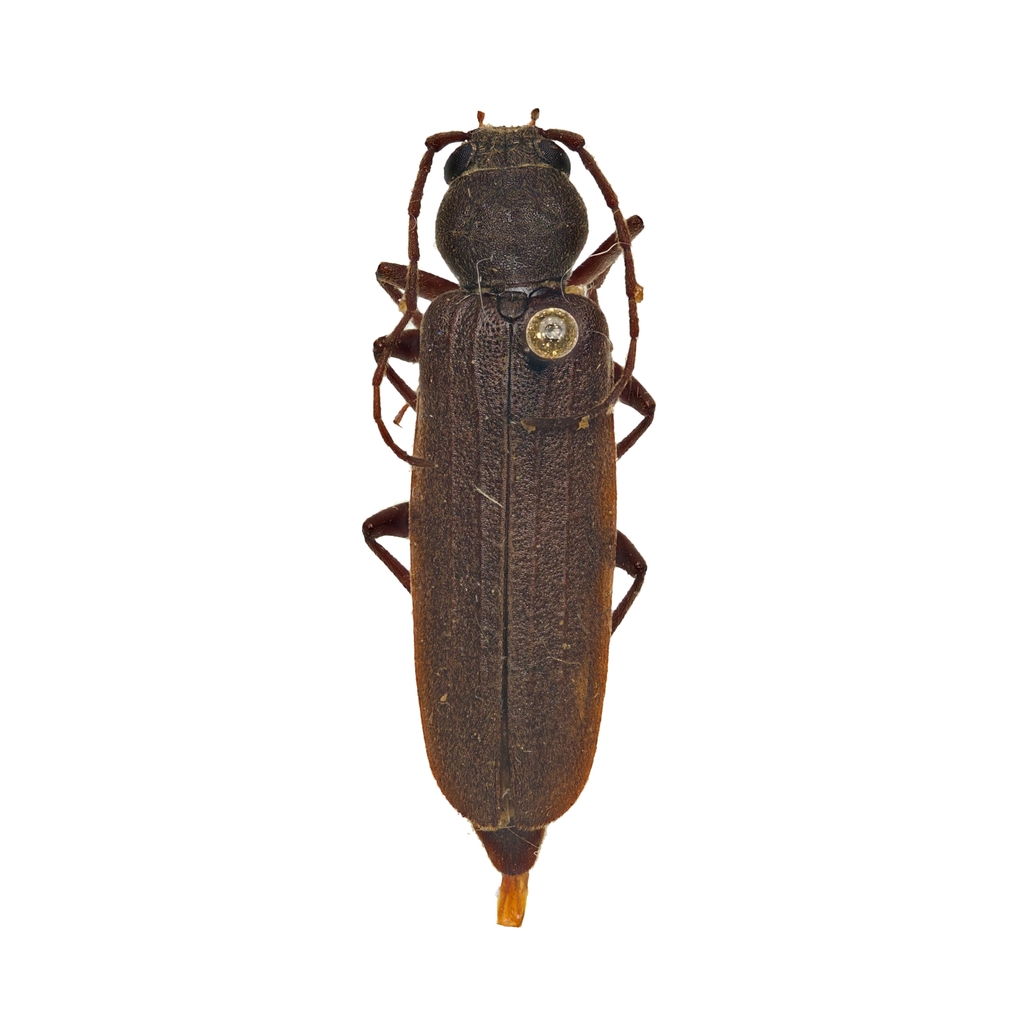
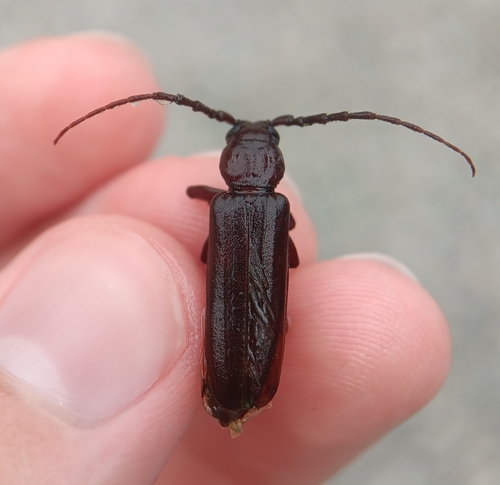
Adult Rust Pine Borers are dark brown to reddish-brown, dull, and have two or three parallel ridges on their wing covers. The larvae are white, flattened, up to about 3 cm long, and they live in the lower parts of conifer trunks up to 1.5 m high. They are common in northern and central Europe, Siberia and parts of Asia, and they also occur across the United States and have been introduced to Australia.
Source: Wikipedia
How to recognize it
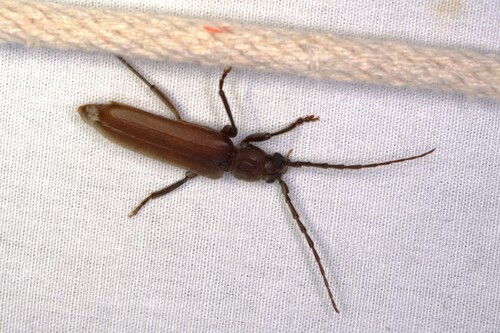
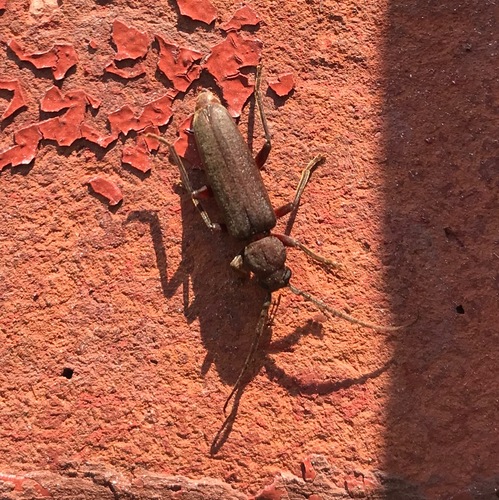
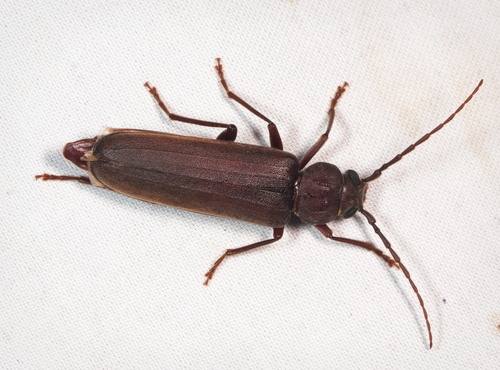
Adults are dark brown or brownish-red, dull in colour, with an elongated, slightly haired body. Their elytra have two or three parallel ridges.
Source: Wikipedia
Size
Adults measure roughly 10 to 30 mm in length. Larvae can grow to about 28 to 39 mm long.
Source: Wikipedia
Where it lives
They nest in coniferous trees such as Scots pine and Norway spruce.
Source: Wikipedia
What it eats
The Rust Pine Borer has one generation every two years.
Source: Wikipedia
Life cycle
Adults are active from mid-June through late-August.
Source: Wikipedia
When you see it
The adult flight period runs from mid-June to late-August.
Source: Wikipedia
Where it comes from
It is also present across the United States and has been introduced to Australia.
Source: Wikipedia
Where it is found in the US
Recorded in 23 of 51 states and DC. Most records: Florida, Connecticut, Ohio, Indiana, New York, Colorado, New Mexico, Arizona.
Darker = more records. Counts are museum and citizen-science records, not population size.
Source: GBIF
Status: native in North America; native in Canada. Source: iNaturalist
Months it is reported in the US
Source: GBIF
More photos
Questions people ask
When can I see adult Rust Pine Borers?
Adults are on the wing from mid-June through late-August.
Source: Wikipedia
What trees do they infest?
They tend to nest in conifers like Scots pine and Norway spruce, especially in the lower 1.5 m of the trunk.
Source: Wikipedia
How can I tell their galleries apart from similar species?
Their galleries are very similar to those of Arhopalus striatum, so they can be hard to distinguish.
Source: Wikipedia
Same family (Cerambycidae)
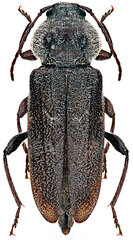 House LonghornHylotrupes bajulusCan damage your home
 Asian Longhorned BeetleAnoplophora glabripennisDamages trees, gardens or crops
 Red Milkweed BeetleTetraopes tetrophthalmus
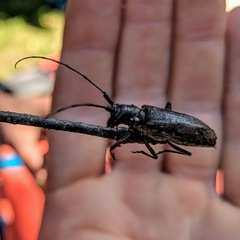 White-spotted SawyerMonochamus scutellatusCan damage your home
 Red Pine Longhorn BeetleStictoleptura rubra
 Spotted Longhorn BeetleRutpela maculata
Sources
- Wikipedia: https://en.wikipedia.org/wiki/Arhopalus_rusticus
Look it up elsewhere: GBIF · iNaturalist · BugGuide · ITIS · Wikipedia
Text written 2026-10-26 from the sources above and checked sentence by sentence against them. Data fetched 2026-10-26.