 Bug FAQ
Rugose Stag Beetle
Sinodendron rugosum · Order: Coleoptera · Family: Lucanidae
Also called: Rugose stag beelte
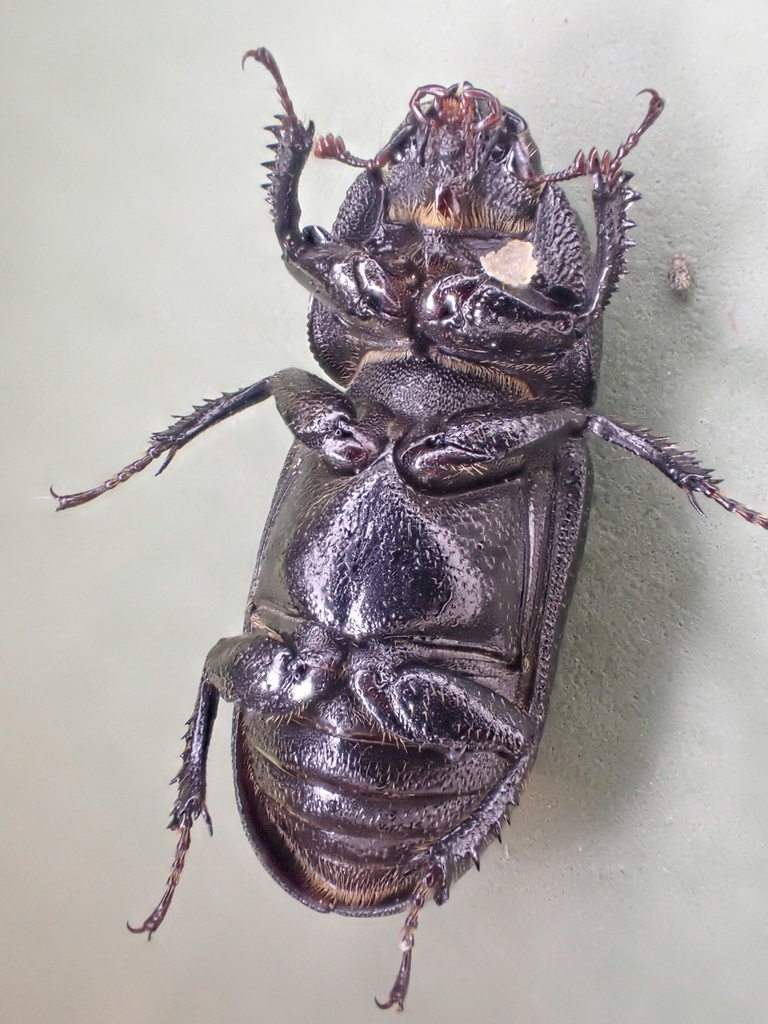
Rugose Stag Beetles are 11 to 18 mm long and have a heavily pitted, wrinkled back and wing covers. Males show a narrow head with a short central horn, and adults are found on the ground in moist woodlands during spring to early summer. Larvae hatch on bark, tunnel into decaying wood of oak, alder, willow or cherry, and later pupate there.
Source: Wikipedia
How to recognize it
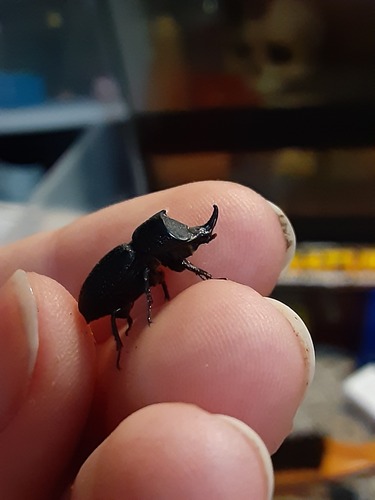
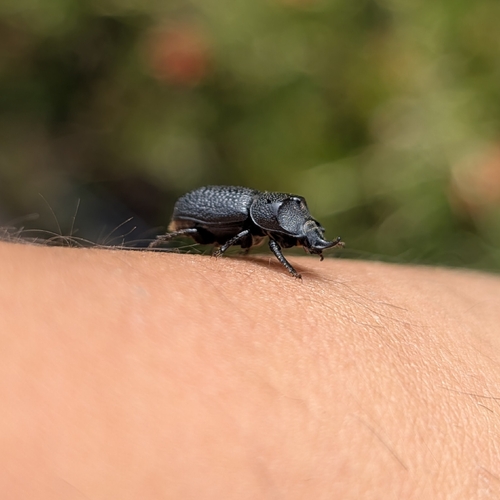
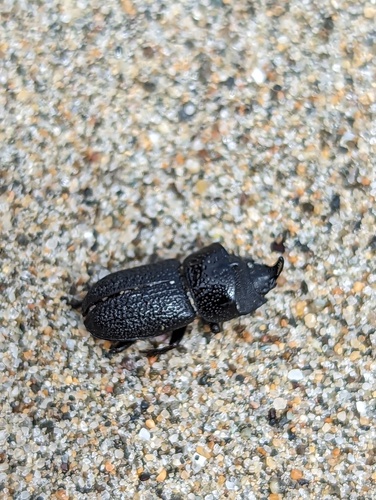
The beetle’s pronotum and elytra are covered in many tiny pits, giving it a rugose appearance. Males have a head much narrower than the pronotum and a short, median horn like a tiny rhinoceros.
Source: Wikipedia
Size
Adults range from 11 to 18 mm in length.
Source: Wikipedia
Where it lives
They inhabit moist woodlands.
Source: Wikipedia
What it eats
Adults may feed on plant juices or on honeydew produced by aphids.
Source: Wikipedia
Life cycle
White, C-shaped larvae hatch on bark, tunnel inward into decaying wood, and create pupal chambers there.
Source: Wikipedia
When you see it
Adults are most often seen on the ground from spring through early summer.
Source: Wikipedia
Where it is found in the US
Recorded in 6 of 51 states and DC. Most records: Washington, Oregon, California, Idaho, Utah, Montana.
Darker = more records. Counts are museum and citizen-science records, not population size.
Source: GBIF
Status: native in North America; native in Canada. Source: iNaturalist
Months it is reported in the US
Source: GBIF
More photos

Questions people ask
How can I identify a Rugose Stag Beetle?
Look for a beetle 11 to 18 mm long with a heavily pitted, wrinkled back; males have a narrow head and a short central horn.
Source: Wikipedia
What do Rugose Stag Beetles eat?
Adults may drink plant juices or feed on aphid honeydew.
Source: Wikipedia
Where do the larvae develop?
The larvae hatch on bark, tunnel into decaying wood of trees such as oak, alder, willow or cherry, and form pupal chambers there.
Source: Wikipedia
Same family (Lucanidae)


Sources
- Wikipedia: https://en.wikipedia.org/wiki/Sinodendron_rugosum
Look it up elsewhere: GBIF · iNaturalist · BugGuide · ITIS · Wikipedia
Text written 2026-10-24 from the sources above and checked sentence by sentence against them. Data fetched 2026-10-24.