 Bug FAQ
Lesser Stag Beetle
Dorcus parallelipipedus · Order: Coleoptera · Family: Lucanidae
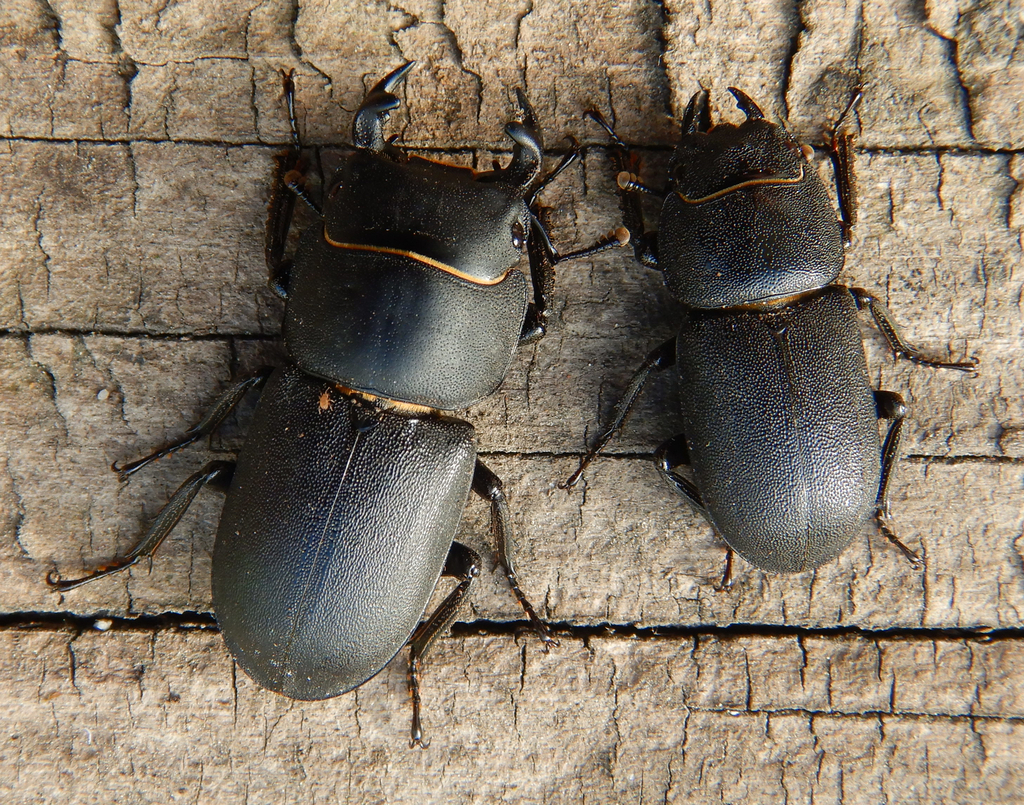
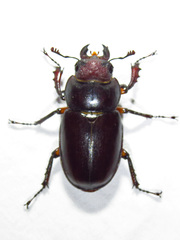
Adult lesser stag beetles are 18 to 32 mm long and are uniformly blackish, with males having small knobbed antennae and modest jaws. They live in European woodlands, parks and hedgerows, appear in summer, and rest on sunny tree trunks. Larvae feed on wood, develop in 1 to 2 years, and adults drink tree sap or fruit juice but cannot chew solid food.
Source: Wikipedia
How to recognize it
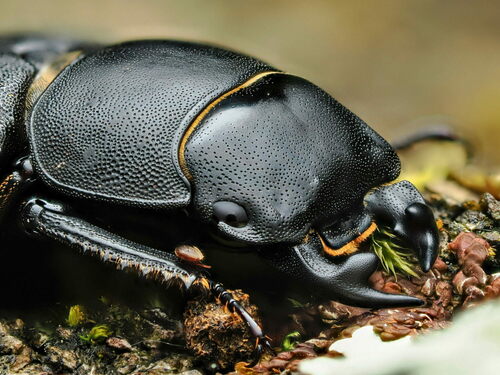
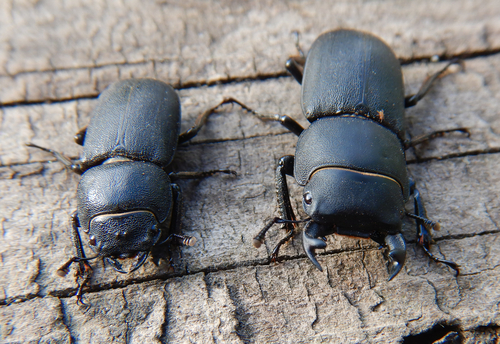
Both sexes look like a smaller, all-black version of the female greater stag beetle, while males have small knobbed antennae and only slightly larger jaws than females.
Source: Wikipedia
Size
Adults measure between 18 and 32 mm in length.
Source: Wikipedia
Where it lives
You’ll find them in woodland, parkland and hedgerows during summer, often sunning on tree trunks.
Source: Wikipedia
What it eats
Larvae are white, C-shaped and eat wood. Adults cannot chew solid food but will sip tree sap and the juices of fallen fruit.
Source: Wikipedia
Life cycle
Larval development takes only one to two years, much shorter than the larger stag beetle. After emerging as adults they can live up to two years.
Source: Wikipedia
When you see it
Adults are present in the summer months.
Source: Wikipedia
Where it comes from
The lesser stag beetle is native to Europe.
Source: Wikipedia
Lookalikes
It resembles the North American antelope beetle, Dorcus parallelus.
Source: Wikipedia
Where it is found in the US
Recorded in 1 of 51 states and DC. Most records: Pennsylvania.
Darker = more records. Counts are museum and citizen-science records, not population size.
Source: GBIF
More photos

Same family (Lucanidae)


Sources
- Wikipedia: https://en.wikipedia.org/wiki/Dorcus_parallelipipedus
Look it up elsewhere: GBIF · iNaturalist · BugGuide · Wikipedia
Text written 2026-10-22 from the sources above and checked sentence by sentence against them. Data fetched 2026-10-22.