 Bug FAQ
Reddish-brown Stag Beetle
Lucanus capreolus · Order: Coleoptera · Family: Lucanidae
Also called: Stag Beetle
Source: Wikipedia
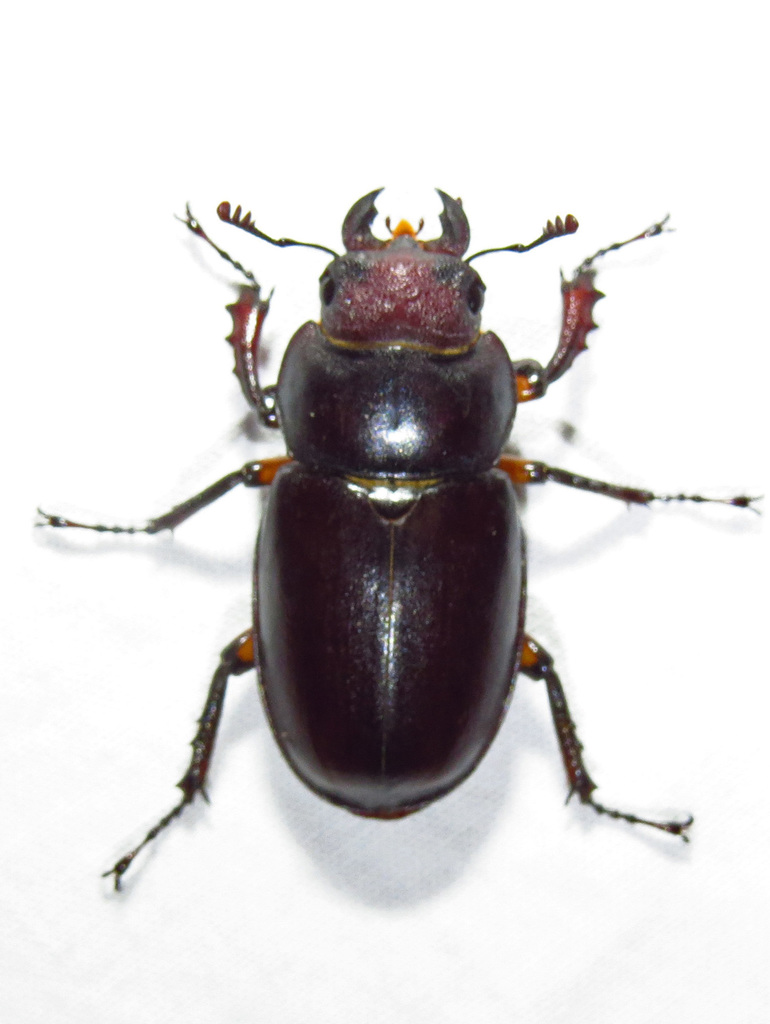
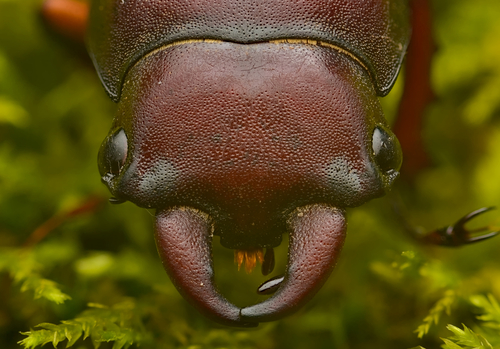
The reddish-brown stag beetle is 22 to 35 mm long; males have long, curved jaws like a sickle. It lives in eastern North American deciduous forests, especially around rotting logs where it breeds. Larvae develop for about two years inside decaying wood, feeding on the inner wood and eventually pupating in soil.
Source: Wikipedia
How to recognize it
Adults are dark reddish-brown with smooth, shiny wing cases and orange-brown femora.
Source: Wikipedia
Size
They measure between 22 and 35 mm in length. Male jaws are long and curved, resembling a sickle.
Source: Wikipedia
Where it lives
Found in deciduous forests and nearby areas of the eastern United States and parts of Canada. They are common around decaying logs and stumps where they breed.
Source: Wikipedia
What it eats
Larvae live in the trunks of old deciduous trees, feeding on the inner wood.
Source: Wikipedia
Life cycle
Eggs are laid in rotting wood; larvae take about two years to develop before pupating in nearby soil.
Source: Wikipedia
When you see it
Adults are attracted to lights at night.
Source: Wikipedia
Where it comes from
Their native range is the eastern United States and some regions of Canada, in deciduous forest habitats.
Source: Wikipedia
Where it is found in the US
Recorded in 37 of 51 states and DC. Most records: Ohio, Massachusetts, Pennsylvania, Illinois, Tennessee, Kentucky, Indiana, New York.
Darker = more records. Counts are museum and citizen-science records, not population size.
Source: GBIF
Status: native in North America; native in Canada; native in United States. Source: iNaturalist
Months it is reported in the US
Source: GBIF
More photos
Questions people ask
Can they damage trees or gardens?
Yes, the larvae feed on the inner wood of decaying deciduous trees, which can weaken or kill the trees.
Source: Wikipedia
Where am I likely to see them?
They are most often found at night near lights in eastern North American deciduous forests, especially around rotting logs and stumps.
Source: Wikipedia
How can I tell a male from a female?
Males have long, sickle-shaped jaws that are much larger than the smaller jaws of females.
Source: Wikipedia
Same family (Lucanidae)


Sources
- Wikipedia: https://en.wikipedia.org/wiki/Lucanus_capreolus
Look it up elsewhere: GBIF · iNaturalist · BugGuide · ITIS · Wikipedia
Text written 2026-10-22 from the sources above and checked sentence by sentence against them. Data fetched 2026-10-22.