 Bug FAQ
Rosy Tabby
Endotricha flammealis · Order: Lepidoptera · Family: Pyralidae
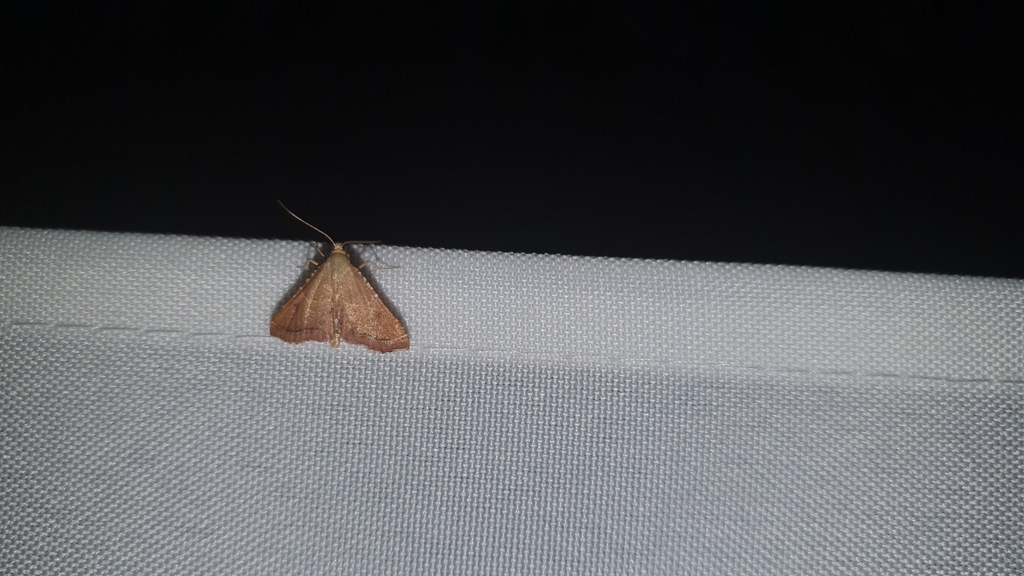
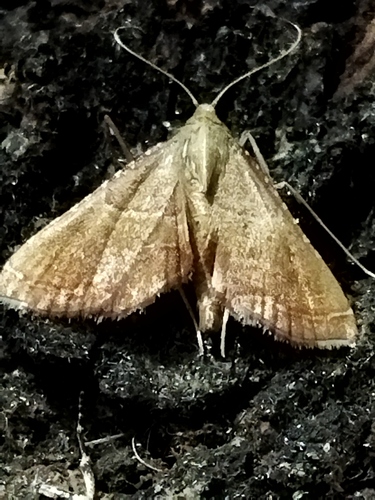
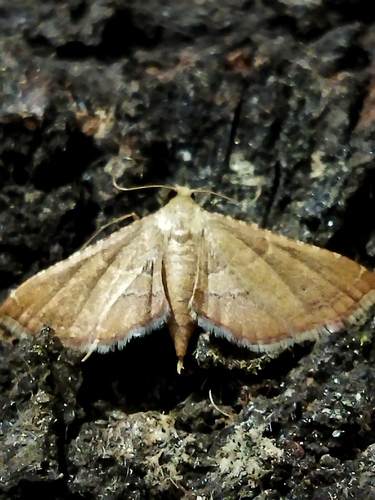
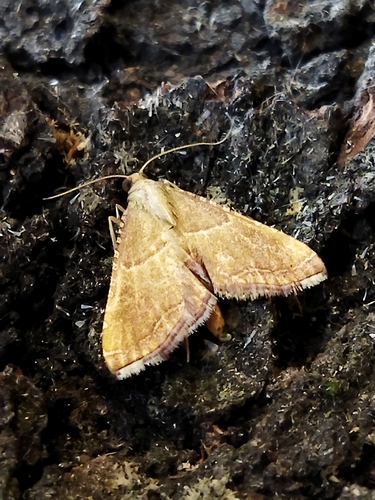
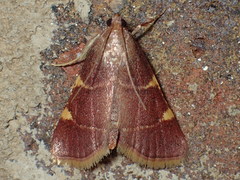
The rosy tabby moth has a wingspan of about 18 to 23 mm. Its wing colour varies widely, often ochre or brown with darker markings and bright or pinkish lines along the forewing edge. It lives in grasslands, heathlands, woodlands, fens, scrub and gardens, and flies from July to August in temperate areas like the British Isles.
Source: Wikipedia
Size
Wingspan ranges from 18 to 23 mm.
Source: Wikipedia
Where it lives
Found in grassland, heathland, woodland, fens, scrub and gardens.
Source: Wikipedia
What it eats
Caterpillars feed on common agrimony, bilberries, and various plant debris, including dry willow and oak leaves.
Source: Wikipedia
Life cycle
Females lay eggs on the underside of leaves during summer.
Source: Wikipedia
When you see it
Adults are on the wing from July to August in temperate parts of its range.
Source: Wikipedia
More photos
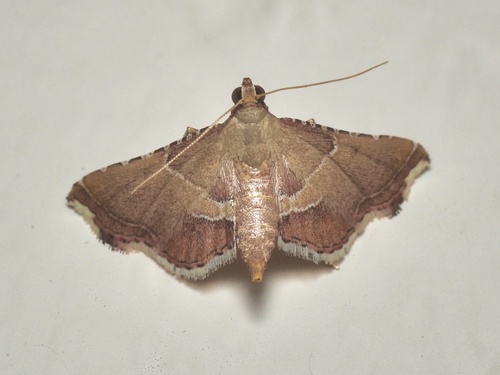
Questions people ask
When are rosy tabby moths active?
Adults fly from July through August in temperate areas such as the British Isles.
Source: Wikipedia
What do the caterpillars eat?
They feed on common agrimony, bilberries, and dry leaves of willow and oak, as well as other plant debris.
Source: Wikipedia
Where can I find this moth?
It lives in grasslands, heathlands, woodlands, fens, scrub and gardens across western, central and southern Europe.
Source: Wikipedia
Same family (Pyralidae)
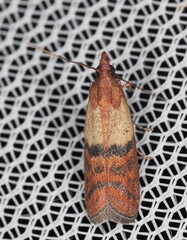 Indian-Meal MothPlodia interpunctellaCan damage your home
 Greater Wax MothGalleria mellonella
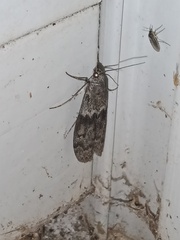 Mediterranean Flour MothEphestia kuehniellaCan damage your home
 Meal mothPyralis farinalisDamages trees, gardens or crops
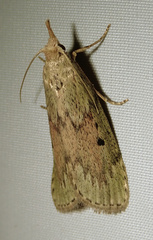 Bee MothAphomia sociellaNuisance, not dangerous
 Yellow-fringed Dolichomia MothHypsopygia olinalis
Sources
- Wikipedia: https://en.wikipedia.org/wiki/Endotricha_flammealis
Look it up elsewhere: GBIF · iNaturalist · BugGuide · Wikipedia
Text written 2026-10-22 from the sources above and checked sentence by sentence against them. Data fetched 2026-10-22.