 Bug FAQ
Ribbed Pine Borer
Rhagium inquisitor · Order: Coleoptera · Family: Cerambycidae
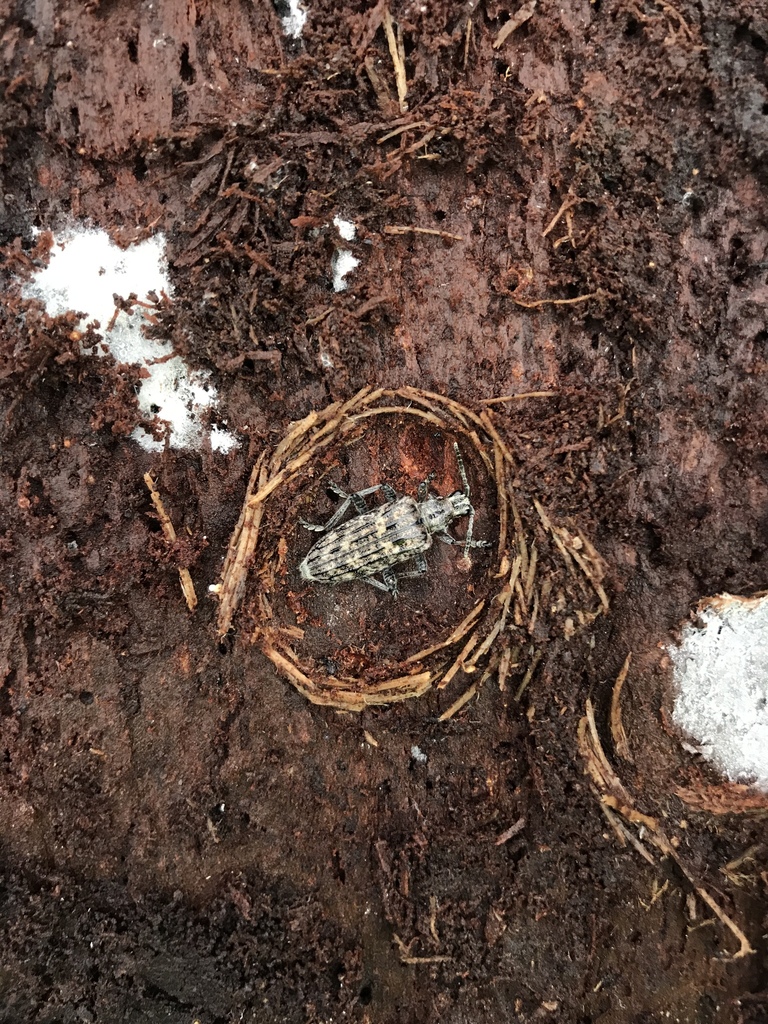
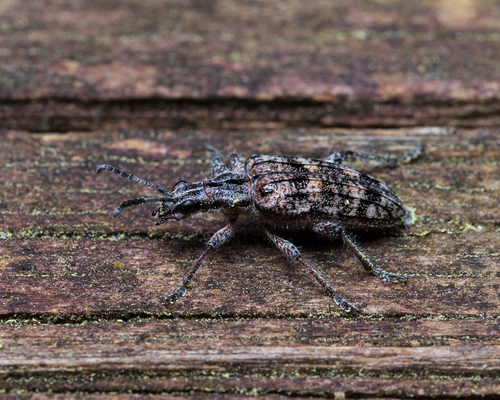
Adults are medium-sized longhorn beetles, 9 to 22 mm long, with dark bodies covered in mottled hairs that blend with bark. The elytra have strong longitudinal ribs, giving the species its common name. They live in coniferous and mixed forests, especially on dead wood, fallen logs, stumps, and freshly cut timber, and are seen from April to July.
Source: Wikipedia
How to recognize it
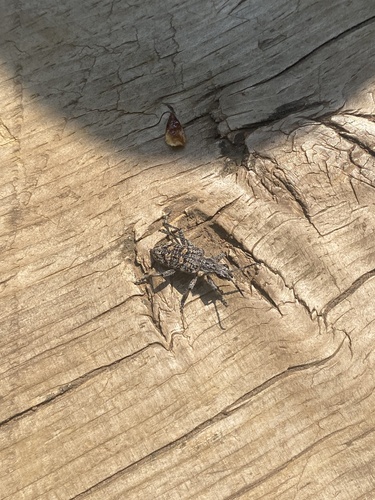
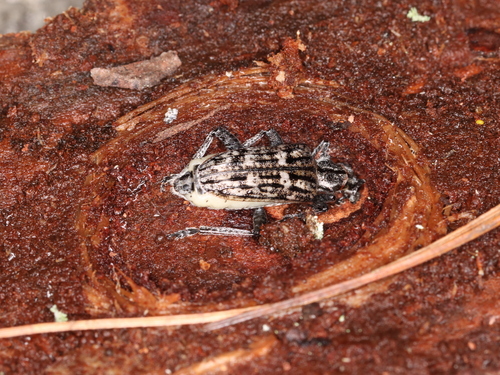
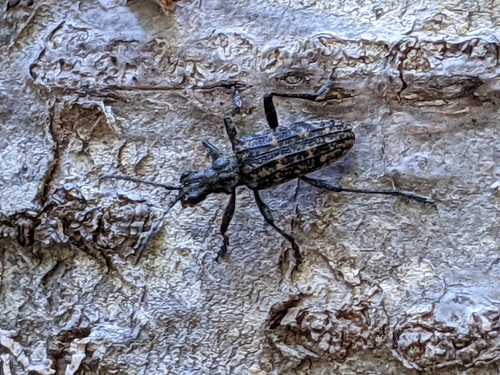
The beetle’s dark brown to blackish body is covered with grey, yellowish or brown hairs that provide camouflage on bark. Its wing covers are heavily sculptured with prominent longitudinal ribs.
Source: Wikipedia
Size
Adults measure about 9 to 22 mm in length.
Source: Wikipedia
Where it lives
It is found in coniferous and mixed forests where dead wood, fallen trunks, stumps, or freshly cut timber are present.
Source: Wikipedia
What it eats
Larvae develop in dead coniferous wood, feeding beneath the bark in the inner bark and cambial zone.
Source: Wikipedia
Life cycle
The life cycle lasts about two years, with mature larvae pupating beneath the bark in chambers surrounded by wood shavings or frass.
Source: Wikipedia
When you see it
In Europe, adults are typically observed from April through July, though timing can vary with climate and altitude.
Source: Wikipedia
Where it is found in the US
Recorded in 42 of 51 states and DC. Most records: Massachusetts, Pennsylvania, South Carolina, California, North Carolina, Colorado, Alaska, Oregon.
Darker = more records. Counts are museum and citizen-science records, not population size.
Source: GBIF
Status: native in North America; native in Canada. Source: iNaturalist
Months it is reported in the US
Source: GBIF
More photos
Questions people ask
Are they a problem for living trees or garden plants?
Their larvae develop only in dead conifer wood, not in living trees or garden plants.
Source: Wikipedia
Same family (Cerambycidae)
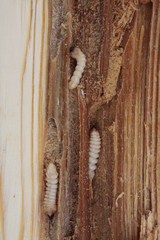 House LonghornHylotrupes bajulusCan damage your home
 Asian Longhorned BeetleAnoplophora glabripennisDamages trees, gardens or crops
 Red Milkweed BeetleTetraopes tetrophthalmus
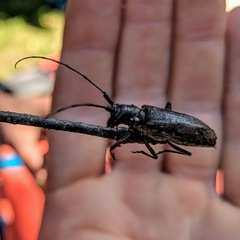 White-spotted SawyerMonochamus scutellatusCan damage your home
 Red Pine Longhorn BeetleStictoleptura rubra
 Spotted Longhorn BeetleRutpela maculataDamages trees, gardens or crops
Sources
- Wikipedia: https://en.wikipedia.org/wiki/Rhagium_inquisitor
Look it up elsewhere: GBIF · iNaturalist · BugGuide · ITIS · Wikipedia
Text written 2026-10-22 from the sources above and checked sentence by sentence against them. Data fetched 2026-10-22.