 Bug FAQ
Potato Leafhopper
Empoasca fabae · Order: Hemiptera · Family: Cicadellidae
Source: Wikipedia
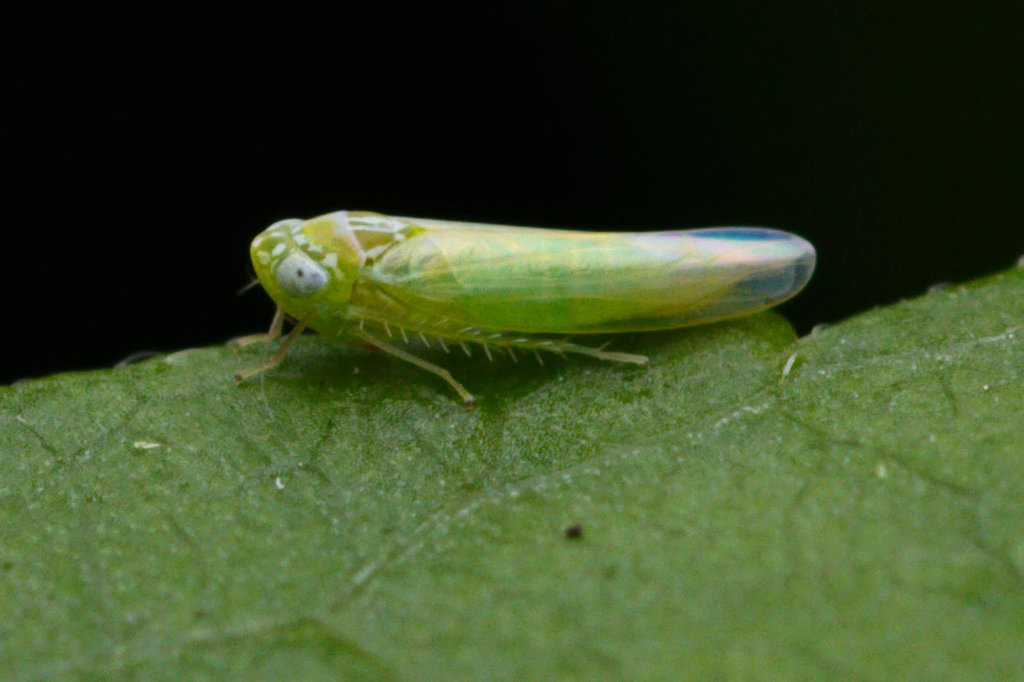
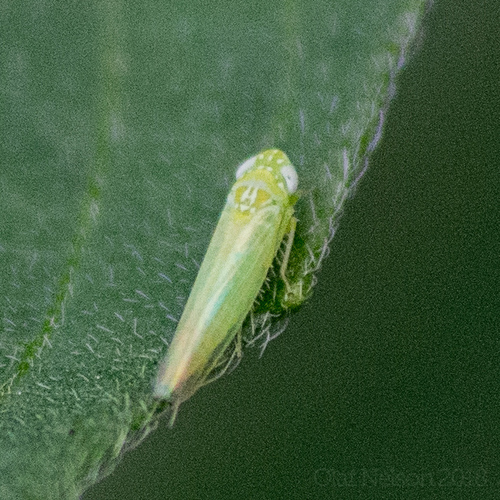
Adults are about 3 mm long, pale-to-iridescent green with white spots on the pronotum and a white H-shaped mark between the head and wing base. They feed on leaves and stems of many plants, and large numbers can create hopperburn that stunts crops.
Source: Wikipedia
How to recognize it
Adults have a pale to iridescent green body with six or eight white spots on the pronotum. A distinctive white H-shaped mark sits between the head and the wing base.
Source: Wikipedia
Size
The insects are roughly 3 mm long.
Source: Wikipedia
Is it a pest in the house?
Crop detection is often too late because hopperburn is the first visible sign of a heavy infestation. Hopperburn reduces plant growth and reproductive output.
Source: Wikipedia
How to get rid of it
Heavy insecticide applications are currently the only proven way to control infestations. Research suggests boosting natural enemies could become part of an integrated pest-management strategy.
Source: Wikipedia
Where it lives
Only about a third of the population lives in croplands; the rest are found in fields, woodlands, scrub, waste places and parks.
Source: Wikipedia
What it eats
They can feed and reproduce on at least 200 plant species in 26 families. Adults prefer leaves and stems, while nymphs feed mainly on leaves.
Source: Wikipedia
Life cycle
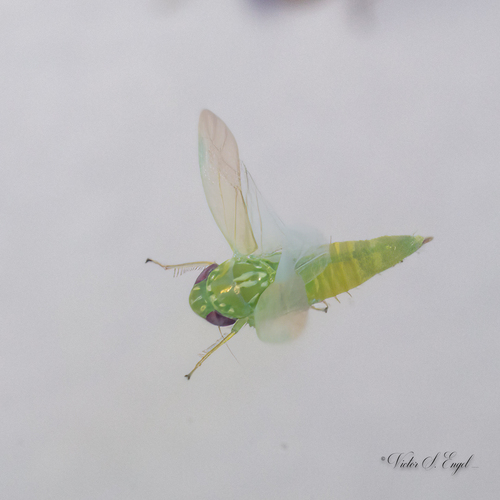
Both adults and nymphs hop among host plants, but only adults are capable of flight. Before returning north, adults shift hosts from herbaceous legumes to the new spring foliage of deciduous trees.
Source: Wikipedia
When you see it
Cold fronts in late summer cue the insects to begin their migration. They use prevailing winds to passively travel, and wind direction influences where they end up within their summer range.
Source: Wikipedia
Where it comes from
They are a seasonal migrant, summering across the Midwest and eastern United States and the Great Lakes region of Canada.
Source: Wikipedia
Where it is found in the US
Recorded in 45 of 51 states and DC. Most records: Illinois, Ohio, California, Texas, Florida, New York, Tennessee, North Carolina.
Darker = more records. Counts are museum and citizen-science records, not population size.
Source: GBIF
Status: native in North America; native in Canada; native in United States. Source: iNaturalist
Months it is reported in the US
Source: GBIF
More photos
Questions people ask
How do I control potato leafhopper infestations?
Apply strong insecticides, which are presently the only effective control, and consider encouraging natural predators as research indicates they may help manage populations.
Source: Wikipedia
When do potato leafhoppers appear and leave my garden?
They arrive in summer, and late-summer cold fronts trigger their migration northward, aided by prevailing winds.
Source: Wikipedia
What damage do potato leafhoppers cause?
Feeding creates hopperburn, a bleaching of leaves that reduces plant growth and fruit or seed production.
Source: Wikipedia
Same family (Cicadellidae)
 Red-banded LeafhopperGraphocephala coccineaDamages trees, gardens or crops
 Coppery LeafhopperJikradia olitoria
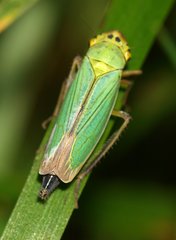 Green LeafhopperCicadella viridis
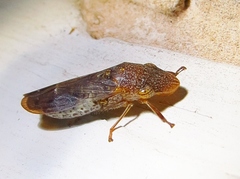 Glassy-winged SharpshooterHomalodisca vitripennisCan spread germs or disease
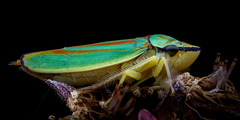 Rhododendron LeafhopperGraphocephala fennahiDamages trees, gardens or crops
 Japanese LeafhopperOrientus ishidaeCan spread germs or disease
Sources
- Wikipedia: https://en.wikipedia.org/wiki/Potato_leafhopper
Look it up elsewhere: GBIF · iNaturalist · BugGuide · Wikipedia
Text written 2026-10-22 from the sources above and checked sentence by sentence against them. Data fetched 2026-10-22.