 Bug FAQ
Redleg Orbweaver
Trichonephila inaurata · Order: Araneae · Family: Araneidae
Also called: Red-legged Golden Orb Weaver, Redleg Banded Orbweaver Spider
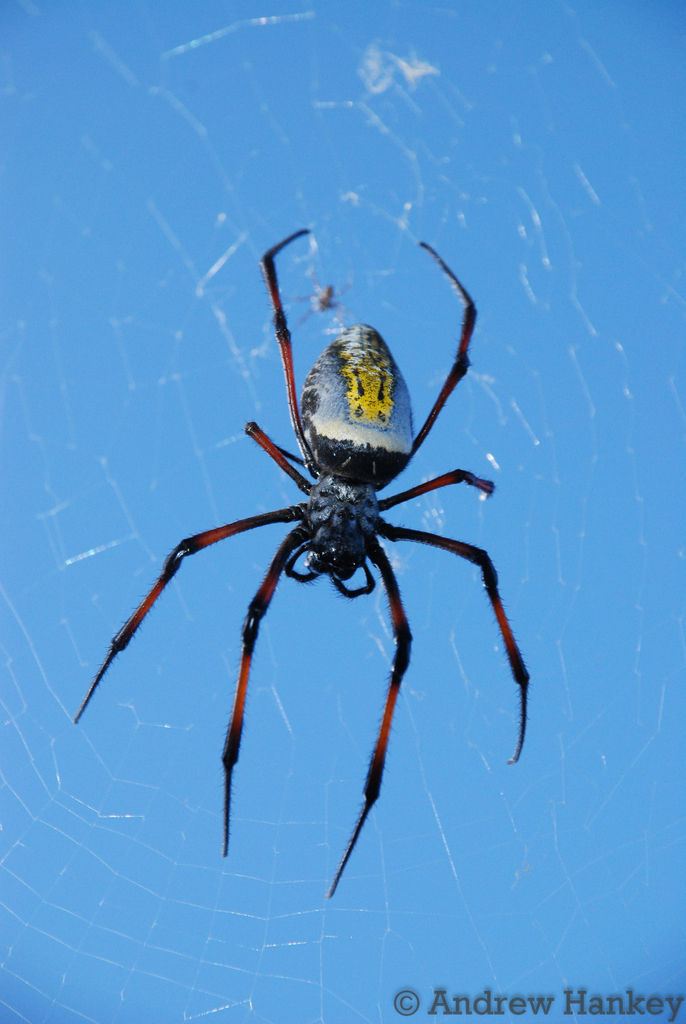
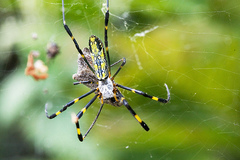
The redleg orbweaver lives in southern and East Africa and several islands in the western Indian Ocean. It builds large, strong webs in damp, unpolluted trees, sometimes catching birds and bats. Its diet consists of flies, mosquitoes, moths, wasps and beetles that become tangled in the web.
Source: Wikipedia
How to recognize it
Native to southern and East Africa and islands such as Madagascar, Seychelles, Réunion, Mauritius and Rodrigues.
Source: Wikipedia
Where it lives
Webs are built in damp places like large trees in unpolluted areas, often forming extensive “homes”.
Source: Wikipedia
Life cycle
Females lay egg sacs about the size of a small marble containing 100-200 eggs that hatch after two months; females mature in four months and reach about 100 mm leg span. Males mature in one to two months, with some maturing early as small black crab-spider-like forms (8-10 mm) and others later as less colorful forms (25-30 mm).
Source: Wikipedia
Where it comes from
Found naturally in southern and East Africa and several western Indian Ocean islands.
Source: Wikipedia
More photos

Same family (Araneidae)


Sources
- Wikipedia: https://en.wikipedia.org/wiki/Trichonephila_inaurata
Look it up elsewhere: GBIF · iNaturalist · BugGuide · ITIS · Wikipedia
Text written 2026-10-23 from the sources above and checked sentence by sentence against them. Data fetched 2026-10-22.