 Bug FAQ
Helms's Stag Beetle
Geodorcus helmsi · Order: Coleoptera · Family: Lucanidae
Also called: Helm's stag beetle, Helms' stag beetle

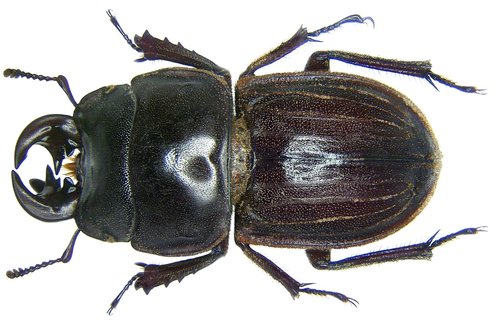
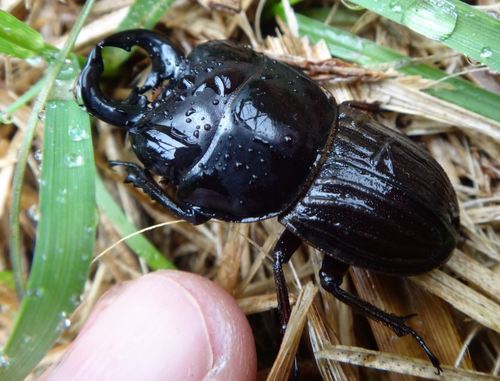
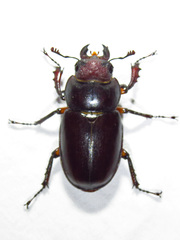
Helms's stag beetle is a large, flightless beetle that ranges from black to brownish-black and can be dull or glossy on its back. Males measure 17.5 to 44 mm and females 16.5 to 27.5 mm, with males having prominent mandibles. It lives only in New Zealand, hiding at night under logs, stones or leaf litter in forests and high-country tussock areas.
Source: Wikipedia
How to recognize it
Its back can be either dull or glossy.
Source: Wikipedia
Size
Males are 17.5 to 44 mm long, including their big mandibles, while females are 16.5 to 27.5 mm and have smaller mandibles.
Source: Wikipedia
Where it lives
This species occupies a wide range of habitats, from forest to tussock-dominated high country.
Source: Wikipedia
What it eats
Adults have been seen feeding on sap that oozes from wounds in tree bark. Larvae contain large amounts of humus in their gut, indicating they feed on decaying wood material.
Source: Wikipedia
Life cycle
There is no published information on the timing of egg laying, larval, pupal or adult stages for New Zealand stag beetles. Geodorcus larvae have been found under decaying logs, living in galleries within the soil layer.
Source: Wikipedia
When you see it
Mating has been observed in October.
Source: Wikipedia
Where it comes from
Helms's stag beetle is endemic to New Zealand.
Source: Wikipedia
More photos
Questions people ask
Where does Helms's stag beetle live?
It is native only to New Zealand and lives under logs, stones or leaf litter in forests and high-country tussock areas.
Source: Wikipedia
What does this beetle eat?
Adults feed on sap that leaks from wounds in tree bark, while the larvae eat decaying wood material and humus.
Source: Wikipedia
When are they active?
They are mainly nocturnal and have been observed mating in October.
Source: Wikipedia
How big are they?
Males range from 17.5 to 44 mm and females from 16.5 to 27.5 mm in length.
Source: Wikipedia
Same family (Lucanidae)


Sources
- Wikipedia: https://en.wikipedia.org/wiki/Geodorcus_helmsi
Look it up elsewhere: GBIF · iNaturalist · BugGuide · Wikipedia
Text written 2026-10-23 from the sources above and checked sentence by sentence against them. Data fetched 2026-10-23.