 Bug FAQ
New Zealand Reticulated Stag Beetle
Paralissotes reticulatus · Order: Coleoptera · Family: Lucanidae
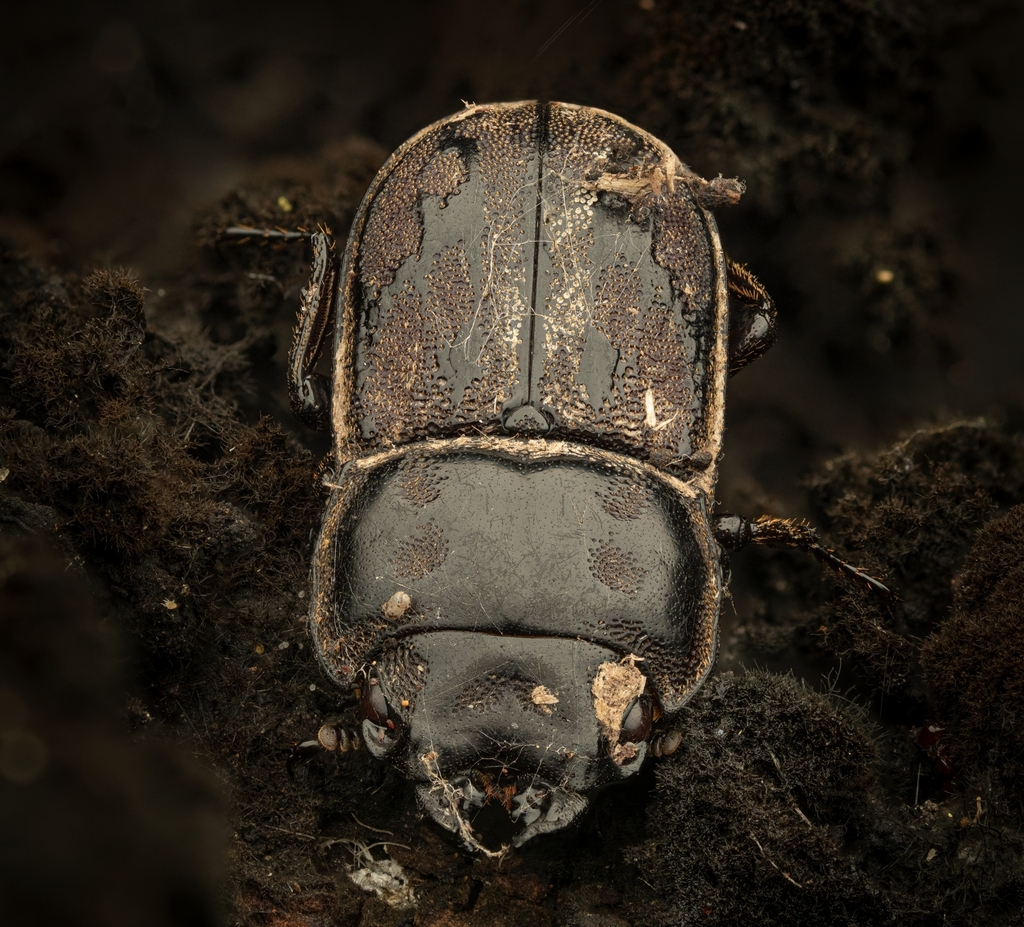
Males are 12.7 to 21.8 mm long and females 13.8 to 21.3 mm, with a glossy black body. They live in New Zealand forests, from sea level up to about 950 m, and are found under decaying native logs.
Source: Wikipedia
How to recognize it
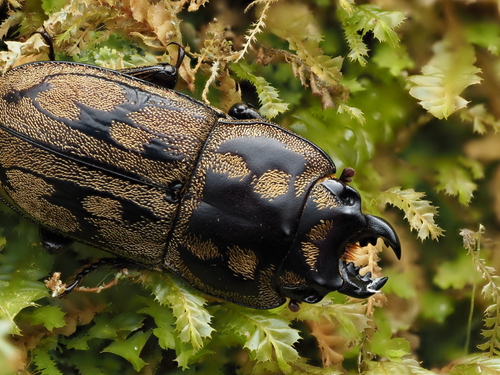
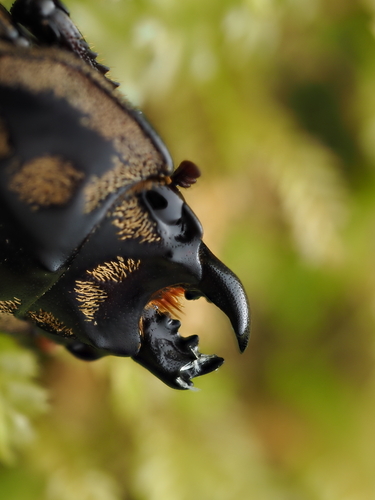
The beetle has a shiny black exoskeleton with a net-like pattern of scaly and non-scaly patches.
Source: Wikipedia
Size
Male length ranges from 12.7 to 21.8 mm; females range from 13.8 to 21.3 mm.
Source: Wikipedia
Where it lives
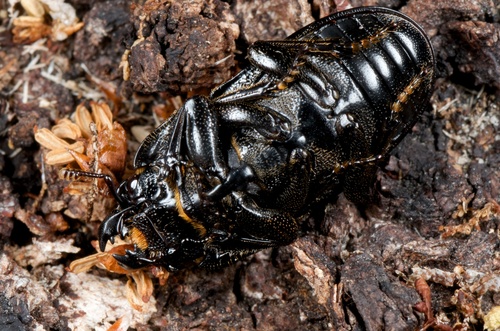
Adults are collected beneath decaying logs of native trees. Larvae develop inside heavily rotted wood.
Source: Wikipedia
What it eats
Larvae eat the interior of advanced-decay wood.
Source: Wikipedia
Life cycle
Like other Paralissotes species, it has vestigial wings and cannot fly.
Source: Wikipedia
Where it comes from
It is a native New Zealand species. It occurs from near sea level up to roughly 950 m elevation.
Source: Wikipedia
Lookalikes
Other Paralissotes species are also flightless with vestigial wings. They share the same nocturnal habit and wet-day activity.
Source: Wikipedia
More photos

Questions people ask
Where is the New Zealand reticulate stag beetle found?
It is native to New Zealand and occurs from sea level up to about 950 m altitude.
Source: Wikipedia
What does this beetle look like?
It is a small to medium glossy black beetle with a net-like pattern of scaly and smooth areas on its back.
Source: Wikipedia
Same family (Lucanidae)


Sources
- Wikipedia: https://en.wikipedia.org/wiki/Paralissotes_reticulatus
Look it up elsewhere: GBIF · iNaturalist · BugGuide · Wikipedia
Text written 2026-10-23 from the sources above and checked sentence by sentence against them. Data fetched 2026-10-23.