 Bug FAQ
Red Widow
Latrodectus bishopi · Order: Araneae · Family: Theridiidae
Also called: Florida Red Widow, Red-legged Widow
Source: Wikipedia
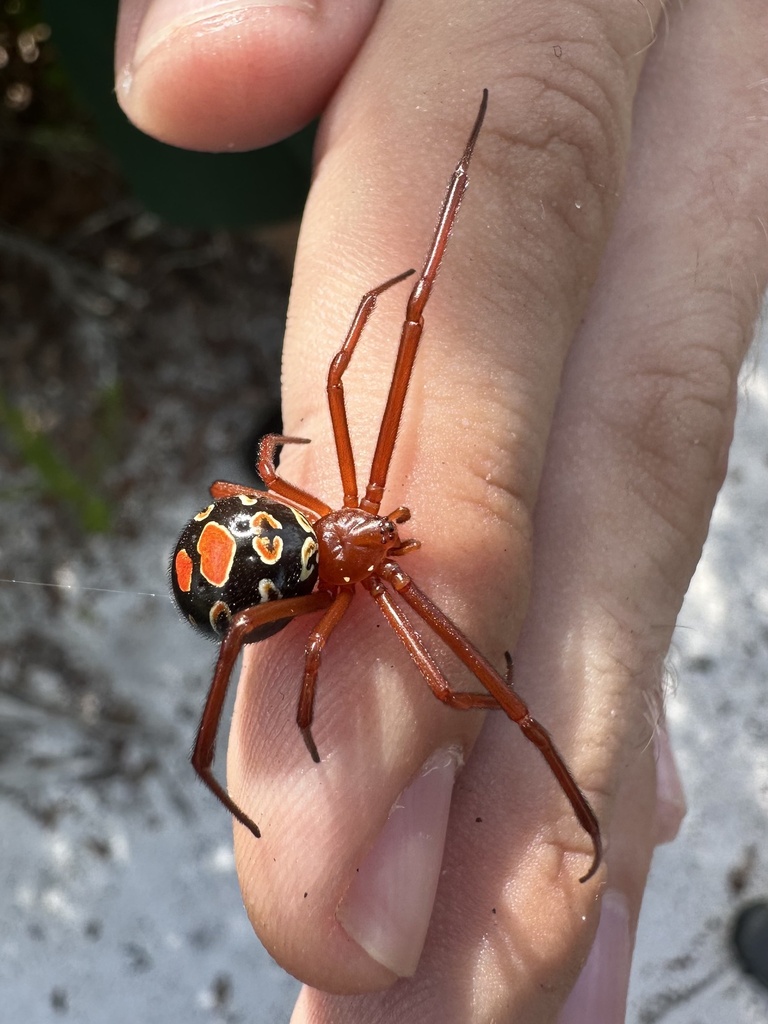
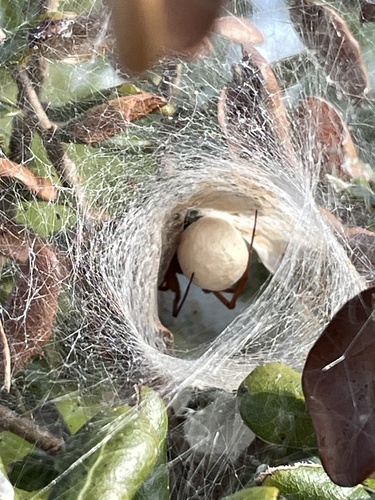
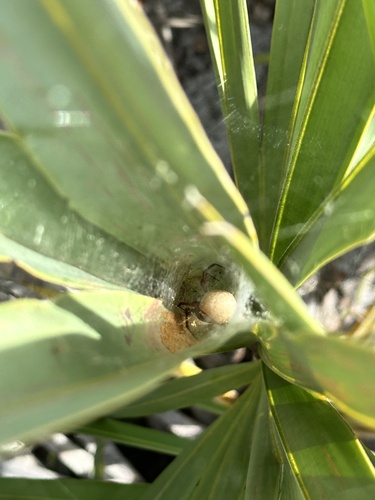
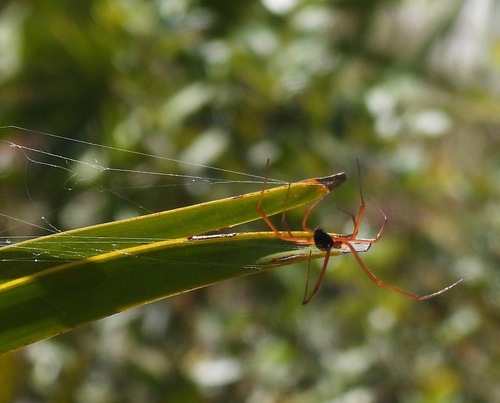
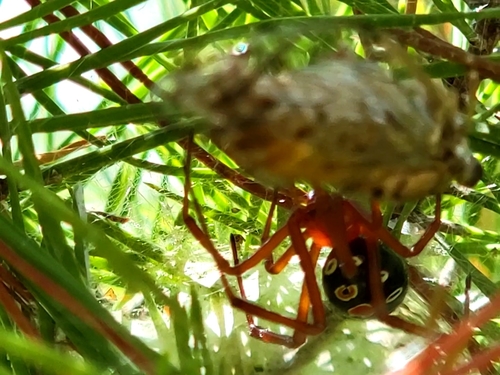
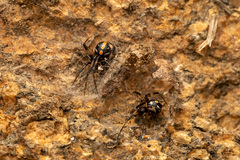
The red widow has a red-orange front body, a black abdomen with yellow rings and red spots, and bright red legs; its underside shows one or two small red marks instead of the usual hourglass. It builds webs in palmetto bushes at least 30 cm above ground and is found only in central and southern Florida.
Source: Wikipedia
How to recognize it
Its cephalothorax is red-orange, the abdomen is black with yellow-ringed rows of red spots, and the legs are bright red. The underside lacks the typical hourglass and usually has one or two small red spots.
Source: Wikipedia
Size
Females are almost twice as large as males.
Source: Wikipedia
Can it bite, sting or make you sick?
It rarely comes into contact with humans compared with more common widow species.
Source: Wikipedia
What it eats
It preys on the beetle Hemisphaerota cyanea.
Source: Wikipedia
Where it comes from
It is endemic to central and southern Florida.
Source: Wikipedia
Where it is found in the US
Recorded in 10 of 51 states and DC. Most records: Florida, Massachusetts, Washington, Indiana, Kansas, Montana, New Hampshire, Utah.
Darker = more records. Counts are museum and citizen-science records, not population size.
Source: GBIF
Status: endemic in North America; endemic in United States. Source: iNaturalist
Months it is reported in the US
Source: GBIF
More photos
Questions people ask
Do red widows bite?
Yes, a bite can cause a mild, throbbing pain that lasts for several hours.
Source: Wikipedia
What does the red widow look like?
It has a red-orange cephalothorax, black abdomen with yellow-ringed rows of red spots, bright red legs, and one or two small red marks on the underside.
Source: Wikipedia
Same family (Theridiidae)


Sources
- Wikipedia: https://en.wikipedia.org/wiki/Latrodectus_bishopi
Look it up elsewhere: GBIF · iNaturalist · BugGuide · ITIS · Wikipedia
Text written 2026-10-26 from the sources above and checked sentence by sentence against them. Data fetched 2026-10-26.