 Bug FAQ
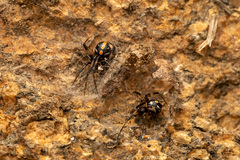
Red House Spider
Nesticodes rufipes · Order: Araneae · Family: Theridiidae
Also called: Spider, brown house spider
Source: Wikipedia
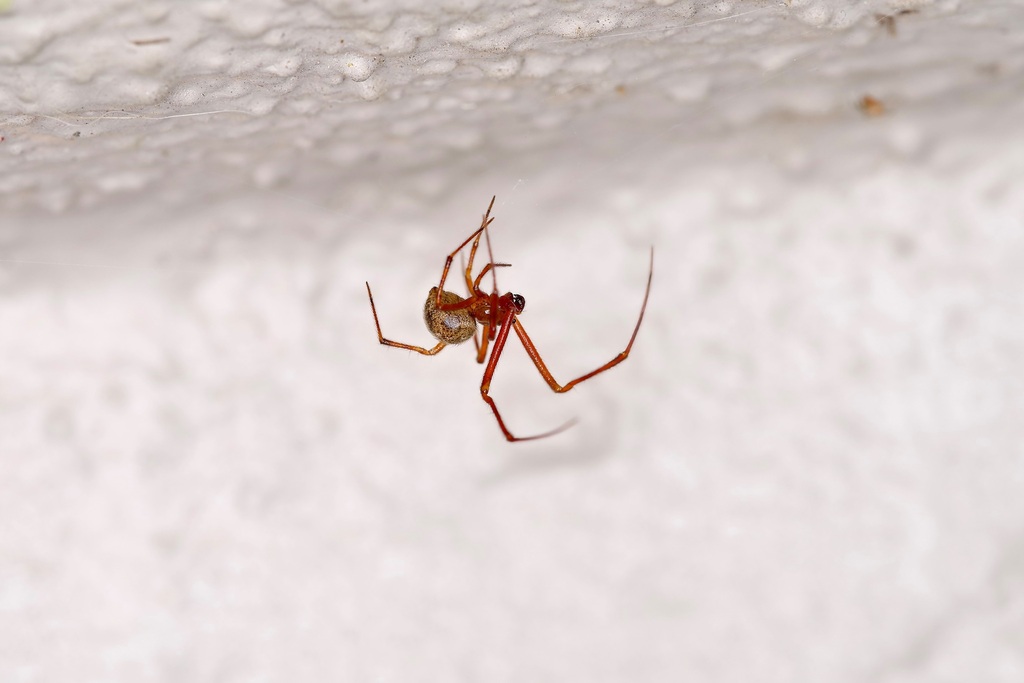
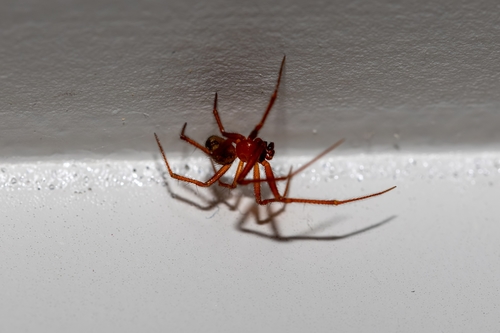
The red house spider is a small spider with a reddish body. It catches insects such as mosquitoes, flies and ants for food.
Source: Wikipedia
How to recognize it
It is recognized by its small size and red coloration.
Source: Wikipedia
Size
Adults are small and have a red-colored body.
Source: Wikipedia
Is it a pest in the house?
They can be extremely common inside homes.
Source: Wikipedia
Does it bite or sting?
Their bite delivers venom but it does not cause harm to humans.
Source: Wikipedia
Where it lives
These spiders are very common inside houses, especially in dark corners and beneath furniture.
Source: Wikipedia
What it eats
They prey on small insects like mosquitoes, flies and ants.
Source: Wikipedia
Life cycle
The species belongs to a monotypic genus described in 1950 and includes only this red house spider.
Source: Wikipedia
Lookalikes
There are no other species in the genus; the red house spider is the only member.
Source: Wikipedia
Where it is found in the US
Recorded in 6 of 51 states and DC. Most records: Florida, Hawaii, Texas, Georgia, Virginia, California.
Darker = more records. Counts are museum and citizen-science records, not population size.
Source: GBIF
Months it is reported in the US
Source: GBIF
More photos
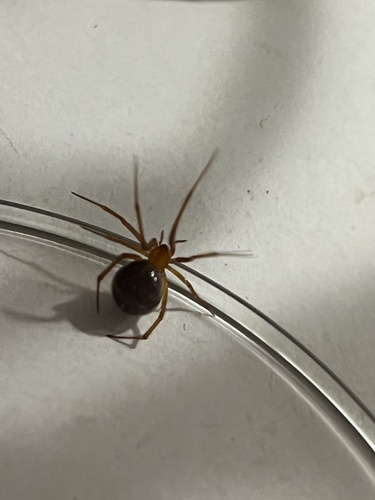
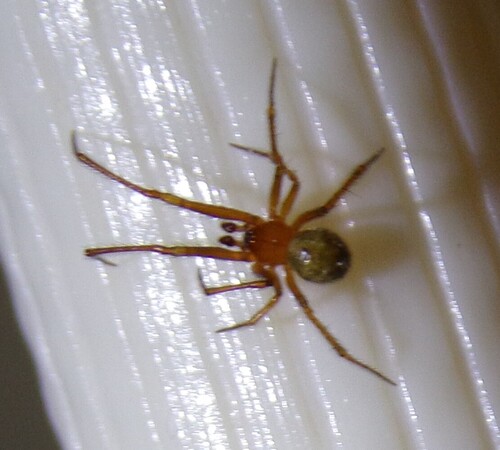
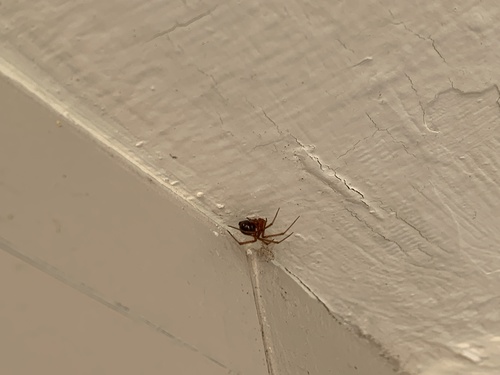
Questions people ask
Where are they usually found in a house?
They often build webs in dark corners and under furniture inside homes.
Source: Wikipedia
Same family (Theridiidae)


Sources
- Wikipedia: https://en.wikipedia.org/wiki/Nesticodes
Look it up elsewhere: GBIF · iNaturalist · BugGuide · ITIS · Wikipedia
Text written 2026-10-23 from the sources above and checked sentence by sentence against them. Data fetched 2026-10-22.