 Bug FAQ
Red-headed Ash Borer
Neoclytus acuminatus · Order: Coleoptera · Family: Cerambycidae
Also called: Read-headed Ash Borer, Redheaded Ash Borer
Source: Wikipedia
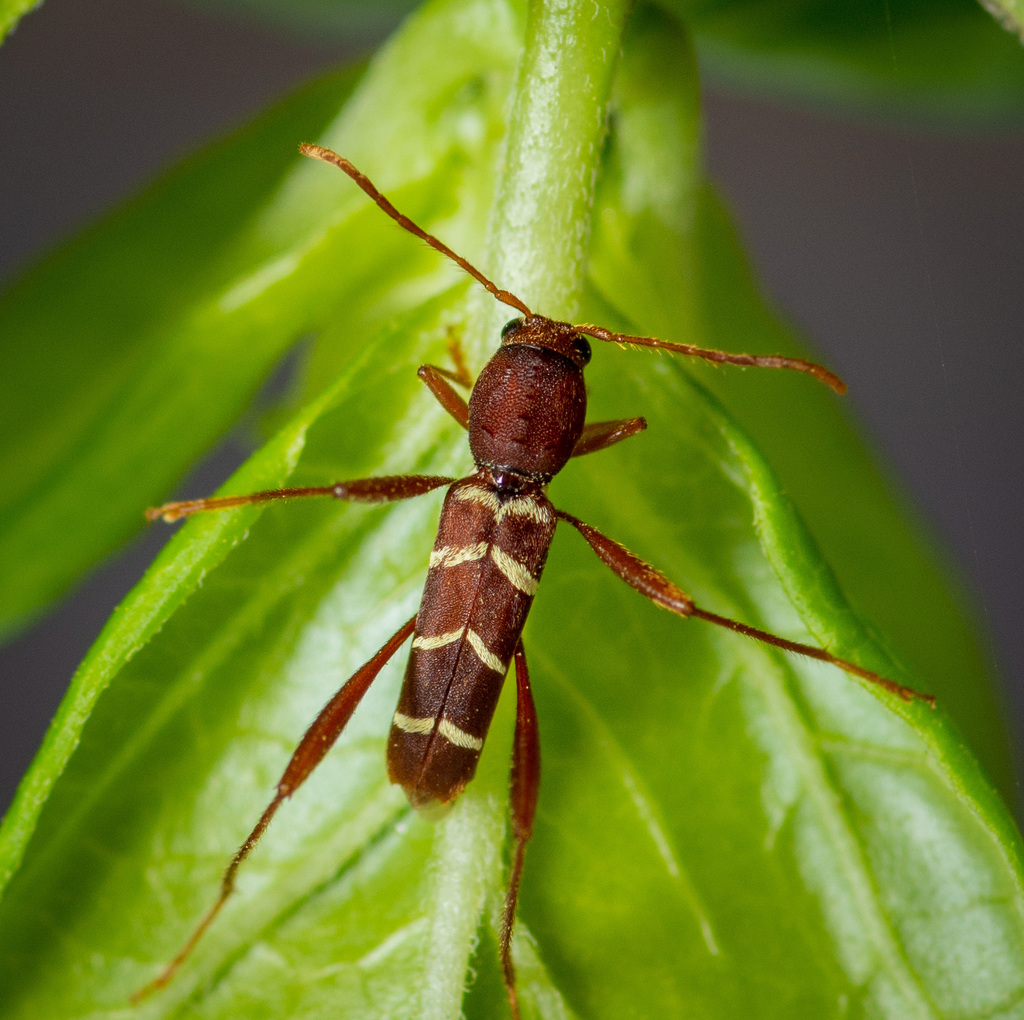
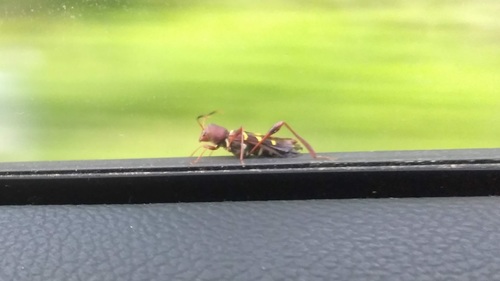
Adults are 12 to 16 mm long and look like wasps with reddish-brown bodies and four yellow stripes. The larvae live in the sapwood of dead or dying hardwoods, while adults emerge in early spring from ash, hickory, oak and other hardwoods.
Source: Wikipedia
How to recognize it
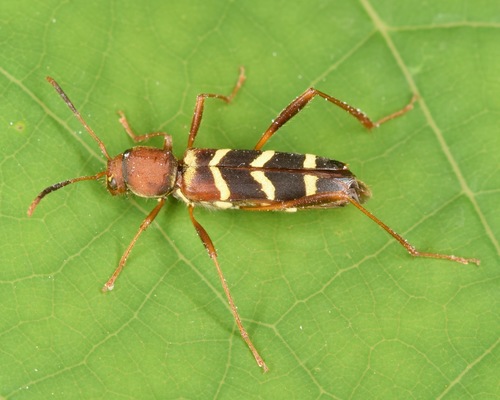
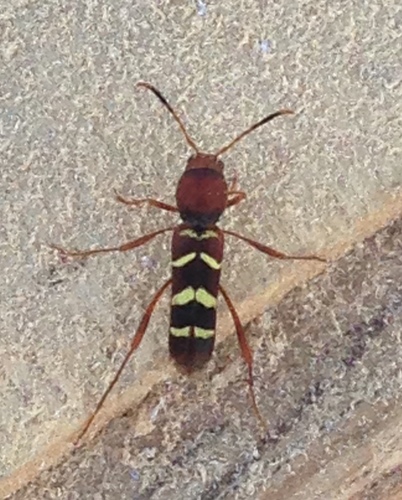
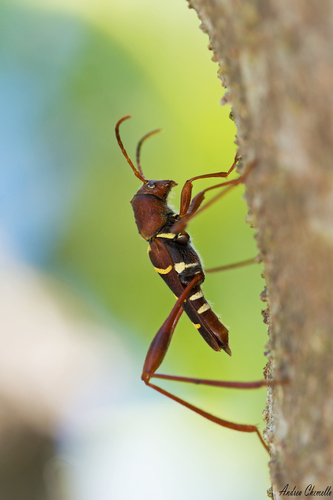
Its reddish-brown color with four yellow bands and a wasp-like shape helps it avoid predators.
Source: Wikipedia
Size
Adults measure about 12 to 16 mm in length.
Source: Wikipedia
Is it a pest in the house?
They are often brought inside on firewood but cause no damage to the house.
Source: Wikipedia
What it eats
Adults emerge from ash, hickory, oak and other hardwoods in early spring.
Source: Wikipedia
Life cycle
Larvae feed on dead-tree sapwood, may have several generations over summer, and overwinter as pupae. Adults emerge in early spring.
Source: Wikipedia
When you see it
Adults appear in early spring.
Source: Wikipedia
Where it comes from
It is a common North American longhorn beetle.
Source: Wikipedia
Lookalikes
Its wasp-like coloration and body shape are a common mimicry strategy among longhorn beetles.
Source: Wikipedia
Where it is found in the US
Recorded in 48 of 51 states and DC. Most records: Texas, Pennsylvania, Ohio, Georgia, North Carolina, Tennessee, Michigan, Virginia.
Darker = more records. Counts are museum and citizen-science records, not population size.
Source: GBIF
Months it is reported in the US
Source: GBIF
More photos
Questions people ask
Can they harm trees in my garden?
Yes, they can infest weak or newly planted trees and are a pest of nursery stock.
Source: Wikipedia
Same family (Cerambycidae)
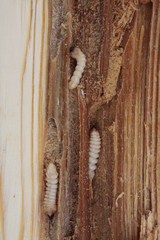 House LonghornHylotrupes bajulusCan damage your home
 Asian Longhorned BeetleAnoplophora glabripennisDamages trees, gardens or crops
 Red Milkweed BeetleTetraopes tetrophthalmus
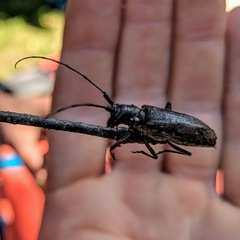 White-spotted SawyerMonochamus scutellatusCan damage your home
 Red Pine Longhorn BeetleStictoleptura rubra
 Spotted Longhorn BeetleRutpela maculataDamages trees, gardens or crops
Sources
- Wikipedia: https://en.wikipedia.org/wiki/Neoclytus_acuminatus
Look it up elsewhere: GBIF · iNaturalist · BugGuide · ITIS · Wikipedia
Text written 2026-10-22 from the sources above and checked sentence by sentence against them. Data fetched 2026-10-22.