 Bug FAQ
Red cabbage bug
Eurydema ornata · Order: Hemiptera · Family: Pentatomidae
Source: Wikipedia
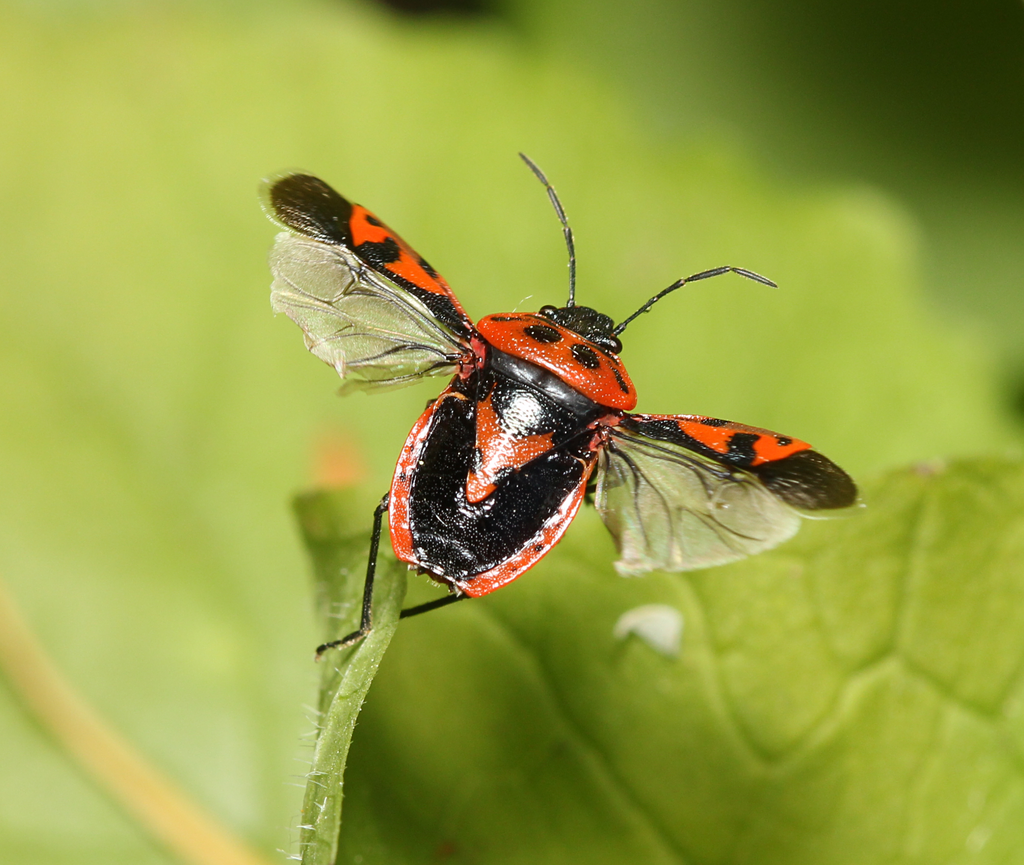
The red cabbage bug is a small shield bug about 7 to 8 mm long with gray or bright red body and black markings, sometimes showing white and yellow-green patches. It lives in open areas with low vegetation across Europe, North Africa and parts of Asia, overwinters as an adult, and the nymphs are pale yellow-orange with dark markings. It sucks sap from cruciferous plants, making it a garden pest for cabbage, cress, radish and related crops.
Source: Wikipedia
How to recognize it
The bug’s body is gray or bright red with black markings; sometimes the red patches appear white or yellow-green.
Source: Wikipedia
Size
It measures about 7 to 8 mm (0.28 to 0.31 in) in length.
Source: Wikipedia
Where it lives
It prefers open habitats with low vegetation.
Source: Wikipedia
Life cycle
Adults survive the winter; the nymphs are pale yellow-orange with a dark pronotum and dorsal abdominal markings.
Source: Wikipedia
Where it comes from
It occurs in Europe, North Africa, and southern and western Asia.
Source: Wikipedia
Lookalikes
It is also known as the red cabbage bug and belongs to the shield-bug tribe Strachiini of the Palaearctic and Oriental realms.
Source: Wikipedia
More photos

Questions people ask
Can it damage my garden vegetables?
Yes, it feeds on the sap of cabbage, cress, radish and other cruciferous crops, which can harm those plants.
Source: Wikipedia
Where is this bug usually found?
It lives in open areas with low vegetation across Europe, North Africa and parts of Asia.
Source: Wikipedia
Same family (Pentatomidae)
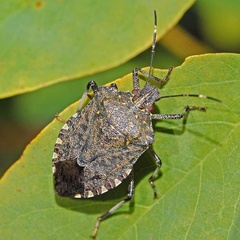 Brown Marmorated Stink BugHalyomorpha halysDamages trees, gardens or crops
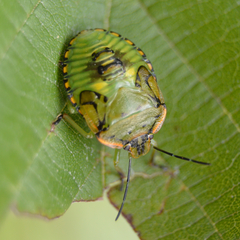 Green Stink BugChinavia hilarisDamages trees, gardens or crops
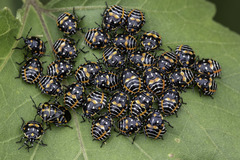 Harlequin BugMurgantia histrionicaDamages trees, gardens or crops
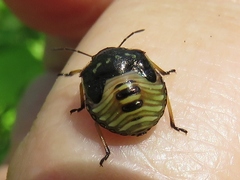 Brown Stink BugEuschistus servusDamages trees, gardens or crops
 Green Shield BugPalomena prasina
 European Striped Shield BugGraphosoma italicum
Sources
- Wikipedia: https://en.wikipedia.org/wiki/Eurydema_ornata
Look it up elsewhere: GBIF · iNaturalist · BugGuide · Wikipedia
Text written 2026-10-22 from the sources above and checked sentence by sentence against them. Data fetched 2026-10-22.