 Bug FAQ
Red-banded Yellowjacket
Vespula rufa · Order: Hymenoptera · Family: Vespidae
Also called: European Red-banded Yellowjacket, Red Wasp
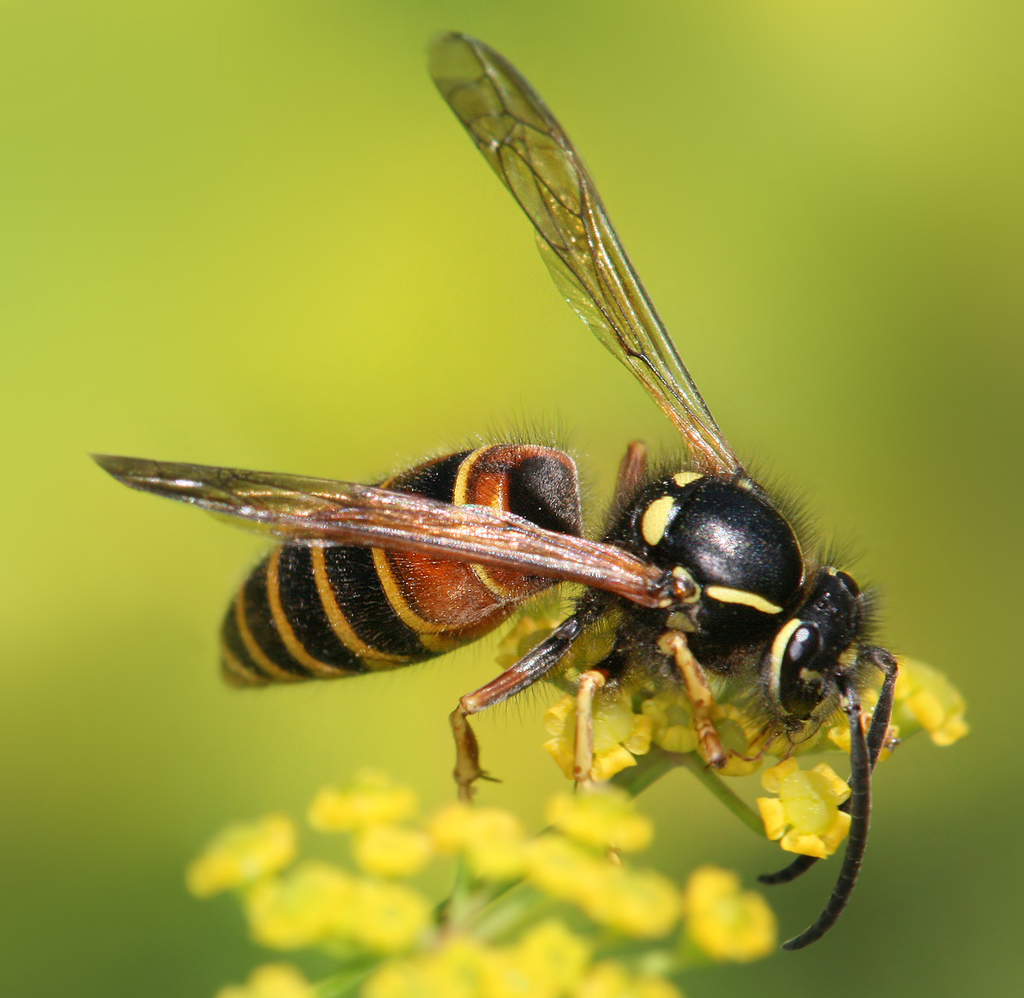
Red-banded Yellowjackets are small wasps with fore-wing lengths of about 10-13 mm, depending on caste (workers smallest, queens largest). They build modest underground nests no larger than 20 cm in diameter, usually in dry bank soil a few centimeters below the surface. The species is native to northern and central Europe, parts of Asia, the Palearctic region, and the northern areas of North America.
Source: Wikipedia
How to recognize it
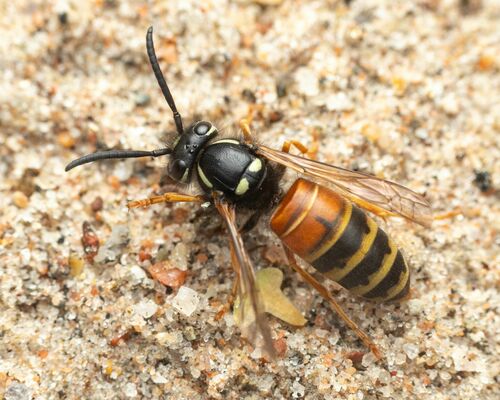
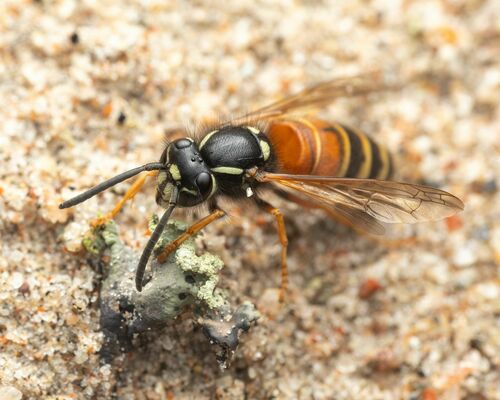
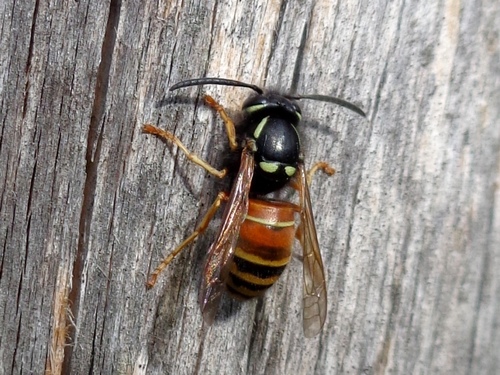
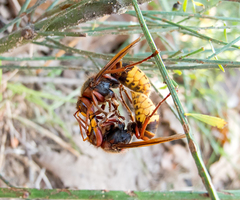
They can be recognized by reddish-brown markings on their backs. Individuals with fewer abdominal spots have a body segment divided into three parts with four forward-pointing lobes.
Source: Wikipedia
Size
Their nests are usually under 20 cm across.
Source: Wikipedia
Is it a pest in the house?
Nests are typically underground but can also be found in cavities under roofs, in hollow stumps, or in wall voids. Nest material consists of mineral soil and leaf litter, usually placed in shaded spots. In a study of 19 subterranean nests, the average depth was about 2.9 cm.
Source: Wikipedia
Does it bite or sting?
Their stings do not affect badgers because of the animals' thick skin and fur. Various predators and parasites target this species.
Source: Wikipedia
How to get rid of it
Nests are usually in abandoned rodent burrows or similar underground cavities, but can occasionally be found above ground in hollow stumps, wall cavities, bird boxes, under moss, dense bushes, eaves, or attics.
Source: Wikipedia
Where it lives
They construct nests in dry banks just below the surface, often in abandoned rodent burrows.
Source: Wikipedia
What it eats
Adults feed on live insects.
Source: Wikipedia
Where it comes from
Found across northern and central Europe, parts of Asia, the Palearctic, and northern North America.
Source: Wikipedia
Lookalikes
They lack the long yellow lines seen on V. squamosa and V. sulphurea.
Source: Wikipedia
Where it is found in the US
Recorded in 5 of 51 states and DC. Most records: Alaska, Oregon, Washington, Utah, Colorado.
Darker = more records. Counts are museum and citizen-science records, not population size.
Source: GBIF
More photos
Same family (Vespidae)


Sources
- Wikipedia: https://en.wikipedia.org/wiki/Vespula_rufa
Look it up elsewhere: GBIF · iNaturalist · BugGuide · Wikipedia
Text written 2026-10-23 from the sources above and checked sentence by sentence against them. Data fetched 2026-10-22.