 Bug FAQ
Pustulated Carrion Beetle
Nicrophorus pustulatus · Order: Coleoptera · Family: Staphylinidae
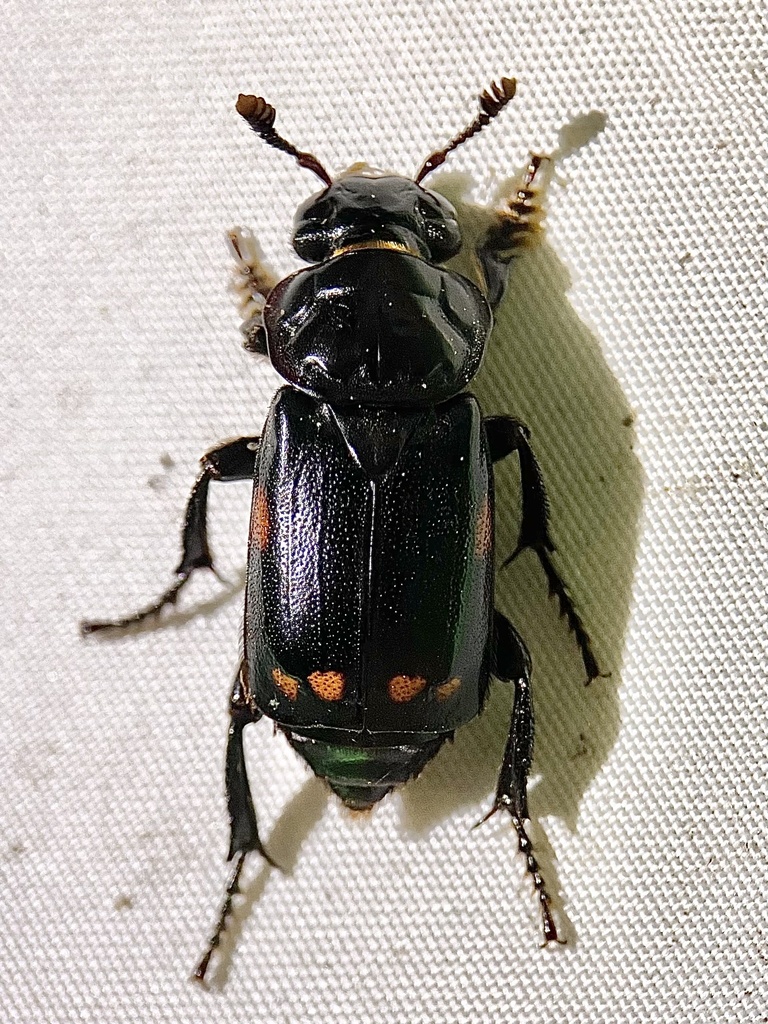
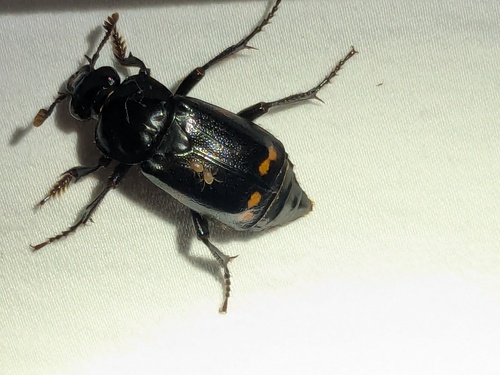
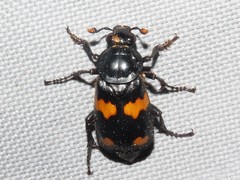
The pustulated carrion beetle is a medium-sized beetle about 14 to 22 mm long with a shiny black body and small orange spots on each wing cover. It lives in mature deciduous and mixed forests, including urban and suburban woodlands across North America. Adults feed on vertebrate carrion and use chemical cues to locate breeding sites in the spring.
Source: Wikipedia
How to recognize it
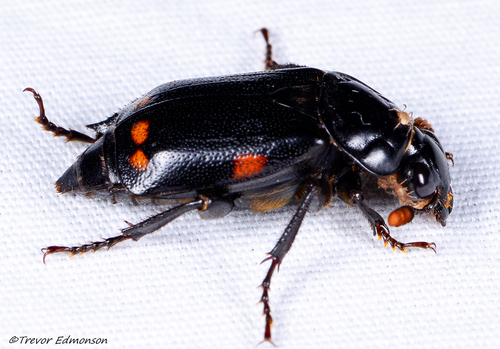
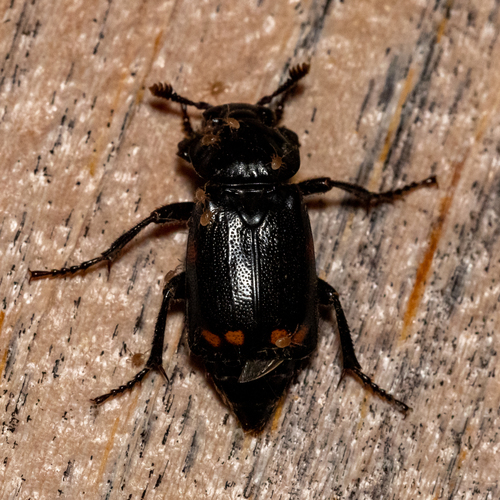
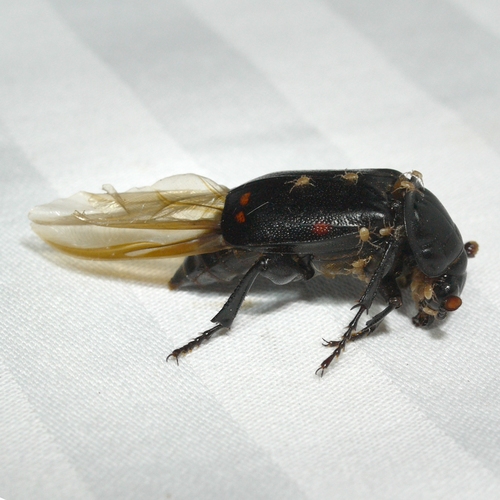
The beetle’s elytra have one orange spot midway on the side edge and two smaller spots near the rear tip. Its antennae are clubbed and appear ten-segmented, and the shortened elytra expose three to four abdominal segments.
Source: Wikipedia
Size
Adults measure between 14.0 and 22.2 mm in length.
Source: Wikipedia
Is it a pest in the house?
It is not considered a major agricultural pest, a biological control agent, a pet species, or a disease vector.
Source: Wikipedia
Does it bite or sting?
It is not known to bite or sting people or pets.
Source: Wikipedia
Where it lives
It is a canopy specialist of mature temperate forests, found in both deciduous and mixed stands. The species is also recorded in urban, suburban, and rural forest patches.
Source: Wikipedia
What it eats
It feeds on vertebrate carrion, playing an important role in decomposition.
Source: Wikipedia
Life cycle
Reproduction is sexual and can involve various mating systems such as monogamy or polygyny. Adults emerge in spring and locate breeding resources by detecting chemical cues.
Source: Wikipedia
When you see it
In Ontario, Canada, the beetle is reproductively active from late April through May or June.
Source: Wikipedia
Where it comes from
The pustulated carrion beetle is native to North America.
Source: Wikipedia
Lookalikes
Members of the Nicrophorinae subfamily can be recognized by their clubbed, apparently ten-segmented antennae and shortened elytra exposing several abdominal segments.
Source: Wikipedia
Status: native in North America; native in Canada. Source: iNaturalist
More photos
Questions people ask
What does the pustulated carrion beetle look like?
It is a shiny black beetle about 14 to 22 mm long with small orange spots on each elytron, one on the side edge and two near the tip.
Source: Wikipedia
Where is this beetle found?
It lives in mature deciduous and mixed forests across North America, including urban, suburban, and rural woodlands.
Source: Wikipedia
Is it a pest for homes or gardens?
It is not considered a major agricultural pest, a household pest, or a disease vector.
Source: Wikipedia
Same family (Staphylinidae)


Sources
- Wikipedia: https://en.wikipedia.org/wiki/Nicrophorus_pustulatus
Look it up elsewhere: GBIF · iNaturalist · BugGuide · ITIS · Wikipedia
Text written 2026-10-23 from the sources above and checked sentence by sentence against them. Data fetched 2026-10-23.