 Bug FAQ
Protopolybia exigua
Protopolybia exigua · Order: Hymenoptera · Family: Vespidae
Source: Wikipedia
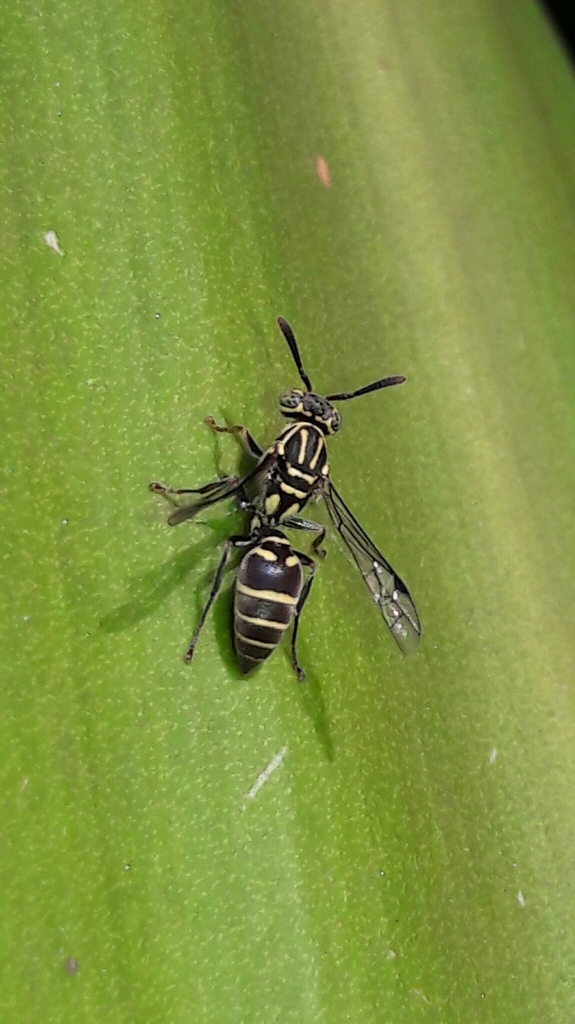
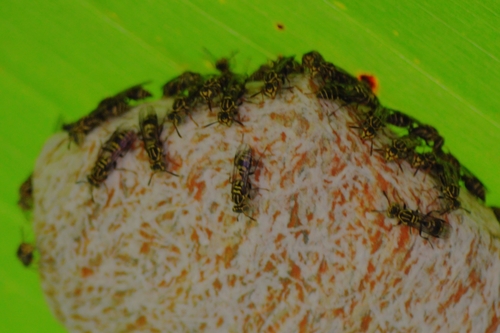
Protopolybia exigua are aggressive wasps that frequently sting, delivering painful punctures with noticeable tissue damage. They feed on nectar and hunt caterpillars, butterflies and moths, and they build disc-shaped nests hanging under leaves or branches in green areas with small trees and bushes.
Source: Wikipedia
How to recognize it
Older individuals are darker than younger ones in the same colony.
Source: Wikipedia
Size
The front wing is about 4.15 mm long and more rounded than in other wasps. Age can be judged by the darkness of the cuticle on the fifth gastral sternite.
Source: Wikipedia
Does it bite or sting?
The species is aggressive and will sting frequently. Stings cause intense pain and damage around the puncture site.
Source: Wikipedia
Where it lives
They live in orange orchards, eucalyptus plantations and other green areas with small trees and bushes.
Source: Wikipedia
What it eats
Adults drink nectar and also capture arthropods, especially caterpillars, butterflies and moths.
Source: Wikipedia
Life cycle
Workers have fully developed ovaries and some older, inseminated workers may have been potential queens at colony start.
Source: Wikipedia
More photos
Questions people ask
How painful is the sting?
The sting is described as intensely painful with noticeable damage at the bite site.
Source: Wikipedia
What does Protopolybia exigua eat?
It feeds on nectar and hunts caterpillars, butterflies and moths.
Source: Wikipedia
Same family (Vespidae)


Sources
- Wikipedia: https://en.wikipedia.org/wiki/Protopolybia_exigua
Look it up elsewhere: GBIF · iNaturalist · BugGuide · Wikipedia
Text written 2026-10-23 from the sources above and checked sentence by sentence against them. Data fetched 2026-10-23.