 Bug FAQ
Prairie Yellowjacket
Vespula atropilosa · Order: Hymenoptera · Family: Vespidae
Source: Wikipedia
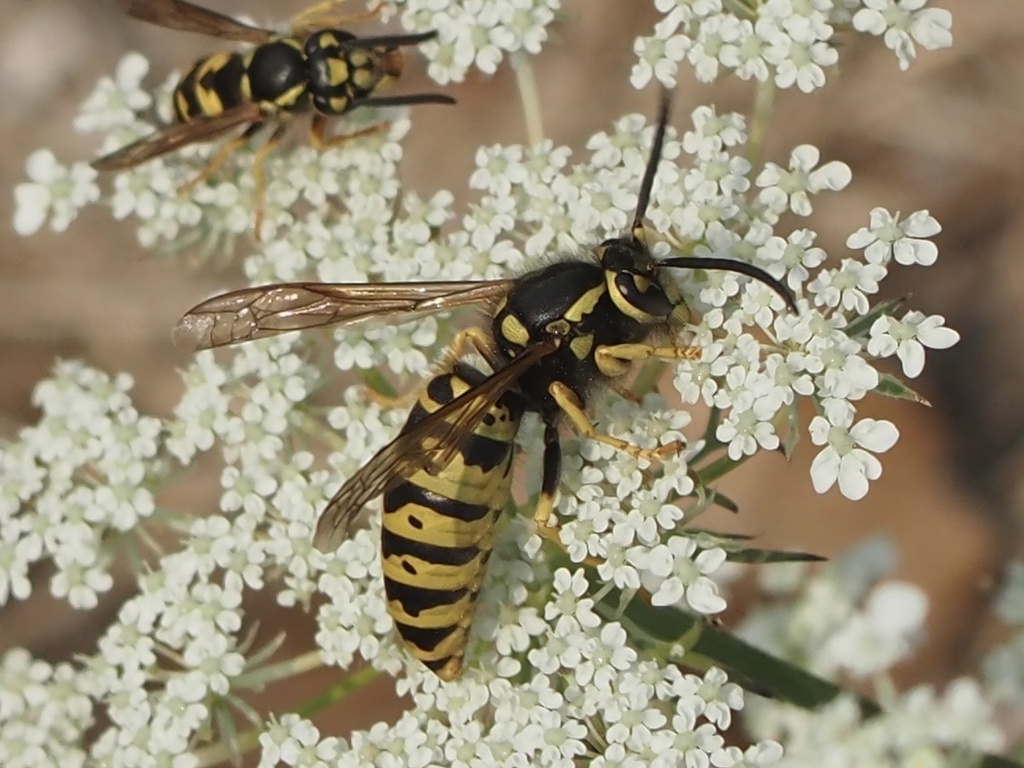
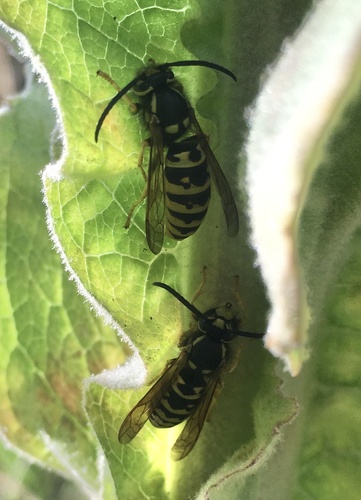
Prairie yellowjackets are black-and-yellow wasps about 10 to 15 mm long that build underground nests in open grasslands and pastures. They hunt insects such as flies, grasshoppers, aphids, cicadas, moths and butterflies, and are not considered household pests, though they may sting if their nest is disturbed.
Source: Wikipedia
How to recognize it
They are black and yellow wasps.
Source: Wikipedia
Size
Adults measure between 10 and 15 mm.
Source: Wikipedia
Is it a pest in the house?
They are not usually considered pests and are often found in backyards of the Pacific Northwest. Workers rarely threaten people unless the nest is disturbed.
Source: Wikipedia
Does it bite or sting?
They use venom mainly to defend the colony against predators, including humans. Queens carry more venom than workers, and a worker can kill many other workers but needs a large portion of its venom to kill a queen.
Source: Wikipedia
How to get rid of it
They are not usually pests and help reduce other insect pests such as lacebugs and caterpillars.
Source: Wikipedia
Where it lives
Nests are built underground in large open areas such as pastures, golf courses and other grasslands.
Source: Wikipedia
What it eats
They prey on other insects, especially flies, grasshoppers, aphids, cicadas, leafhoppers, moths and butterflies.
Source: Wikipedia
Life cycle
A queen starts a colony in spring and the nest grows most during mid-summer.
Source: Wikipedia
When you see it
Colonies are founded in spring and reach their peak in mid-summer.
Source: Wikipedia
Where it comes from
They occur in the western and Midwestern United States and parts of southern Canada. Their range is in western North America, both in Canada and the United States.
Source: Wikipedia
Lookalikes
They were formerly placed in the Vespa (hornet) family.
Source: Wikipedia
Where it is found in the US
Recorded in 17 of 51 states and DC. Most records: Colorado, Idaho, California, Utah, Oregon, Washington, Wyoming, Montana.
Darker = more records. Counts are museum and citizen-science records, not population size.
Source: GBIF
Status: native in North America; native in United States; native in Canada. Source: iNaturalist
Months it is reported in the US
Source: GBIF
More photos
Questions people ask
Do prairie yellowjackets sting?
Yes, they can sting people when their nest is disturbed, using venom mainly for defense.
Source: Wikipedia
Are prairie yellowjackets a household pest?
They are not considered household pests, though they may appear in backyards in the Pacific Northwest.
Source: Wikipedia
What do prairie yellowjackets eat?
They hunt a variety of insects, including flies, grasshoppers, aphids, cicadas, leafhoppers, moths and butterflies.
Source: Wikipedia
Where are prairie yellowjackets found?
They live in the western and Midwestern United States and parts of southern Canada.
Source: Wikipedia
Same family (Vespidae)


Sources
- Wikipedia: https://en.wikipedia.org/wiki/Vespula_atropilosa
Look it up elsewhere: GBIF · iNaturalist · BugGuide · Wikipedia
Text written 2026-10-24 from the sources above and checked sentence by sentence against them. Data fetched 2026-10-24.